Climate Threats to Freshwater Ecosystem
Interactive passage with audio narration, comprehension questions, and printable PDF.
By completing this purchase you agree to our Terms of Use and Privacy Policy. Your subscription renews automatically until you cancel. You can cancel anytime from your account settings. All sales are final and non-refundable. Digital content is available for download in your account immediately upon purchase.
What's included
Climate Threats to Freshwater Ecosystem preview and details
About this printable Climate Threats to Freshwater Ecosystem science reading passage, NGSS-aligned (Grades 5-8)
Sample passage and quiz from Climate Threats to Freshwater Ecosystem
Reading passage and comprehension quiz preview
Climate Threats to Freshwater Ecosystems
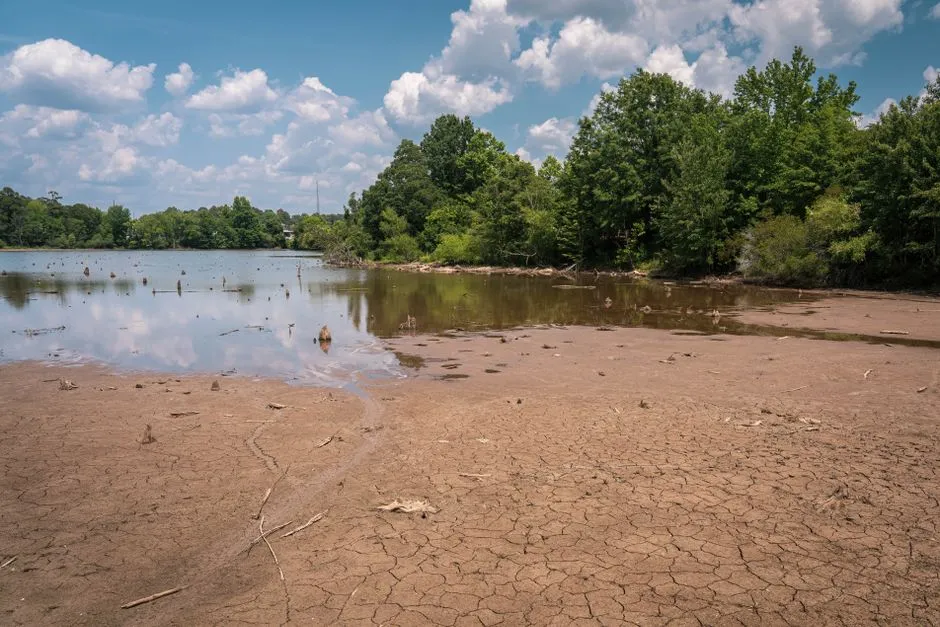
"A parched lakebed and forested shoreline." by Mark Stebnicki / Pexels.
Freshwater ecosystems cover less than one percent of Earth's surface. Yet these rivers, lakes, streams, and wetlands support about ten percent of all known species. Climate change threatens these vital habitats in specific and measurable ways. Understanding these threats helps scientists predict how ecosystems will respond to continued warming.
Warmer water creates serious problems for aquatic life. Water temperature affects how much dissolved oxygen the water can hold. Evidence shows that warmer water holds less oxygen than cold water. Fish and other aquatic organisms need oxygen to survive. When water temperatures rise, these organisms may struggle to breathe. Some species can tolerate low oxygen better than others. Cold-water fish like trout and salmon are especially sensitive to temperature changes.
Climate change also alters precipitation patterns and the timing of snowmelt. Some regions receive more intense rainstorms, while others experience longer dry periods. Mountains that once held snow until late spring now lose their snowpack earlier. This changes when water flows into streams and rivers. Early snowmelt can cause spring floods followed by low water levels in summer. Streams may become too warm or too shallow for fish to survive.
Droughts shrink lakes and wetlands, concentrating pollutants and reducing habitat space. Heavy floods can scour stream bottoms and wash away plants and small organisms. These extreme events disrupt the entire ecosystem. Scientists observe that cold-water species get squeezed into smaller and smaller areas as suitable habitat disappears. Brook trout in Appalachian streams, for example, now occupy only the coldest headwater sections. As these areas warm, the fish may have nowhere left to go.
These changes connect directly to the water cycle and human water supplies. The same climate disruptions that reduce stream flow affect drinking water, irrigation, and industry. When runoff patterns change, both people and ecosystems face water scarcity. Healthy freshwater ecosystems filter water, control floods, and support food webs. Protecting these systems matters for both wildlife and human communities.
Interesting Fact: Some mountain streams in the western United States have warmed by more than two degrees Fahrenheit in recent decades. This seemingly small change can eliminate habitat for native trout species that evolved in cold water.
Comprehension quiz (10 questions)
1. What percentage of Earth's surface do freshwater ecosystems cover?
2. How does warmer water affect dissolved oxygen levels?
3. What does the term 'aquatic' mean in the passage?
4. What does the term 'habitat' refer to in the context of this passage?
5. What can happen when snowmelt occurs earlier than normal?
6. Based on the passage, why are cold-water fish like trout especially threatened by climate change?
7. How do droughts affect freshwater ecosystems according to the passage?
8. What connection does the passage make between freshwater ecosystems and human water supplies?
9. True or False: Freshwater ecosystems support about ten percent of all known species despite covering less than one percent of Earth's surface.
10. True or False: Heavy floods have no impact on stream ecosystems.
Perfect for the way you teach
- Build comprehension skills
- Auto-graded quiz
- Differentiated reading
- Read together at home
- Improve fluency
- Quiet reading time
- Reading curriculum support
- Independent practice
- Track Lexile growth