Reading PassagePremium

Colonial Anger Toward Britain

Interactive passage with audio narration, comprehension questions, and printable PDF.

No ratings yet
Grades 6–8ElaSocial-studiesHistoryEnglish · SpanishInteractive · Printable
Just this resource
$1.50
One-time purchase
Best value
Unlock everything
$49.99$29.99/yr
40% off until Aug 1 — 10,000+ resources
Renews at $49.99/year.
Unlock above to use these actions

What's included

Reading passage
Audio narration
Comprehension quiz
Writing activity
Glossary & flashcards
Differentiated version
Spanish translation

Colonial Anger Toward Britain preview and details

About this printable Colonial Anger Toward Britain reading passage (Grades 6-8)

This engaging history reading passage examines the changing relationship between the American colonists and Britain after the Seven Years’ War. Students will analyze key causes for colonial anger, including new taxes and laws, and learn how these changes contributed to growing resistance. The passage uses a problem/solution structure and integrates a primary source quote. Multiple perspectives—British leaders and colonial residents—are included to foster critical thinking. Students can access a glossary, a differentiated reading version, and a complete Spanish translation. Activities include a reading comprehension quiz, writing prompts, graphic organizers, and a timeline. The passage and activities align with history standards CA HSS 8.1 and TEKS 8.4, as well as Common Core ELA standards RI.6.3, RI.6.4, and W.6.2. Ideal for students and teachers seeking a rigorous, standards-based U.S. history resource with audio and Spanish support.
Written by Workybooks TeamPublished by Workybooks
Preview

Sample passage and quiz from Colonial Anger Toward Britain

Reading passage and comprehension quiz preview

Colonial Anger Toward Britain
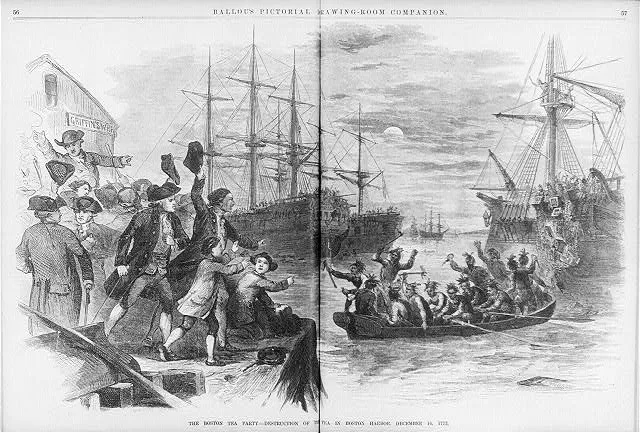
The Boston Tea Party--destruction of the tea in Boston Harbor, December 16, 1773

"The Boston Tea Party--destruction of the tea in Boston Harbor, December 16, 1773" / Library of Congress. 

After the end of the French and Indian War in 1763, the relationship between Britain and its American colonies changed dramatically. The British government, facing large debts from the war, turned to the colonies for financial support. As a result, Parliament passed new laws that required colonists to pay taxes on everyday goods such as paper, tea, and sugar. Many colonists saw these taxes as unfair, because they had no representatives in Parliament to argue their interests. These actions created serious grievances among the colonial population.

The colonists believed these new taxes threatened their sense of liberty. For decades, they had managed their own affairs and had grown used to a degree of independence. The sudden enforcement of strict trade restrictions and new laws made many colonists feel that their rights were being taken away. Some saw Britain’s policies as a form of oppression, where a powerful government used its authority to limit freedoms. This led colonists to protest, write petitions, and organize meetings to express their anger.

As frustration grew, colonial leaders helped unify the resistance. Groups like the Sons of Liberty, formed by figures such as Samuel Adams, used public demonstrations to oppose British actions. These protests included boycotts of British goods and sometimes violent acts, such as the destruction of stamped paper. The British government responded by sending more troops to enforce order and passing even stricter laws, which only increased colonial resentment. The presence of British soldiers in colonial towns, such as Boston, made daily life tense for many colonists.

This period saw the development of a new sense of American identity. Colonists debated what it meant to be loyal subjects of Britain while also demanding greater rights. The idea of resistance became widespread, as people questioned the legitimacy of British rule and discussed the principles of self-government. Newspapers, pamphlets, and public gatherings allowed colonists to share their ideas and organize collective action. Over time, what began as scattered protests grew into a movement for change.

Despite the risks, many colonists continued to challenge British authority. Some hoped for a compromise that would restore their rights within the empire, while others began to imagine complete independence. The conflict between colonial demands and British decisions eventually led to open rebellion and the start of the American Revolution in 1775. The years between 1763 and 1775 were a time of rising tension, debate, and action, as colonists struggled to defend their freedoms.

Interesting Fact: The famous Boston Tea Party of 1773 was not just about tea—it was a dramatic protest against British taxes and control over colonial trade.

Comprehension quiz (8 questions)

1. What year did the French and Indian War end?

1763
1775
1773
1755

2. Who were the Sons of Liberty?

Colonial protest group
British soldiers
Tea merchants
Members of Parliament

3. What event protested British taxes in 1773?

Boston Tea Party
Stamp Act Congress
Declaration of Independence
Treaty of Paris

4. Why did Britain tax the colonies after 1763?

To pay war debts
To buy land
To reward colonists
To help trade

5. How did colonists show resistance?

Boycotts and protests
Voting for Parliament
Building forts
Moving to Britain

6. What effect did British soldiers have in Boston?

Made life tense
Helped local trade
Improved relations
Built new houses

7. Colonists paid taxes on tea. True or false?

True
False

8. What does 'grievances' mean?

Complaints
Rewards
Laws
Farms
Who it's for

Perfect for the way you teach

Teachers
  • Build comprehension skills
  • Auto-graded quiz
  • Differentiated reading
Parents
  • Read together at home
  • Improve fluency
  • Quiet reading time
Homeschoolers
  • Reading curriculum support
  • Independent practice
  • Track Lexile growth
Topics

Reviews & Ratings

No reviews yet. Be the first to share your experience!

More reading you might love

20 more
Passage
Great Awakening Colonial America - reading educational content

Great Awakening Colonial America

Reading Passage

$1.50
Passage
Quakers in Colonial America - reading educational content

Quakers in Colonial America

Reading Passage · D2.HIS.2.3-5

$1.50
Passage
Indentured Servants in Colonial America  - reading educational content

Indentured Servants in Colonial America

Reading Passage · D2.HIS.2.3-5

$1.50
Passage
Cities in Colonial America - reading educational content

Cities in Colonial America

Reading Passage · HSS 5.4.6

$1.50
Passage
Why Europeans Immigrated to Colonial America - reading educational content

Why Europeans Immigrated to Colonial America

Reading Passage · D2.HIS.2.3-5

$1.50
Passage
Colonial Social Classes - reading educational content

Colonial Social Classes

Reading Passage · D2.HIS.2.3-5

$1.50
Passage
Colonial Slave Resistance - reading educational content

Colonial Slave Resistance

Reading Passage · D2.HIS.2.3-5

$1.50
Passage
Benjamin Franklin in Colonial America - reading educational content

Benjamin Franklin in Colonial America

Reading Passage · HSS 5.5

$1.50
Passage
How the Middle Colonies Were Governed - reading educational content

How the Middle Colonies Were Governed

Reading Passage · D2.HIS.2.3-5

$1.50
Passage
Life in the Southern Colonies - reading educational content

Life in the Southern Colonies

Reading Passage · D2.HIS.4.3-5

$1.50
Passage
Colonial Printing Press - reading educational content

Colonial Printing Press

Reading Passage · HSS 5.5

$1.50
Passage
Frontier Life in Colonial America - reading educational content

Frontier Life in Colonial America

Reading Passage · HSS 5.4.6

$1.50
Passage
Colonial Jobs: Blacksmiths, Bakers, and Craftsmen - reading educational content

Colonial Jobs: Blacksmiths, Bakers, and Craftsmen

Reading Passage · D2.HIS.2.3-5

$1.50
Passage
Colonial Apprenticeship System  - reading educational content

Colonial Apprenticeship System

Reading Passage · HSS 5.4.6

$1.50
Passage
Native American Allies in Colonial Wars - reading educational content

Native American Allies in Colonial Wars

Reading Passage · D2.HIS.2.3-5

$1.50
Passage
Colonial Clothing and Homemade Goods - reading educational content

Colonial Clothing and Homemade Goods

Reading Passage · D2.HIS.2.3-5

$1.50
Passage
Colonial Labor Shortage - reading educational content

Colonial Labor Shortage

Reading Passage · CA HSS 8.1.2

$1.50
Passage
Colonial Women's Lives - reading educational content

Colonial Women's Lives

Reading Passage · D2.HIS.2.3-5

$1.50
Passage
African Diaspora in the Americas - reading educational content

African Diaspora in the Americas

Reading Passage · HSS 8.7

$1.50
Passage
Colonial Games and Entertainment - reading educational content

Colonial Games and Entertainment

Reading Passage · D2.HIS.1.3-5

$1.50
Copyright © 2026 Workybooks. Made with ♥ in California.