Could There Be Life on Enceladus
Interactive passage with audio narration, comprehension questions, and printable PDF.
By completing this purchase you agree to our Terms of Use and Privacy Policy. Your subscription renews automatically until you cancel. You can cancel anytime from your account settings. All sales are final and non-refundable. Digital content is available for download in your account immediately upon purchase.
What's included
Could There Be Life on Enceladus preview and details
About this printable Could There Be Life on Enceladus science reading passage, NGSS-aligned (Grades 5-8)
Sample passage and quiz from Could There Be Life on Enceladus
Reading passage and comprehension quiz preview
Could There Be Life on Enceladus
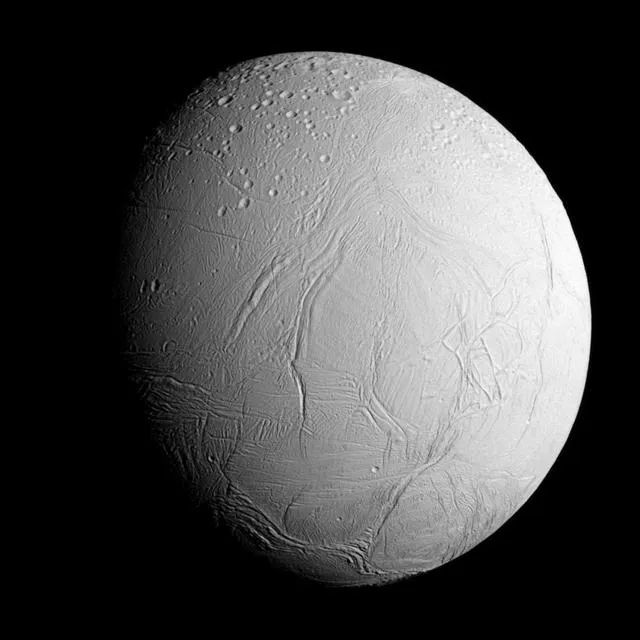
Scientists believe Enceladus, one of Saturn's small moons, may be one of the best places to search for life beyond Earth. This icy moon is only about 300 miles wide, yet it shoots powerful geysers of water ice into space. Evidence shows these geysers come from a hidden ocean beneath the moon's frozen surface.
The discovery of this subsurface ocean began when NASA's Cassini spacecraft flew past Enceladus in 2005. Scientists observed enormous plumes erupting from cracks near the moon's south pole. These cracks, called tiger stripes, release jets of water vapor and ice particles. The geysers shoot material hundreds of miles into space. Cassini flew directly through these plumes multiple times to analyze their contents.
What Cassini detected was remarkable. The spacecraft found water molecules, salt, and organic molecules in the plumes. Organic molecules are carbon-based compounds that serve as building blocks for life. The presence of these molecules suggests chemical reactions may be occurring in Enceladus's ocean. Scientists explain that hydrothermal vents on the ocean floor could provide energy for these reactions. On Earth, similar vents support thriving ecosystems in the deep ocean.
Enceladus has three essential ingredients that life requires: liquid water, energy sources, and chemistry. The moon's ocean exists because tidal forces from Saturn's gravity squeeze and stretch Enceladus. This process generates heat through friction, which keeps water liquid beneath the ice. The same tidal heating may power hydrothermal activity on the ocean floor. This combination creates conditions where microbial life could potentially survive.
The Cassini mission ended in 2017, but scientists continue analyzing its data. Researchers found evidence of molecular hydrogen in the plumes. This discovery is significant because hydrogen can provide energy for microbes. Scientists use computer models to understand how water circulates between the ocean and surface. The models suggest the ocean may be in contact with a rocky core, allowing chemical exchanges.
Why does this matter for understanding our solar system? Enceladus demonstrates that small, distant moons can harbor conditions suitable for life. This finding expands where scientists search for extraterrestrial life. Future missions may return to Enceladus to collect and analyze plume samples more thoroughly. Understanding whether life exists on Enceladus could answer fundamental questions about life's distribution in the universe.
Interesting Fact: Enceladus's geysers create Saturn's E-ring by continuously supplying fresh ice particles. The moon orbits within this ring, essentially creating its own cosmic environment.
Comprehension quiz (10 questions)
1. What does Enceladus shoot into space from its surface?
2. When did NASA's Cassini spacecraft first observe the plumes on Enceladus?
3. What are organic molecules?
4. What term describes the openings on the ocean floor where heated water flows out?
5. Why does Enceladus have a liquid ocean beneath its ice?
6. What important gas did scientists find in the plumes that can provide energy for microbes?
7. How does the discovery of conditions on Enceladus change the search for life?
8. What do scientists think may be happening on the ocean floor of Enceladus?
9. True or False: Enceladus has all three essential ingredients that life requires: water, energy, and chemistry.
10. True or False: The Cassini mission is still actively exploring Enceladus today.
Perfect for the way you teach
- Build comprehension skills
- Auto-graded quiz
- Differentiated reading
- Read together at home
- Improve fluency
- Quiet reading time
- Reading curriculum support
- Independent practice
- Track Lexile growth