This learning resource is available in interactive and printable formats. The interactive worksheet can be played online and assigned to students. The Printable PDF version can be downloaded and printed for completion by hand.
This middle school science passage explores the critical topic of nuclear safety and waste management, aligned with NGSS standards MS-PS3-4, MS-ESS3-3, and MS-ESS3-4. Students will learn how nuclear energy, while powerful, presents risks such as radiation exposure, cell damage, and long-term environmental impacts. The passage details the mechanisms of radiation protection, including shielding, distance, time limits, and the use of Geiger counters. Real-world examples like the Chernobyl and Fukushima nuclear accidents are analyzed for the lessons they provide in safety culture and regulations. The persistent challenge of nuclear waste, which remains radioactive for thousands of years, is addressed alongside solutions like deep geological repositories. The passage fosters scientific thinking by explaining cause-and-effect relationships and integrating quantitative data. Activities include comprehension questions, writing prompts, and graphic organizers to deepen understanding. Audio integration supports accessibility for diverse learners.
CONTENT PREVIEW
Expand content preview
Nuclear Safety and Waste
Nuclear energy is a powerful source of electricity used around the world. While it offers huge benefits, such as producing large amounts of energy with low carbon emissions, it also presents serious safety challenges. The major concerns are exposure to radiation, the management of radioactive waste, and the risk of accidents. Understanding how nuclear safety systems work and why waste is difficult to manage is crucial for protecting people and the environment.
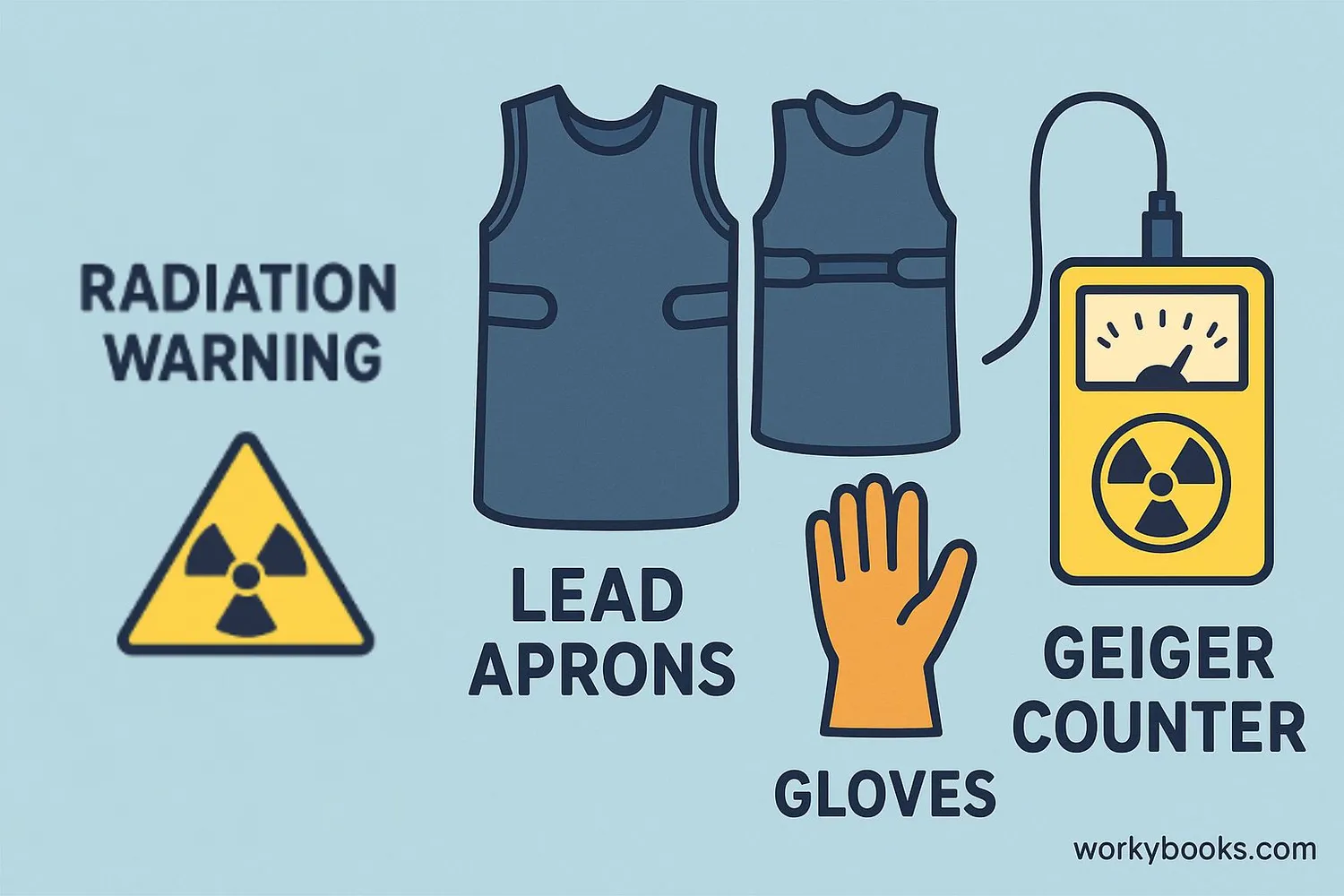
Radiation Risks and Safety Measures Radiation is energy released from unstable atoms. When humans are exposed to high levels of radiation, it can damage cells in the body. This can lead to radiation sickness, an illness with symptoms like nausea and fatigue, or even increase the risk of cancer. The effects depend on the amount and duration of exposure. To reduce risks, nuclear facilities use multiple safety measures. Shielding made of thick concrete or lead blocks radiation from escaping. Workers limit their exposure by keeping a safe distance from radioactive sources and spending as little time as possible near them. Protective equipment, like special suits, further reduces exposure. Geiger counters are used to detect and measure radiation levels, ensuring that environments remain safe.
Managing Nuclear Waste One of the biggest challenges is dealing with nuclear waste. After fuel is used in a reactor, it remains radioactive for thousands of years. Improperly managed waste can leak into the environment, contaminating soil and water. To address this, scientists and engineers develop storage solutions like deep geological repositories, which are underground facilities built to contain radioactive materials safely for very long periods. These repositories are designed with layers of barriers to prevent leaks. Storing waste safely requires careful planning, monitoring, and regulations to protect current and future generations.
Accidents, Regulations, and Safety Culture History has shown the importance of strict safety standards. The Chernobyl disaster in 1986 and the Fukushima accident in 2011 both released large amounts of radiation into the environment. Investigations found that inadequate safety measures and lack of a strong safety culture contributed to these events. As a result, international regulations became stricter, and nuclear facilities worldwide improved their training and emergency plans. Today, a strong safety culture means everyone working in nuclear energy is responsible for following safety procedures, reporting problems, and learning from past mistakes.
In summary, nuclear safety depends on understanding radiation, using protective systems, responsibly managing waste, and maintaining a safety culture. By learning from accidents, applying regulations, and using technology, societies can minimize risks while benefiting from nuclear energy's power.
Interesting Fact: Some radioactive waste remains dangerous for over 100,000 years, requiring storage solutions that last far longer than any human-made structure has before.
What is the main reason nuclear waste is difficult to manage?
It remains radioactive for thousands of years.It is easy to recycle.It is not dangerous.It can be used as medicine.
Which safety measure helps prevent radiation from escaping into the environment?
Shielding made from thick concrete or leadRecycling wasteUsing solar panelsCleaning with water
What device is used to measure radiation levels?
ThermometerBarometerGeiger counterScale
What happened as a result of the Chernobyl and Fukushima accidents?
International regulations became stricter.Nuclear energy was banned worldwide.Solar energy replaced nuclear energy everywhere.Waste became harmless.
Which of the following best defines 'deep geological repository'?
A nuclear reactor for making energyA special underground storage for radioactive wasteA device to detect radiationA protective suit for workers
If a worker increases their distance from a radioactive source, what happens to their radiation exposure?
It increasesIt stays the sameIt decreasesIt doubles
Which statement is supported by the passage?
All nuclear waste becomes safe within a year.Safety culture is important for nuclear power plants.Radiation cannot hurt living things.No safety equipment is needed in nuclear plants.
Why is it important to have regulations and a safety culture in nuclear energy?
To minimize risks and learn from past accidentsTo make nuclear waste disappearTo increase radiation exposureTo build more nuclear plants quickly
True or False: Geiger counters are used to detect and measure radiation.
TrueFalse
True or False: Nuclear waste can safely be stored above ground for 100,000 years.
TrueFalse
Perfect For:
👩🏫 Teachers
• Reading comprehension practice
• Auto-graded assessments
• Literacy skill development
👨👩👧👦 Parents
• Reading practice at home
• Comprehension improvement
• Educational reading time
🏠 Homeschoolers
• Reading curriculum support
• Independent reading practice
• Progress monitoring
Reading Features:
📖
Reading Passage
Engaging fiction or nonfiction text
❓
Comprehension Quiz
Auto-graded questions
📊
Instant Feedback
Immediate results and scoring
📄
Printable Version
Download for offline reading
🔊
Read Aloud
Voice-over with word highlighting
Reviews & Ratings
No reviews yet. Be the first to share your experience!
Related Content
Natural Disaster: Volcanic Eruptions
Volcanoes can erupt with lava and ash, changing the landscape. While dangerous, they also create fertile land and new la...
RI.3.1RI.4.4RI.4.2RI.5.2
Human Impacts: Pollution
This middle school science reading passage, aligned with NGSS standards MS-LS2-4 and MS-ESS3-3, examines the mechanisms ...
MS-LS2-4MS-ESS3-3
Human Impacts: Habitat Destruction
This grade 6-8 science passage explores human impacts on ecosystems, focusing on habitat destruction as the leading caus...
MS-LS2-4MS-LS2-5MS-ESS3-3
Ecosystem Services
This engaging middle school science passage introduces students to the concept of ecosystem services, the vital benefits...
MS-LS2-5MS-ESS3-3
Environmental Problems and Solutions
This passage for grades 6-8 introduces major environmental problems such as habitat loss, pollution, climate change, inv...
MS-LS2-4MS-ESS3-3MS-ESS3-4
Remote Sensing
This middle school science passage introduces students to the concept of remote sensing—the collection of information ab...
MS-ESS3-3MS-PS4-2MS-ETS1-1MS-ETS1-3
Geographic Information Systems (GIS)
This engaging middle school science passage introduces students to Geographic Information Systems (GIS), aligning with N...
MS-ESS3-3MS-ETS1-1MS-ETS1-2MS-ETS1-3
Renewable vs. Nonrenewable Energy
This engaging passage, aligned with NGSS standards MS-PS3-4, MS-ESS3-3, and MS-ESS3-4, helps middle school students diff...
MS-PS3-4MS-ESS3-3MS-ESS3-4
Fossil Fuels: Coal
This middle school science reading passage explores the science behind coal, a major fossil fuel. Students will learn ho...
MS-PS3-4MS-ESS3-3MS-ESS3-4
Solar Energy
This engaging passage for grades 6-8 explores the science of solar energy, focusing on how sunlight is converted into el...
MS-PS3-4MS-ESS3-3MS-ESS3-4
Wind Energy
This comprehensive middle school science passage explores the scientific principles behind wind energy and how wind turb...
MS-PS3-4MS-ESS3-3MS-ESS3-4
Hydroelectric Energy
This comprehensive passage introduces middle school students to the science behind hydroelectric energy, directly aligni...
MS-PS3-4MS-ESS3-3MS-ESS3-4
Geothermal Energy
This comprehensive science passage introduces middle school students to the mechanisms and applications of geothermal en...
MS-PS3-4MS-ESS3-3MS-ESS3-4
Biomass and Biofuels
This NGSS-aligned passage introduces grades 6-8 students to the science of biomass and biofuels, explaining how organic ...
MS-PS3-4MS-ESS3-3MS-ESS3-4
Nuclear Energy as a Resource
This NGSS-aligned informational science passage, designed for grades 6-8, explores nuclear energy as a resource in the c...
MS-PS3-4MS-ESS3-3MS-ESS3-4
Water Quality
This middle school science reading passage covers the topic of water quality, aligned with NGSS standards MS-ESS3-1 and ...
MS-ESS3-1MS-ESS3-3
Florida Everglades
This comprehensive passage introduces middle school students to the Florida Everglades, a distinctive wetland ecosystem ...
MS-LS2-1MS-LS2-4MS-ESS3-3MS-ESS3-4
Congo Rainforest
This middle school science passage explores the Congo Rainforest—Earth’s second-largest rainforest, located in Central A...
MS-LS2-1MS-ESS3-3
Nuclear Power Plants
This comprehensive reading passage introduces middle school students (grades 6-8) to the science of nuclear power plants...