This learning resource is available in interactive and printable formats. The interactive worksheet can be played online and assigned to students. The Printable PDF version can be downloaded and printed for completion by hand.
This comprehensive passage introduces middle school students to the science behind hydroelectric energy, directly aligning with NGSS standards MS-PS3-4, MS-ESS3-3, and MS-ESS3-4. Students will explore how moving water’s kinetic energy is transformed into electricity using dam-based, run-of-river, and pumped storage systems. The text explains the underlying mechanisms, the cause-and-effect relationships, and presents real-world examples, including the advantages (such as reliability and low emissions) and the challenges (such as ecosystem disruption and vulnerability to drought). Key academic vocabulary is embedded and supported, and the passage is available in both standard and simplified English and Spanish. The passage includes rich literacy supports: glossary, comprehension quiz, writing prompts, and graphic organizers, all designed for diverse learners. Audio integration ensures accessibility for students with varying needs. This resource is ideal for middle school science educators seeking to build understanding of renewable energy systems and their impacts.
CONTENT PREVIEW
Expand content preview
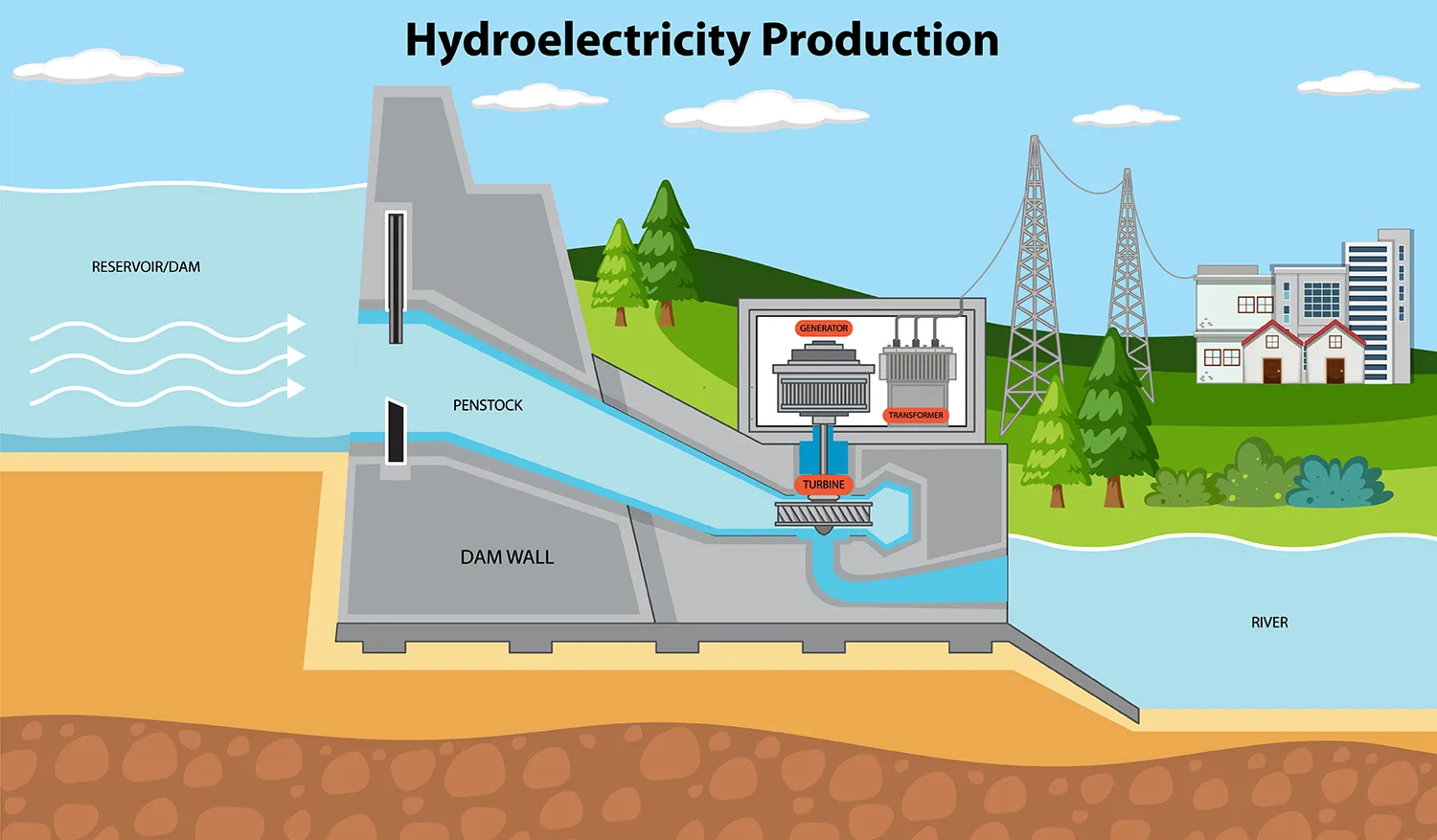
Hydroelectric dam and turbine concept
Hydroelectric energy is a major source of renewable electricity around the world. Today, about 16% of the world’s electricity is generated using moving water. This form of energy is important because it helps meet growing energy needs while reducing harmful emissions. Hydroelectric power plants use the movement of water to create electricity, showing how natural forces can be harnessed for human use.
How Hydroelectric Power Works Hydroelectric plants convert the kinetic energy of moving water into electrical energy. In dam-based systems, a reservoir stores large amounts of water behind a dam. When the water is released, gravity causes it to flow down through pipes called penstocks. The force of the falling water spins turbines, which are connected to generators. As the turbine blades turn, the generators convert the mechanical motion into electricity. For example, the Hoover Dam in the United States can generate over 2,000 megawatts of electricity, enough to power nearly 1.3 million homes. The amount of electricity produced depends on the water’s volume and the height it falls, which is why large dams are built in deep river valleys.
Types of Hydroelectric Systems and Their Roles Not all hydroelectric systems use large dams. Run-of-river systems divert a portion of river water through turbines without creating big reservoirs, reducing environmental impacts but also limiting energy output during dry seasons. Pumped storage plants are designed for energy storage: they use excess electricity to pump water uphill into a reservoir, then release it to generate power when demand is high. These systems help stabilize the electrical grid, making renewable energy sources more reliable. Hydroelectric plants can also provide flood control, irrigation, and recreation for communities.
Benefits and Challenges Hydroelectric energy offers many advantages. It produces electricity without releasing greenhouse gases during operation, making it a clean energy source. Hydroelectric plants are highly reliable, with some operating for over fifty years. However, there are also significant challenges. Building large dams can disrupt ecosystems, block fish migration, and change sediment flow in rivers. Communities may be displaced, and reservoirs can lose capacity over time due to sediment buildup. Droughts and changing rainfall patterns can reduce water availability, making hydroelectric power vulnerable in some regions. Scientists and engineers are studying new designs and technologies to reduce these impacts while still providing renewable energy for the future.
Hydroelectric energy demonstrates how humans can use natural systems to meet society’s needs, but it also shows the importance of considering environmental and social consequences. By understanding both the benefits and the challenges, we can make better decisions about using and improving clean energy sources.
Interesting Fact: The world’s largest hydroelectric plant, the Three Gorges Dam in China, can produce over 22,000 megawatts of power—enough to supply electricity to entire cities!
What is the main source of energy used in hydroelectric power plants?
Moving water's kinetic energyBurning fossil fuelsSolar radiationWind energy
How do turbines help generate electricity in a hydroelectric plant?
They spin when water flows through, turning generatorsThey store water in reservoirsThey slow down the flow of waterThey produce kinetic energy from the sun
What percent of the world’s electricity is generated by hydroelectric energy?
About 16%About 2%About 50%About 80%
What does the word 'ecosystem' most likely mean in the passage?
A group of living things and their environmentA large damA source of electricityA pipe for moving water
What does 'sediment' refer to in the context of hydroelectric dams?
Sand, soil, and rocks that build up in reservoirsThe amount of electricity producedThe moving parts of a turbineA type of generator
Why might hydroelectric energy production decrease during droughts?
Less water is available to flow through turbinesTurbines stop working in the sunSediment is used upFish can’t migrate
How does pumped storage help the electrical grid?
It stores energy by moving water uphill and releases it when neededIt builds new dams automaticallyIt collects sediment from riversIt increases rainfall
Which of the following is an advantage of hydroelectric power?
It does not release greenhouse gases during operationIt increases air pollutionIt always works during droughtsIt makes rivers flow faster
True or False: Run-of-river systems create large reservoirs like dam-based systems.
TrueFalse
True or False: Hydroelectric plants can help control floods and provide irrigation.
TrueFalse
Perfect For:
👩🏫 Teachers
• Reading comprehension practice
• Auto-graded assessments
• Literacy skill development
👨👩👧👦 Parents
• Reading practice at home
• Comprehension improvement
• Educational reading time
🏠 Homeschoolers
• Reading curriculum support
• Independent reading practice
• Progress monitoring
Reading Features:
📖
Reading Passage
Engaging fiction or nonfiction text
❓
Comprehension Quiz
Auto-graded questions
📊
Instant Feedback
Immediate results and scoring
📄
Printable Version
Download for offline reading
🔊
Read Aloud
Voice-over with word highlighting
Reviews & Ratings
No reviews yet. Be the first to share your experience!
Related Content
Natural Disaster: Volcanic Eruptions
Volcanoes can erupt with lava and ash, changing the landscape. While dangerous, they also create fertile land and new la...
RI.3.1RI.4.4RI.4.2RI.5.2
Human Impacts: Pollution
This middle school science reading passage, aligned with NGSS standards MS-LS2-4 and MS-ESS3-3, examines the mechanisms ...
MS-LS2-4MS-ESS3-3
Human Impacts: Habitat Destruction
This grade 6-8 science passage explores human impacts on ecosystems, focusing on habitat destruction as the leading caus...
MS-LS2-4MS-LS2-5MS-ESS3-3
Ecosystem Services
This engaging middle school science passage introduces students to the concept of ecosystem services, the vital benefits...
MS-LS2-5MS-ESS3-3
Environmental Problems and Solutions
This passage for grades 6-8 introduces major environmental problems such as habitat loss, pollution, climate change, inv...
MS-LS2-4MS-ESS3-3MS-ESS3-4
Remote Sensing
This middle school science passage introduces students to the concept of remote sensing—the collection of information ab...
MS-ESS3-3MS-PS4-2MS-ETS1-1MS-ETS1-3
Geographic Information Systems (GIS)
This engaging middle school science passage introduces students to Geographic Information Systems (GIS), aligning with N...
MS-ESS3-3MS-ETS1-1MS-ETS1-2MS-ETS1-3
Renewable vs. Nonrenewable Energy
This engaging passage, aligned with NGSS standards MS-PS3-4, MS-ESS3-3, and MS-ESS3-4, helps middle school students diff...
MS-PS3-4MS-ESS3-3MS-ESS3-4
Fossil Fuels: Coal
This middle school science reading passage explores the science behind coal, a major fossil fuel. Students will learn ho...
MS-PS3-4MS-ESS3-3MS-ESS3-4
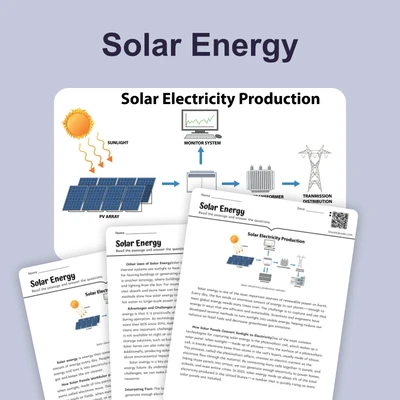
Solar Energy
This engaging passage for grades 6-8 explores the science of solar energy, focusing on how sunlight is converted into el...
MS-PS3-4MS-ESS3-3MS-ESS3-4
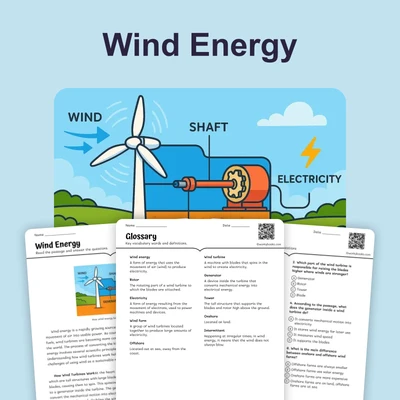
Wind Energy
This comprehensive middle school science passage explores the scientific principles behind wind energy and how wind turb...
MS-PS3-4MS-ESS3-3MS-ESS3-4
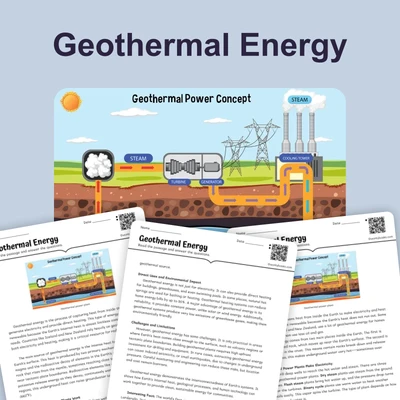
Geothermal Energy
This comprehensive science passage introduces middle school students to the mechanisms and applications of geothermal en...
MS-PS3-4MS-ESS3-3MS-ESS3-4
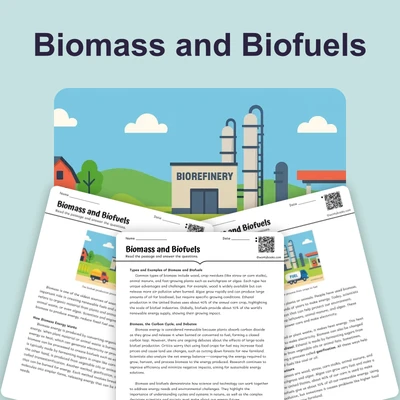
Biomass and Biofuels
This NGSS-aligned passage introduces grades 6-8 students to the science of biomass and biofuels, explaining how organic ...
MS-PS3-4MS-ESS3-3MS-ESS3-4
Nuclear Energy as a Resource
This NGSS-aligned informational science passage, designed for grades 6-8, explores nuclear energy as a resource in the c...
MS-PS3-4MS-ESS3-3MS-ESS3-4
Water Quality
This middle school science reading passage covers the topic of water quality, aligned with NGSS standards MS-ESS3-1 and ...
MS-ESS3-1MS-ESS3-3
Florida Everglades
This comprehensive passage introduces middle school students to the Florida Everglades, a distinctive wetland ecosystem ...
MS-LS2-1MS-LS2-4MS-ESS3-3MS-ESS3-4
Congo Rainforest
This middle school science passage explores the Congo Rainforest—Earth’s second-largest rainforest, located in Central A...
MS-LS2-1MS-ESS3-3
Nuclear Power Plants
This comprehensive reading passage introduces middle school students (grades 6-8) to the science of nuclear power plants...
MS-PS3-4MS-ESS3-3
Nuclear Safety and Waste
This middle school science passage explores the critical topic of nuclear safety and waste management, aligned with NGSS...