Exploration of the Solar System
Interactive passage with audio narration, comprehension questions, and printable PDF.
By completing this purchase you agree to our Terms of Use and Privacy Policy. Your subscription renews automatically until you cancel. You can cancel anytime from your account settings. All sales are final and non-refundable. Digital content is available for download in your account immediately upon purchase.
What's included
Exploration of the Solar System preview and details
About this printable Exploration of the Solar System science reading passage, NGSS-aligned (Grades 5-8)
Sample passage and quiz from Exploration of the Solar System
Reading passage and comprehension quiz preview
Exploration of the Solar System
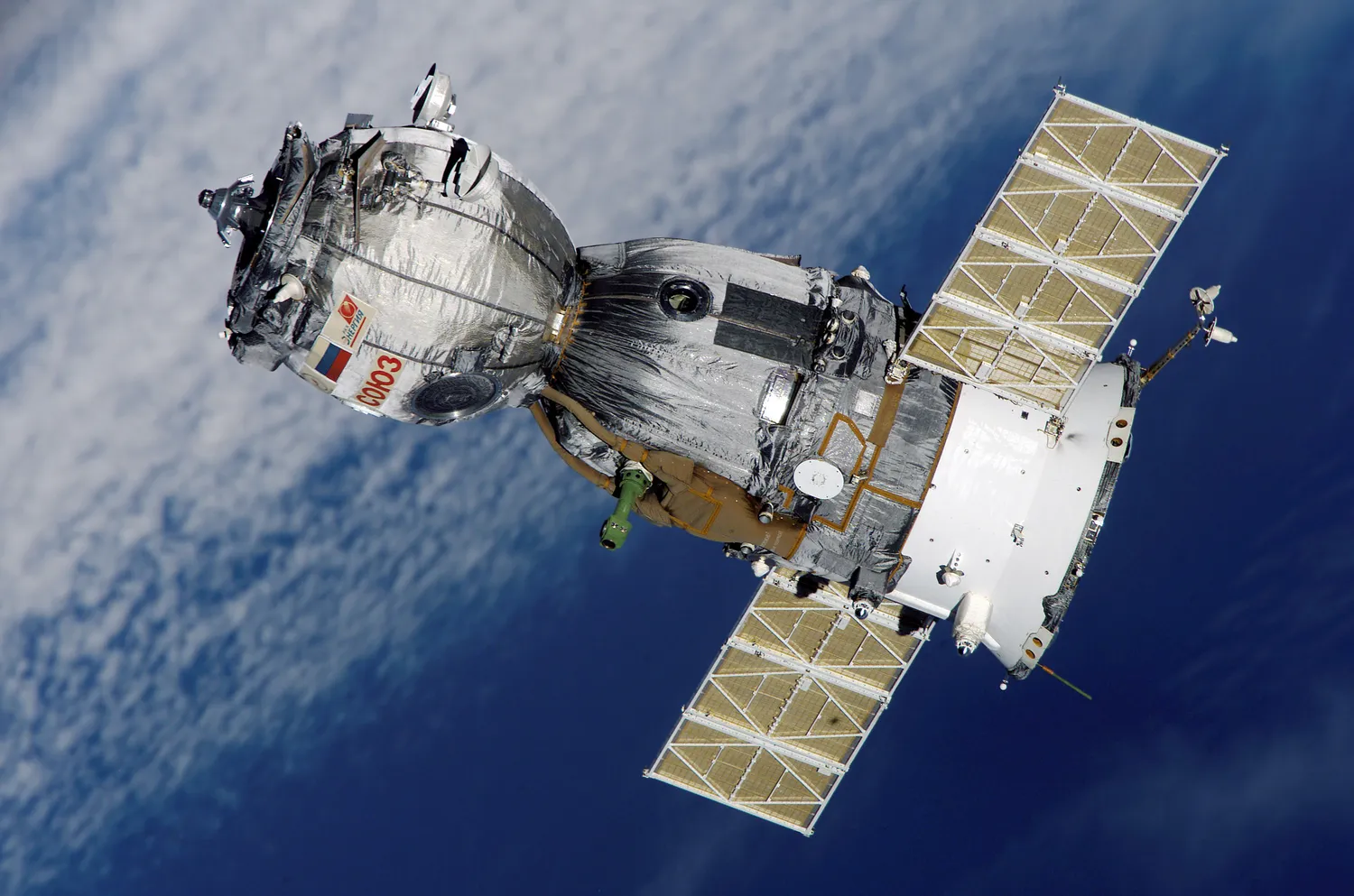
Image byThegreenj . Source: Wikimedia Commons (Public domain).
Spacecraft have transformed our understanding of the solar system by sending back detailed images and data from planets millions or even billions of kilometers away. Exploring these distant worlds is important because it helps scientists uncover the history of our solar system, understand planetary processes, and search for signs of life. The solar system is a vast place, and each mission must overcome challenges related to distance, harsh environments, and limited communication. By studying the planets, scientists learn not only about those worlds, but also about Earth’s own past and potential future.
How Missions Explore Planets
There are several types of planetary missions, each using different technology. Flyby missions, like Pioneer 10 and 11, travel past planets quickly, capturing brief but valuable data. These missions are fast and less expensive, but can only collect information during a short encounter. Orbiters, such as Magellan at Venus or Cassini at Saturn, enter orbit and study a planet over months or years, sending back detailed maps and observations. Landers and rovers, like the Vikings, Pathfinder, Spirit, Opportunity, Curiosity, and Perseverance on Mars, actually touch down on the surface to conduct experiments and analyze soil and rocks. Each mission type is chosen based on the scientific questions and the characteristics of the target planet. For example, solar panels provide power for missions close to the Sun, but for distant planets, nuclear batteries are used since sunlight is too weak.
Challenges and Innovations
Exploring the solar system presents many challenges. The extreme distance from Earth causes long communication delays—it can take over an hour for signals to travel between Earth and outer planets. Planetary environments are harsh, with extreme temperatures, high radiation, and storms. Engineers must design spacecraft to survive these conditions and operate for many years. Limited power is another issue; for example, only 4% of the sunlight that reaches Earth is available at Jupiter. To solve this, missions like Voyager and New Horizons use radioisotope generators as power sources. Recent missions have advanced technology, like high-resolution cameras and artificial intelligence for autonomous navigation, allowing spacecraft to make decisions without waiting for commands from Earth.
International Collaboration and Future Missions
Space exploration is a global effort. The United States, Russia, Europe, China, India, Japan, and the UAE have all launched missions to study planets and moons. Future missions include Mars Sample Return, Europa Clipper to study Jupiter’s icy moon, and Dragonfly to explore Titan, Saturn’s largest moon. Scientists are also planning missions to Uranus and Neptune, the ice giants. These efforts drive scientific discovery, inspire people around the world, and lead to new technologies that can improve life on Earth.
Studying the solar system helps us answer big questions about the origins of planets and the potential for life beyond Earth. It also pushes the limits of human technology and cooperation, showing what is possible when nations work together for science.
Interesting Fact:
The Voyager 1 spacecraft, launched in 1977, is now over 23 billion kilometers from Earth and is the farthest human-made object in space.
Comprehension quiz (10 questions)
1. What is the main reason scientists explore the solar system with spacecraft?
2. Which mission type allows for the longest and most detailed study of a planet?
3. Why do spacecraft traveling to outer planets often use nuclear batteries instead of solar panels?
4. Which challenge is caused by the vast distance between Earth and other planets?
5. What does the word "orbiter" mean in the context of space missions?
6. What is a "rover" according to the passage?
7. How have recent missions improved spacecraft operation?
8. Why is international cooperation important in space exploration?
9. True or False: A flyby mission spends a long time orbiting a planet.
10. True or False: Voyager 1 is the farthest human-made object in space.
Perfect for the way you teach
- Build comprehension skills
- Auto-graded quiz
- Differentiated reading
- Read together at home
- Improve fluency
- Quiet reading time
- Reading curriculum support
- Independent practice
- Track Lexile growth