This learning resource is available in interactive and printable formats. The interactive worksheet can be played online and assigned to students. The Printable PDF version can be downloaded and printed for completion by hand.
This comprehensive passage explores the science of optical telescopes for middle school students, aligning with NGSS standards MS-ESS1-3 and MS-ETS1-1. Students will learn how refracting and reflecting telescopes use visible light to collect and focus images of distant objects, why aperture size is the most important factor, and how magnification relates to image clarity. The passage also covers limitations such as atmospheric distortion and light pollution, and explains technological solutions like adaptive optics and space telescopes. Real-world examples—including the Keck Observatory, Very Large Telescope, and amateur telescopes—demonstrate the range and impact of these instruments. Activities include a multiple-choice quiz, writing prompts, and graphic organizers to reinforce understanding, and the passage is available in both English and Spanish. The resource features audio integration for accessibility and is designed to build scientific literacy, vocabulary, and critical thinking.
CONTENT PREVIEW
Expand content preview
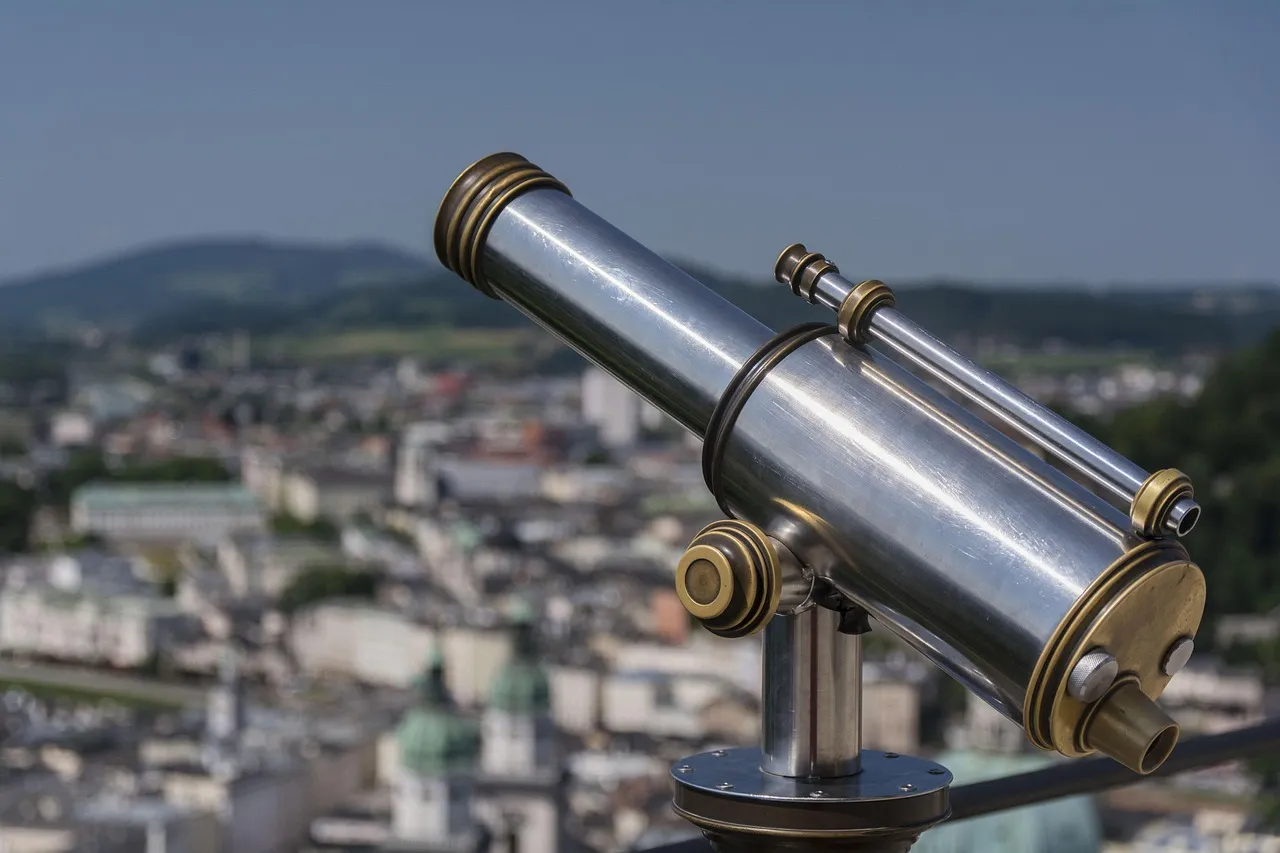
Optical telescopes are essential scientific tools that allow humans to explore the universe using visible light. Image by azorko / Source: Pixabay.
Optical telescopes are essential scientific tools that allow humans to explore the universe using visible light. While the human eye can see stars and planets, it cannot gather enough light to reveal faint or distant objects in detail. Telescopes solve this problem by collecting much more light than our eyes, making dim objects appear brighter and clearer. This ability has led to countless discoveries about our universe, from finding new planets to understanding galaxies billions of light-years away.
How Optical Telescopes Work
All optical telescopes operate by focusing light to form an image. There are two main types: refracting telescopes and reflecting telescopes. A refracting telescope uses a large glass lens at the front to bend, or refract, light to a focus point. In contrast, a reflecting telescope uses a curved mirror to collect and reflect light to a focus. The most important part of any telescope is its aperture—the diameter of the main lens or mirror. A larger aperture gathers more light, allowing astronomers to see fainter objects and finer details. For example, a telescope with a 10-meter mirror, like the Keck Observatory in Hawaii, collects over 100 times more light than a typical amateur telescope with a 30-centimeter lens.
Types, Advantages, and Challenges
Refracting telescopes were the first type invented, but they have limitations. Large glass lenses are expensive to make and can cause chromatic aberration, where colors do not focus at the same point, making images blurry. Reflecting telescopes solve this by using mirrors, which can be made much larger and do not cause chromatic aberration. As a result, most modern research telescopes are reflectors. Some of the world’s largest telescopes, such as the Very Large Telescope in Chile (four 8-meter mirrors) and the Giant Magellan Telescope (under construction, with a 25-meter equivalent mirror), are all reflectors. Amateur astronomers use smaller versions to view the Moon’s craters, planets like Jupiter, and distant galaxies or nebulae. Even a small telescope can reveal wonders invisible to the naked eye.
Light, Magnification, and Overcoming Obstacles
Although people often think magnification is the most important feature, it is actually less crucial than aperture. High magnification without enough light from a large aperture results in a dim, blurry image. The Earth’s atmosphere also creates challenges: air turbulence causes stars to twinkle and blurs images, while weather and light pollution from cities can make observing difficult. To overcome these problems, scientists build observatories in high, dry places like mountaintops and use adaptive optics—technology that adjusts the telescope’s mirror in real time to correct for atmospheric distortion. Some telescopes, like the Hubble Space Telescope, are placed in space to avoid the atmosphere entirely.
Optical telescopes have revolutionized our view of the cosmos by gathering light, magnifying distant objects, and enabling scientific discoveries. Their design and technology continue to evolve, allowing us to see farther and with greater clarity. As telescopes grow larger and smarter, they will keep expanding our understanding of the universe.
Interesting Fact: The Keck telescopes’ mirrors are made of 36 hexagonal segments, working together as one giant mirror to collect light from the farthest reaches of space.
What is the main purpose of an optical telescope?
To gather more light than the human eye and make distant objects clearer.To create electricity from sunlight.To listen to sounds from space.To measure Earth's weather patterns.
Which part of a telescope is most important for seeing faint objects?
ApertureMagnificationTripodFinder scope
What is chromatic aberration?
A problem where colors do not focus at the same point, causing blurry images.A special lens used in telescopes.A type of light pollution.A way to measure the brightness of stars.
Which is an advantage of reflecting telescopes over refracting telescopes?
They do not have chromatic aberration.They are always smaller.They use only lenses.They work best in daylight.
What is adaptive optics used for in telescopes?
To correct for atmospheric distortion and make images clearer.To increase magnification.To make telescopes lighter.To block city lights.
What does 'aperture' mean in the context of telescopes?
The diameter of the main lens or mirror.The number of lenses a telescope has.The distance to the nearest star.The brightness of an object.
Why are many observatories built on mountaintops?
To reduce the effects of the atmosphere and light pollution.Because telescopes are heavy.To be closer to the Moon.Because mountains are warmer.
If you increased the magnification of a small telescope without increasing aperture, what would likely happen?
The image would become dim and blurry.You would see more stars.Colors would become clearer.The telescope would collect more light.
True or False: A reflecting telescope uses a lens as its main way to gather light.
TrueFalse
True or False: The Hubble Space Telescope avoids atmospheric distortion by being in space.
TrueFalse
Perfect For:
👩🏫 Teachers
• Reading comprehension practice
• Auto-graded assessments
• Literacy skill development
👨👩👧👦 Parents
• Reading practice at home
• Comprehension improvement
• Educational reading time
🏠 Homeschoolers
• Reading curriculum support
• Independent reading practice
• Progress monitoring
Reading Features:
📖
Reading Passage
Engaging fiction or nonfiction text
❓
Comprehension Quiz
Auto-graded questions
📊
Instant Feedback
Immediate results and scoring
📄
Printable Version
Download for offline reading
🔊
Read Aloud
Voice-over with word highlighting
Reviews & Ratings
No reviews yet. Be the first to share your experience!
Related Content
Sunspots and Solar Flares
This quiz is designed to test your understanding of the fascinating phenomena of sunspots and solar flares, as described...
RI.4.1RI.4.4RI.5.1ESS1.A
The Hottest Planet in the Solar System
This NGSS-aligned middle school reading passage explains why Venus is the hottest planet in our solar system. Students l...
MS-ESS1-3
Scientific Investigations
This passage, aligned with NGSS standards for grades 6-8, introduces students to the process of scientific investigation...
MS-ETS1-1MS-ETS1-2MS-ETS1-3MS-ETS1-4
Tools and Technology in Earth Science
This middle school science reading passage explores the wide range of tools and technologies used in Earth science, from...
MS-ESS2-2MS-ESS3-2MS-ETS1-1MS-PS4-3
Types of Maps
This engaging science passage for grades 6-8 introduces students to the various types of maps and their uses, supporting...
MS-ESS2-2MS-ESS3-2MS-ETS1-1MS-ETS1-4
Remote Sensing
This middle school science passage introduces students to the concept of remote sensing—the collection of information ab...
MS-ESS3-3MS-PS4-2MS-ETS1-1MS-ETS1-3
Geographic Information Systems (GIS)
This engaging middle school science passage introduces students to Geographic Information Systems (GIS), aligning with N...
MS-ESS3-3MS-ETS1-1MS-ETS1-2MS-ETS1-3
Mercury: Closest to the Sun
This comprehensive, standards-aligned passage explores Mercury—the smallest and closest planet to the Sun. Students in g...
MS-ESS1-2MS-ESS1-3
Venus: Earth's Twin?
This comprehensive science passage for grades 6-8 examines Venus—often called Earth's twin—by exploring its similarities...
MS-ESS1-2MS-ESS1-3
Mars: The Red Planet
This middle school science passage explores Mars, the Red Planet, providing students in grades 6-8 with a comprehensive ...
MS-ESS1-2MS-ESS1-3
Hurricane Preparedness and Safety
This passage explores the science and practical strategies of hurricane preparedness and safety, designed for middle sch...
MS-ESS3-2MS-ETS1-1
What Is the Solar System?
This passage provides a comprehensive overview of the solar system for grades 6-8, aligned with NGSS standards MS-ESS1-2...
MS-ESS1-2MS-ESS1-3
Structure of the Solar System
This comprehensive science reading passage introduces middle school students (grades 6-8) to the structure of the solar ...
MS-ESS1-2MS-ESS1-3
Scale of the Solar System
This passage, aligned to NGSS standard MS-ESS1-3, helps middle school students grasp the immense scale of the solar syst...
MS-ESS1-3
Exploration of the Solar System
This comprehensive passage for grades 6-8 examines how humans explore the solar system, aligning with NGSS standards MS-...
MS-ESS1-3MS-ETS1-1
Future of Alien Search
This informational passage for grades 6-8 explores how scientists are using cutting-edge missions and technology to sear...
MS-ESS1-3MS-ETS1-1
Communicating with Aliens
This middle school science passage, aligned with NGSS standard MS-ESS1-3, examines the scientific and technological chal...
MS-ESS1-3
How Animals Navigate
This engaging science passage for grades 6-8 examines the fascinating world of navigation strategies. Aligned with NGSS ...
MS-LS1-4MS-ESS3-3MS-ETS1-1
Measuring Distances in Space
This middle school science passage explores how astronomers measure the vast distances in space, aligning with NGSS stan...