Climate Change and Biodiversity
Interactive passage with audio narration, comprehension questions, and printable PDF.
By completing this purchase you agree to our Terms of Use and Privacy Policy. Your subscription renews automatically until you cancel. You can cancel anytime from your account settings. All sales are final and non-refundable. Digital content is available for download in your account immediately upon purchase.
What's included
Climate Change and Biodiversity preview and details
About this printable Climate Change and Biodiversity science reading passage, NGSS-aligned (Grades 6-8)
Sample passage and quiz from Climate Change and Biodiversity
Reading passage and comprehension quiz preview
Climate Change and Biodiversity
Biodiversity refers to the variety of all living things on Earth. It includes millions of species, from microscopic bacteria to giant blue whales. Biodiversity also includes the different ecosystems these organisms form, such as forests, oceans, and grasslands. This variety of life provides humans with essential resources including food, medicines, clean water, and air. Scientists explain that greater biodiversity makes ecosystems more stable and resilient. When many different species live together, they support one another like members of a strong team. Climate change has become one of the most serious threats to biodiversity worldwide.
Climate change affects biodiversity through several connected processes. Rising global temperatures force many species to move toward cooler regions or higher elevations. Evidence shows that some species cannot migrate fast enough to keep pace with changing conditions. Altered precipitation patterns create droughts in some areas and floods in others. These changes disrupt the timing of natural events such as flowering, migration, and breeding. When one species struggles, the effects ripple through the entire food web. For example, if warming temperatures harm insects, the birds that eat those insects also suffer. The predators that eat those birds may then decline as well.
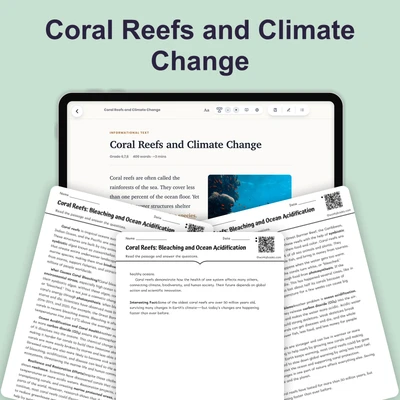
Coral reefs demonstrate how climate change can damage entire ecosystems. Rising ocean temperatures cause coral bleaching, a process where corals expel the algae living in their tissues. Without these algae, corals lose their color and their main food source. Scientists have observed that the Great Barrier Reef has experienced several major bleaching events since 1998. These events have killed large portions of the reef. Thousands of species depend on coral reefs for food and shelter. When reefs die, fish populations decline, affecting both ocean ecosystems and human communities that rely on fishing.
Protecting biodiversity in a changing climate requires understanding these connections. Habitat loss from human development combines with climate change to create greater stress on species. Some species may adapt to new conditions through evolution, but this process takes many generations. Conservation efforts focus on protecting diverse habitats and creating wildlife corridors. These corridors allow species to move safely between areas as conditions change. Reducing greenhouse gas emissions can slow the rate of climate change. This gives species more time to adjust. The web of life connects all organisms, including humans, so protecting biodiversity ultimately protects our own future.
Interesting Fact: Scientists estimate that climate change could threaten one million species with extinction by 2050 if current warming trends continue. Some species, like the pika (a small mountain mammal), are already losing habitat as mountain temperatures rise.
Comprehension quiz (10 questions)
1. What does biodiversity include?
2. According to the passage, why does greater biodiversity make ecosystems more stable?
3. What does the term 'food web' mean in the context of this passage?
4. What is coral bleaching?
5. How does climate change create ripple effects in food webs?
6. According to the passage, what has happened to the Great Barrier Reef since 1998?
7. What are wildlife corridors designed to do?
8. Which statement best describes how evolution helps species adapt to climate change?
9. True or False: Climate change is the only threat to biodiversity mentioned in the passage.
10. True or False: Reducing greenhouse gas emissions can give species more time to adjust to changing conditions.
Perfect for the way you teach
- Build comprehension skills
- Auto-graded quiz
- Differentiated reading
- Read together at home
- Improve fluency
- Quiet reading time
- Reading curriculum support
- Independent practice
- Track Lexile growth