How All Body Systems Connect โ Reading Comprehension
Rate this
Premium Resource
Present
Present in classroom. No work saved
Assign
Classroom with student accounts, Track progress
Quick Play
No student accounts, assign with a link
Grades
3
4
5
Standards
NGSS 4-LS1-1
PRINT+DIGITAL RESOURCE
This learning resource is available in interactive and printable formats. The interactive worksheet can be played online and assigned to students. The Printable PDF version can be downloaded and printed for completion by hand.
This 250-word reading passage helps Grade 4 students understand how all body systems connect and depend on each other. Aligned with NGSS standard 4-LS1-1, the passage explains that the circulatory system delivers oxygen and nutrients, the respiratory system brings in oxygen, the digestive system breaks down food for nutrients, the skeleton and muscles enable movement, and the nervous system controls everything. Students learn that every system depends on the others, and if one system has a problem, the whole body is affected. The passage includes audio integration for enhanced accessibility and engagement. This unit capstone helps students argue that the body works because all its systems work together. The passage uses age-appropriate language and real-world examples that fourth graders can relate to, building foundational understanding of the Disciplinary Core Idea LS1.A: Structure and Function. Activities include multiple-choice questions testing recall and comprehension, writing prompts requiring application of concepts, and graphic organizers that help students visualize the connections between different body systems and their functions.
CONTENT PREVIEW
Expand content preview
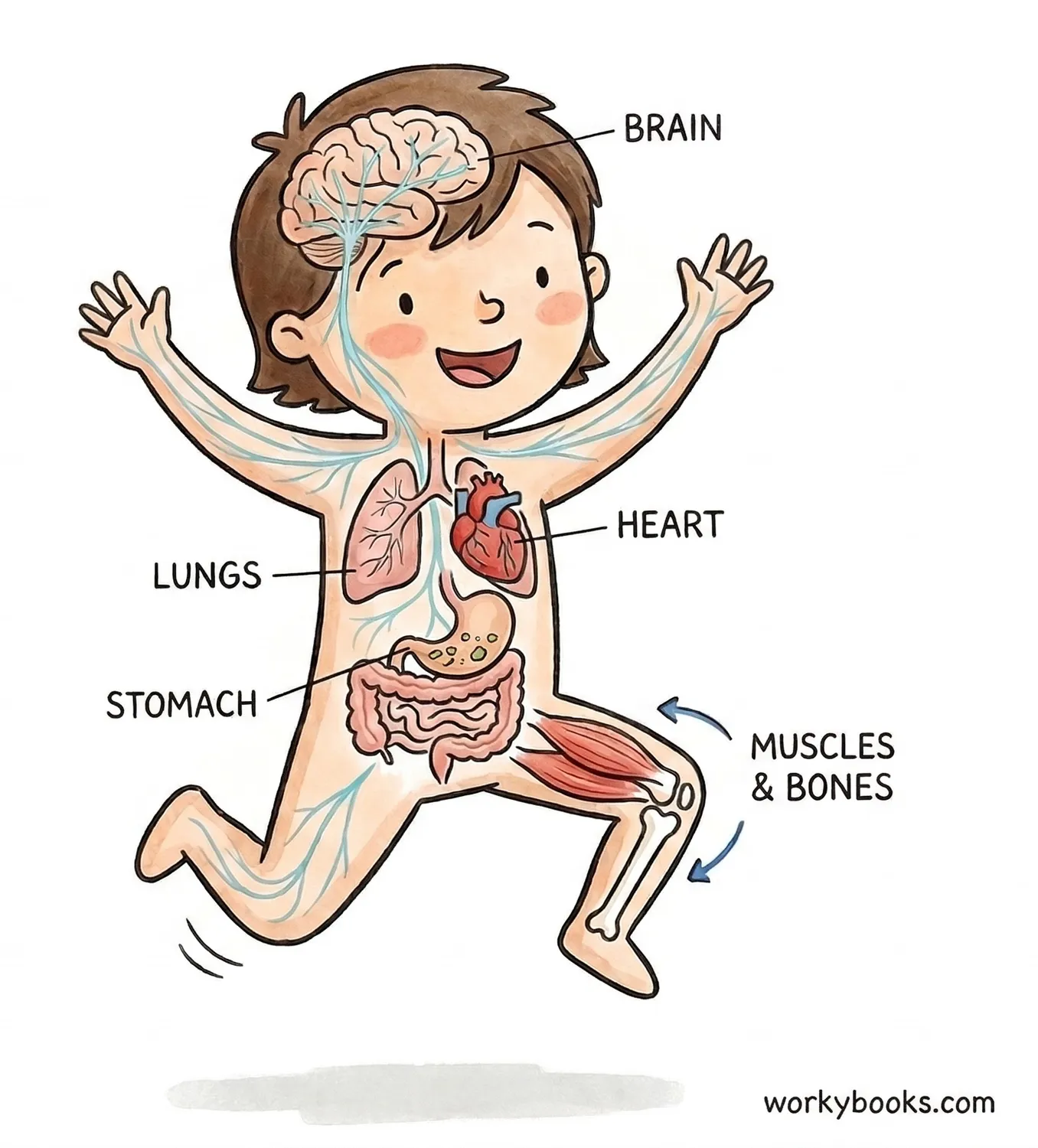
Your body systems work together as a team to keep you healthy.
Your body is made up of different systems, which are groups of organs that work together to do specific jobs. Each system has an important role, but no system works alone. All your body systems are connected and depend on each other to keep you alive and healthy.
The respiratory system brings oxygen into your body when you breathe. Your lungs take in oxygen from the air. The circulatory system, which includes your heart and blood vessels, carries that oxygen to every cell in your body. At the same time, the circulatory system picks up nutrients from food that your digestive system has broken down. Your digestive system includes your stomach and intestines, which turn food into tiny particles your body can use.
Your skeletal system (bones) and muscular system (muscles) work together to help you move. Muscles pull on bones to create movement. But muscles need oxygen and nutrients from the circulatory system to work properly. The nervous system, which includes your brain and nerves, controls all the other systems. It tells your heart to beat, your lungs to breathe, and your muscles to move.
If one system has a problem, other systems are affected too. For example, if your respiratory system cannot get enough oxygen, your muscles will feel weak because they need oxygen to work. This shows that your body works because all its systems work together like a team.
Interesting Fact: Your heart beats about 100,000 times every day, pumping blood to deliver oxygen and nutrients to all your body systems without you even thinking about it!
What does the respiratory system do?
Brings oxygen into the bodyBreaks down food into nutrientsMoves blood around the bodyControls all other body systems
Which system includes the heart?
Respiratory systemCirculatory systemDigestive systemNervous system
What do muscles need to work?
Only bonesOnly nervesOxygen and nutrientsOnly the brain
Why do muscles feel weak without oxygen?
Bones stop moving completelyMuscles need oxygen to work properlyThe brain stops sending signalsFood cannot be digested
How do skeletal and muscular systems work?
Muscles pull on bones to moveBones pull on muscles to moveThey work completely separatelyOnly bones create all movement
What happens if one system has problems?
Only that system is affectedOther systems are affected tooNothing happens to the bodyThe body works better
All body systems work completely alone.
TrueFalse
What are systems in the body?
Single organs working aloneGroups of organs working togetherOnly bones and musclesParts that never connect
Perfect For:
๐ฉโ๐ซ Teachers
โข Reading comprehension practice
โข Auto-graded assessments
โข Literacy skill development
๐จโ๐ฉโ๐งโ๐ฆ Parents
โข Reading practice at home
โข Comprehension improvement
โข Educational reading time
๐ Homeschoolers
โข Reading curriculum support
โข Independent reading practice
โข Progress monitoring
Reading Features:
๐
Reading Passage
Engaging fiction or nonfiction text
โ
Comprehension Quiz
Auto-graded questions
๐
Instant Feedback
Immediate results and scoring
๐
Printable Version
Download for offline reading
๐
Read Aloud
Voice-over with word highlighting
Reviews & Ratings
No reviews yet. Be the first to share your experience!
Related Content
How Animals See Differently
This engaging 250-word reading passage introduces fourth-grade students to the fascinating world of animal vision and ey...
NGSS 4-LS1-1LS1.D
Animal Internal Structure
This engaging science passage for Grade 4-5 students explores animal internal structure and how organs work together to ...
NGSS 4-LS1-1
What Are Bones Made Of
This engaging 250-word reading passage introduces Grade 4 students to the structure and function of bones, aligned with ...
NGSS 4-LS1-1LS1.A
How Bones Protect Organs
This engaging 250-word reading passage helps Grade 4 students understand how bones protect organs, aligned with NGSS sta...
NGSS 4-LS1-1LS1.A
How Joints Connect Bones
This 250-word reading passage teaches fourth-grade students about joints and their role in the human skeletal system. Al...
NGSS 4-LS1-1LS1.A
How Muscles Move Bones
This comprehensive 250-word reading passage introduces fourth-grade students to the fundamental concept of how muscles a...
NGSS 4-LS1-1
Two Types of Muscles
This 250-word reading passage introduces fourth-grade students to the two main types of muscles in the human body: volun...
NGSS 4-LS1-1
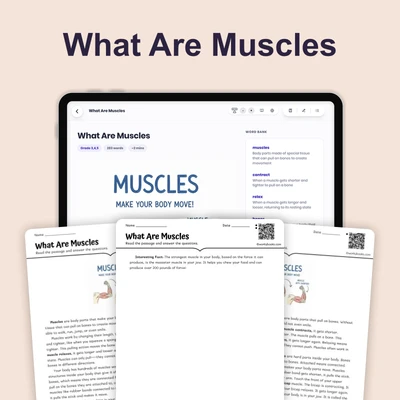
What Are Muscles
This engaging 250-word reading passage introduces fourth-grade students to the essential concept of muscles and how they...
NGSS 4-LS1-1
How Skin Protects Body
This audio-integrated reading passage introduces fourth-grade students to the protective functions of skin, aligned with...
NGSS 4-LS1-1
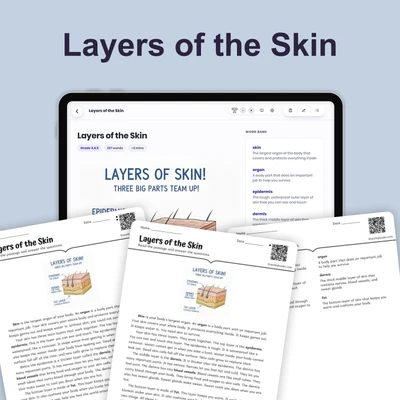
Layers of the Skin
This engaging 250-word reading passage introduces fourth-grade students to the three layers of skin and their functions....
NGSS 4-LS1-1LS1.A
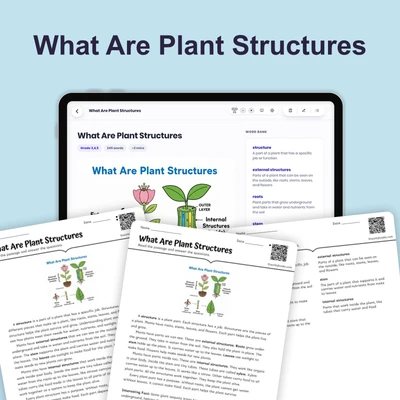
What Are Plant Structures
This engaging 250-word reading passage introduces fourth-grade students to the fundamental concept of plant structures a...
NGSS 4-LS1-1
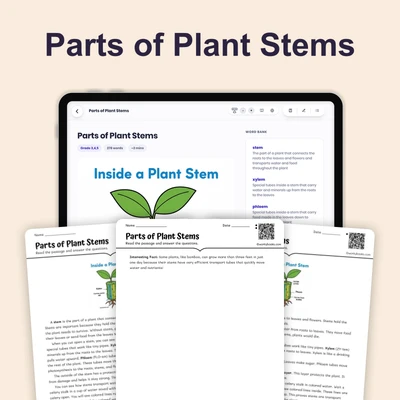
Parts of Plant Stems
This engaging 250-word reading passage introduces fourth-grade students to the internal structure and function of plant ...
NGSS 4-LS1-1LS1.A
How Water Moves Inside Plants
This 250-word reading passage introduces fourth-grade students to the concept of water transport in plants, aligned with...
NGSS 4-LS1-1
Parts of a Flower
This comprehensive 250-word reading passage introduces fourth-grade students to the essential parts of a flower and thei...
NGSS 4-LS1-1LS1.A
How Fish Gills Work
This engaging 250-word reading passage introduces fourth-grade students to the concept of fish gills and how they functi...
NGSS 4-LS1-1
How Leaves Make Food
This engaging Grade 4 science reading passage explains how leaves make food through photosynthesis. Students discover th...
NGSS 4-LS1-1LS1.A
How Animal Hearts Work
This 250-word audio-integrated reading passage introduces fourth-grade students to the essential function of the heart a...
NGSS 4-LS1-1LS1.A
Animal Skeleton Structure
This 250-word reading passage introduces fourth grade students to animal skeleton structure, aligned with NGSS 4-LS1-1 a...
NGSS 4-LS1-1LS1.A
How Animal Lungs Work
This 250-word reading passage introduces fourth-grade students to how animal lungs work, aligned with NGSS standard 4-LS...
NGSS 4-LS1-1LS1.A
What Is Inside a Seed
This engaging 250-word reading passage helps Grade 4 students understand the internal structure of seeds, aligned with N...