This 400-500 word informational science reading passage for grades 6-8 examines how climate change threatens species survival. Students learn about the three options species face when confronted with changing climates: move to new locations, adapt to new conditions, or face extinction. The passage explores migration patterns, phenological mismatches, and the specific vulnerabilities of rare or isolated species. Aligned to NGSS standards MS-LS4-4 (natural selection and adaptation) and MS-ESS3-5 (human impacts on Earth systems), this resource includes audio integration, Spanish translations, differentiated versions for English Language Learners, vocabulary glossaries, comprehension questions, writing activities, and graphic organizers. Students examine real-world examples like polar bears and coral reefs while developing critical thinking skills about biodiversity conservation and environmental change. Perfect for middle school science curriculum focusing on ecosystems, evolution, and human environmental impact.
Written by Workybooks TeamPublished by Workybooks
Preview
Sample passage and quiz content
CONTENT PREVIEW
Expand content preview
Climate change poses a serious threat to species around the world. Every species has adapted to survive within a specific range of temperatures, rainfall patterns, and seasonal cycles. Evidence shows that Earth's climate is changing faster than many species can handle. Rising global temperatures force species to make difficult choices: move to new locations, adapt to changing conditions, or face extinction.
Scientists observe that many species are already on the move. Animals and plants shift toward the poles or climb higher up mountains to find cooler temperatures similar to their original homes. Migration patterns have changed as species search for suitable habitats. However, movement creates challenges. Some species cannot travel fast enough or far enough to escape warming conditions. Others reach barriers like oceans, cities, or mountain peaks with nowhere left to go.
Adaptation through natural selection can help some species survive in changing environments. Yet climate change happens much faster than the slow process of evolution. Most species need thousands of years to develop significant new traits. Climate change unfolds over decades, not millennia. This mismatch in timing puts enormous pressure on wildlife populations.
Another major problem involves phenology, which refers to the timing of seasonal events in nature. Warmer temperatures cause many plants to bloom earlier and insects to emerge sooner. Animals that depend on these food sources may still follow old seasonal patterns. When a bird arrives from migration after insects have already emerged, it cannot find enough food for its young. These timing mismatches disrupt entire ecosystems.
Certain species face higher risks than others. Endangered species with small populations have less genetic diversity to draw upon for adaptation. Species living in isolated areas, like mountaintops or islands, have nowhere to move. Polar bears provide a clear example. They depend on sea ice for hunting seals. As Arctic ice melts earlier each year, polar bears have less time to hunt and build up fat reserves. Scientists have documented declining body conditions and lower survival rates in some polar bear populations.
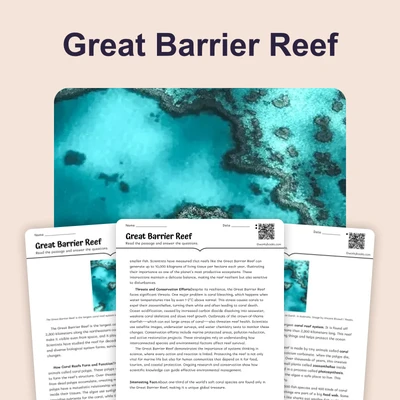
Coral reefs demonstrate another climate threat. Rising ocean temperatures cause coral bleaching, where corals expel the algae they need to survive. Repeated bleaching events can kill entire reef systems. The Great Barrier Reef has experienced several massive bleaching events in recent years, threatening thousands of species that depend on coral habitats.
Understanding these threats matters because biodiversity supports healthy ecosystems that humans rely upon. When species disappear, ecosystems become less stable and less able to provide clean air, water, and food. Protecting species from climate change requires reducing greenhouse gas emissions and preserving connected habitats that allow species to move and adapt.
Interesting Fact: Some species are adapting in surprising ways. City-dwelling birds in Europe now lay eggs up to two weeks earlier than their forest relatives, showing rapid behavioral changes in response to warmer urban temperatures.
What are the three options species have when facing climate change?
Move, adapt, or dieHibernate, migrate, or huntGrow, shrink, or hideEat more, sleep less, or travel
Why do many species move toward the poles or higher up mountains?
To find more food sourcesTo escape predatorsTo find cooler temperaturesTo find better shelter
What does phenology refer to?
The study of animal behaviorThe timing of seasonal events in natureThe process of evolutionThe movement of species
What does the term 'habitat' mean in the passage?
The food an animal eatsThe natural environment where a species livesThe temperature range of an areaThe migration pattern of birds
Why can't most species adapt quickly enough to climate change?
They don't want to changeEvolution takes thousands of years, but climate change happens in decadesThey cannot find enough foodThey are too large to adapt
What problem do polar bears face due to climate change?
They cannot swim in warm waterSea ice melts earlier, giving them less time to hunt sealsThey are moving to the South PoleThey cannot find mates
What happens during coral bleaching?
Corals grow larger and strongerCorals change colors naturallyCorals expel the algae they need and turn whiteCorals move to deeper water
Which species face the highest risk from climate change according to the passage?
Large predators with many offspringSpecies with small populations, in isolated areas, or that cannot moveSpecies that live in citiesSpecies that eat only plants
Climate change happens faster than most species can naturally evolve.
TrueFalse
All species can easily move to new locations when their habitat becomes too warm.
TrueFalse
Who it's for
Perfect for the way you teach
Teachers
Build comprehension skills
Auto-graded quiz
Differentiated reading
Parents
Read together at home
Improve fluency
Quiet reading time
Homeschoolers
Reading curriculum support
Independent practice
Track Lexile growth
Topics
climate changespecies extinctionhabitat lossadaptationmigrationphenologyendangered speciesNGSS MS-LS4-4MS-ESS3-5middle school science
Reviews & Ratings
No reviews yet. Be the first to share your experience!
More reading you might love
20 more
Natural Disaster: Hurricanes
Hurricanes are massive storms with strong winds and rain. Tracking and preparing for them helps protect people in their ...
RI.3.1RI.4.4RI.4.2RI.5.2
Animal Migration and Climate Change
This engaging 400-500 word reading passage explores how climate change affects animal migration patterns across multiple...
MS-LS2-4MS-ESS3-5MS-LS4-4; RST.6-8.1RST.6-8.4
What Is Global Warming?
This NGSS-aligned reading passage explains global warming, the greenhouse effect, and how human activities like burning ...
MS-ESS3-5
What Causes Global Warming?
This NGSS-aligned reading passage explains what causes global warming, focusing on how human activities like burning fos...
MS-ESS3-5
How to Stop Global Warming
This NGSS-aligned reading passage helps students understand how to stop global warming by reducing greenhouse gases. It ...
MS-ESS3-5
Human Impacts: Climate Change
This standards-aligned science reading passage for grades 6-8 explains the mechanisms and effects of human-driven climat...
MS-LS2-4MS-ESS3-5
Climate Change: Vulnerable Ecosystems
This middle school science passage, aligned with NGSS standards MS-ESS3-5 and MS-LS2-4, helps students understand how cl...
MS-ESS3-5MS-LS2-4
Climate Change: Solutions and Mitigation
This passage explores scientific solutions and mitigation strategies for climate change, designed for middle school scie...
MS-ESS3-4MS-ESS3-5
Scientific Inquiry in Earth Science
This passage explores scientific inquiry in Earth science for grades 6-8, aligned with NGSS standards MS-ESS1-4, MS-ESS2...
MS-ESS1-4MS-ESS2-1MS-ESS3-5SEP
Great Barrier Reef
This passage introduces middle school students to the Great Barrier Reef, the world's largest coral reef system, located...
MS-LS2-1MS-LS2-4MS-ESS3-5
Siberian Taiga
This engaging middle school science passage explores the Siberian Taiga, the world’s largest forest ecosystem, stretchin...
MS-LS2-1MS-ESS3-5
The Greenhouse Effect
This comprehensive middle school science passage explores the greenhouse effect, a process essential to maintaining Eart...
MS-ESS2-6MS-ESS3-5
Melting Glaciers and Ice Sheets
This comprehensive middle school science reading passage examines the critical issue of melting glaciers and ice sheets,...
MS-ESS3-5
Sea Level Rise and Climate Change
This 400-500 word informational science passage for grades 6-8 explores sea level rise and climate change, aligned with ...
MS-ESS3-5
Ice Cores
This passage, aligned with NGSS standards MS-ESS3-5 and MS-ESS1-4, explores the scientific process of extracting and ana...
MS-ESS3-5MS-ESS1-4
How Climate Change Affects Weather
This middle school science passage explores how and why weather patterns are changing globally. Students will learn abou...
MS-ESS3-5
How Climate Change Affects Oceans
This NGSS-aligned passage explores major changes occurring in Earth’s oceans, focusing on the mechanisms and impacts of ...
MS-ESS3-5
Carbon Footprint
This NGSS-aligned passage for grades 6-8 explores the concept of a carbon footprint, focusing on how personal activities...
MS-ESS3-4MS-ESS3-5
El Niño
This middle school science passage provides an in-depth exploration of El Niño, the warm phase of the El Niño-Southern O...
MS-ESS2-6MS-ESS3-5
ENSO and Global Climate
This comprehensive passage explores the El Niño-Southern Oscillation (ENSO), a crucial driver of global climate variabil...