How Solar Storms Affect Your Phone
Interactive passage with audio narration, comprehension questions, and printable PDF.
By completing this purchase you agree to our Terms of Use and Privacy Policy. Your subscription renews automatically until you cancel. You can cancel anytime from your account settings. All sales are final and non-refundable. Digital content is available for download in your account immediately upon purchase.
What's included
How Solar Storms Affect Your Phone preview and details
About this printable How Solar Storms Affect Your Phone science reading passage, NGSS-aligned (Grades 5-8)
Sample passage and quiz from How Solar Storms Affect Your Phone
Reading passage and comprehension quiz preview
How Solar Storms Affect Your Phone
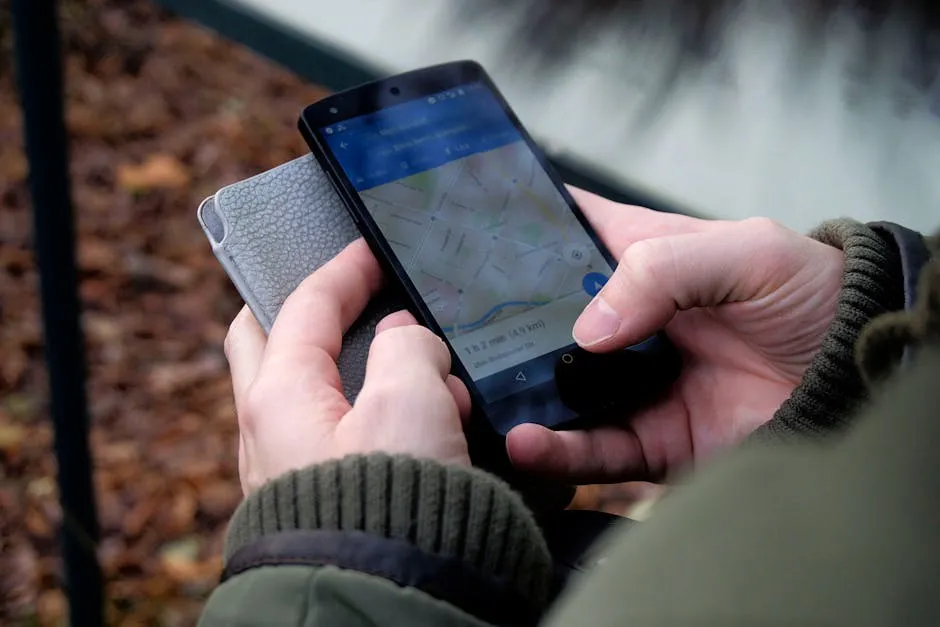
Evidence shows that solar storms can interfere with satellites orbiting Earth. GPS satellites may send inaccurate signals, causing navigation systems to malfunction. Image by Ingo Joseph / Pexels.
Have you ever noticed your GPS suddenly showing the wrong location? Perhaps a flight was rerouted unexpectedly, or you saw news about the northern lights appearing in unusual places. These events may seem unrelated, but they share a common cause: solar storms. The Sun occasionally releases powerful bursts of charged particles into space. When these particles reach Earth, they can disrupt the technology we rely on every day.
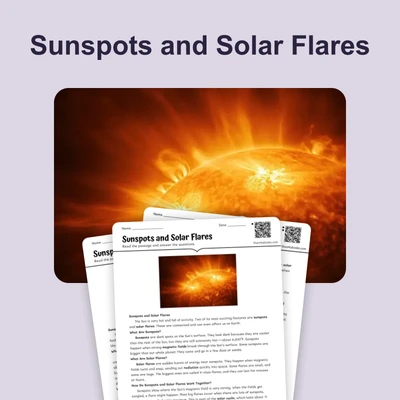
Solar storms begin with activity on the Sun's surface. Scientists observe that the Sun releases massive clouds of charged particles called coronal mass ejections. These ejections travel through space at speeds up to several million miles per hour. When they reach Earth, usually within one to three days, they interact with our planet's magnetic field. This interaction can compress and distort the magnetic field, creating what scientists call space weather. The magnetosphere, which normally protects Earth from harmful radiation, becomes disturbed during these events.
The effects of solar storms reach far beyond pretty light displays in the sky. Evidence shows that these storms can interfere with satellites orbiting Earth. GPS satellites may send inaccurate signals, causing navigation systems to malfunction. Radio communications can fade or become filled with static. Power grids on Earth's surface may experience surges that can damage transformers. In March 1989, a powerful solar storm caused a blackout in Quebec, Canada, leaving six million people without electricity for nine hours. Airlines sometimes reroute flights over polar regions to avoid communication problems and increased radiation exposure during major solar storms.
Understanding solar storms matters because our society depends heavily on technology vulnerable to space weather. Scientists monitor the Sun constantly using spacecraft and ground-based instruments. When they detect a coronal mass ejection heading toward Earth, they can issue warnings. These warnings give satellite operators time to protect their equipment and power companies time to prepare their systems. As we use more satellites for communication, navigation, and weather forecasting, predicting space weather becomes increasingly important for protecting the technology in our pockets and homes.
Interesting Fact: The largest recorded solar storm, called the Carrington Event, occurred in 1859. Telegraph systems worldwide sparked and caught fire, and auroras were visible as far south as the Caribbean.
Comprehension quiz (10 questions)
1. What are coronal mass ejections?
2. How long does it typically take for charged particles from the Sun to reach Earth?
3. What happened in Quebec, Canada in March 1989?
4. In the passage, what does the word 'magnetosphere' refer to?
5. What does 'space weather' mean in this passage?
6. Based on the passage, why do airlines sometimes reroute flights during solar storms?
7. Which statement best explains why scientists monitor the Sun constantly?
8. How can solar storms affect GPS satellites?
9. True or False: The Carrington Event in 1859 was the largest recorded solar storm.
10. True or False: Solar storms only create northern lights and have no other effects on Earth.
Perfect for the way you teach
- Build comprehension skills
- Auto-graded quiz
- Differentiated reading
- Read together at home
- Improve fluency
- Quiet reading time
- Reading curriculum support
- Independent practice
- Track Lexile growth