How the Body Removes Waste — Reading Comprehension
Rate this
Premium Resource
Present
Present in classroom. No work saved
Assign
Classroom with student accounts, Track progress
Quick Play
No student accounts, assign with a link
Grades
3
4
5
Standards
NGSS 4-LS1-1
PRINT+DIGITAL RESOURCE
This learning resource is available in interactive and printable formats. The interactive worksheet can be played online and assigned to students. The Printable PDF version can be downloaded and printed for completion by hand.
This engaging 250-word reading passage introduces fourth-grade students to the important process of waste removal in the human body, aligned with NGSS standard 4-LS1-1. Students discover that not all food can be used by the body and learn how leftover waste travels through the digestive system before leaving the body. The passage explains three main ways the body removes waste: through solid waste from digestion, sweat from the skin, and urine from the kidneys. Written in age-appropriate language, the content helps students understand why waste removal is just as critical as consuming food and water. The passage emphasizes that if waste built up inside the body, it would cause illness. Audio-integrated features support diverse learners, while bolded vocabulary terms like nutrients, waste, digestive system, and kidneys are clearly defined in context. Supplementary activities include comprehension questions, writing prompts, and graphic organizers that reinforce understanding of body systems and waste removal processes. This foundational science content prepares students for hands-on investigations and deeper exploration of how living organisms maintain health through essential life processes.
CONTENT PREVIEW
Expand content preview
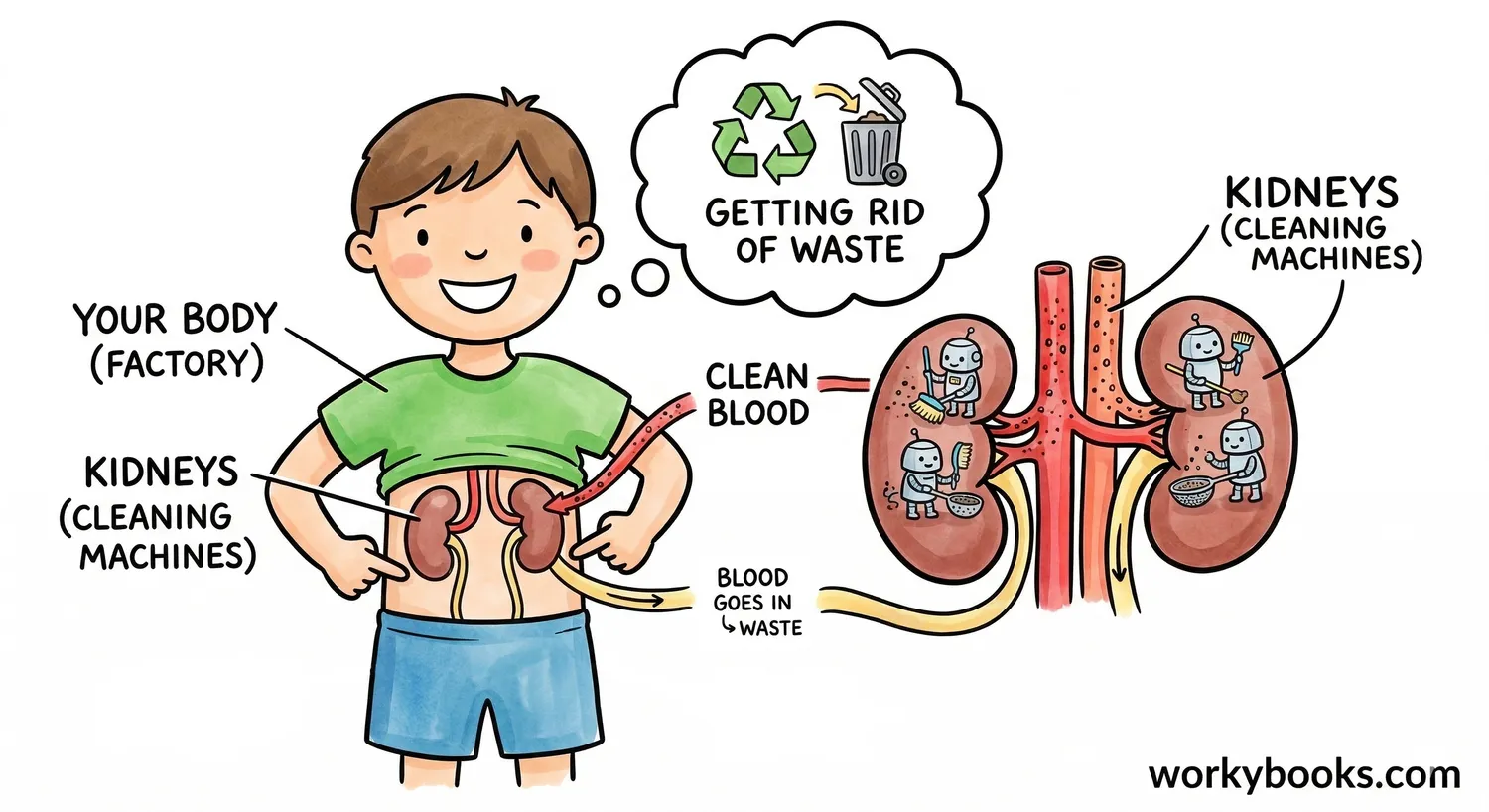
Kidneys work like tiny machines to filter waste from your blood.
Your body is like a busy factory that uses food and water to keep you healthy and strong. When you eat, your body breaks down food to get nutrients—the useful parts that give you energy and help you grow. Nutrients are like fuel for your body. However, not everything you eat can be used.
After your body absorbs the nutrients it needs, leftover materials become waste. Waste is anything your body cannot use. This waste must leave your body to keep you healthy. The leftover waste from food continues moving through your digestive system—the group of organs that breaks down food. Eventually, this solid waste leaves your body when you go to the bathroom.
Your body removes waste in other ways too. When you sweat, your skin releases water and waste. Your kidneys are organs that filter your blood and remove waste. Kidneys are like tiny cleaning machines inside your body. This waste mixes with water to make urine, which leaves your body when you use the bathroom.
Removing waste is very important. If waste built up inside your body, you would get sick. Your body works hard every day to get rid of waste, just like taking out the trash at home. Waste removal is just as important as eating food and drinking water.
Interesting Fact: Your kidneys filter about 200 quarts of blood every single day! That's enough to fill a bathtub more than twice.
What are nutrients?
Useful parts that give energyWaste materials from foodWater in your bodyOrgans that clean blood
Where does solid waste leave the body?
Through the skinIn the bathroomThrough the lungsFrom the mouth
What do kidneys do?
Break down foodMake you sweatFilter blood and remove wasteStore nutrients
Why must waste leave your body?
To make room for foodIf it stays, you get sickTo help you growTo create energy
How does waste leave through skin?
Through breathingThrough eatingThrough sweatThrough urine
What happens after nutrients are absorbed?
All food becomes energyLeftover materials become wasteThe body stores everythingFood turns into water
Waste removal is as important as eating.
TrueFalse
What is the digestive system?
Organs that make sweatOrgans that break down foodBlood vessels in bodyBones and muscles
Perfect For:
👩🏫 Teachers
• Reading comprehension practice
• Auto-graded assessments
• Literacy skill development
👨👩👧👦 Parents
• Reading practice at home
• Comprehension improvement
• Educational reading time
🏠 Homeschoolers
• Reading curriculum support
• Independent reading practice
• Progress monitoring
Reading Features:
📖
Reading Passage
Engaging fiction or nonfiction text
❓
Comprehension Quiz
Auto-graded questions
📊
Instant Feedback
Immediate results and scoring
📄
Printable Version
Download for offline reading
🔊
Read Aloud
Voice-over with word highlighting
Reviews & Ratings
No reviews yet. Be the first to share your experience!
Related Content
How Animals See Differently
This engaging 250-word reading passage introduces fourth-grade students to the fascinating world of animal vision and ey...
NGSS 4-LS1-1LS1.D
Animal Internal Structure
This engaging science passage for Grade 4-5 students explores animal internal structure and how organs work together to ...
NGSS 4-LS1-1
What Are Bones Made Of
This engaging 250-word reading passage introduces Grade 4 students to the structure and function of bones, aligned with ...
NGSS 4-LS1-1LS1.A
How Bones Protect Organs
This engaging 250-word reading passage helps Grade 4 students understand how bones protect organs, aligned with NGSS sta...
NGSS 4-LS1-1LS1.A
How Joints Connect Bones
This 250-word reading passage teaches fourth-grade students about joints and their role in the human skeletal system. Al...
NGSS 4-LS1-1LS1.A
How Muscles Move Bones
This comprehensive 250-word reading passage introduces fourth-grade students to the fundamental concept of how muscles a...
NGSS 4-LS1-1
Two Types of Muscles
This 250-word reading passage introduces fourth-grade students to the two main types of muscles in the human body: volun...
NGSS 4-LS1-1
What Are Muscles
This engaging 250-word reading passage introduces fourth-grade students to the essential concept of muscles and how they...
NGSS 4-LS1-1
How Skin Protects Body
This audio-integrated reading passage introduces fourth-grade students to the protective functions of skin, aligned with...
NGSS 4-LS1-1
Layers of the Skin
This engaging 250-word reading passage introduces fourth-grade students to the three layers of skin and their functions....
NGSS 4-LS1-1LS1.A
What Are Plant Structures
This engaging 250-word reading passage introduces fourth-grade students to the fundamental concept of plant structures a...
NGSS 4-LS1-1
Parts of Plant Stems
This engaging 250-word reading passage introduces fourth-grade students to the internal structure and function of plant ...
NGSS 4-LS1-1LS1.A
How Water Moves Inside Plants
This 250-word reading passage introduces fourth-grade students to the concept of water transport in plants, aligned with...
NGSS 4-LS1-1
Parts of a Flower
This comprehensive 250-word reading passage introduces fourth-grade students to the essential parts of a flower and thei...
NGSS 4-LS1-1LS1.A
How Fish Gills Work
This engaging 250-word reading passage introduces fourth-grade students to the concept of fish gills and how they functi...
NGSS 4-LS1-1
How Leaves Make Food
This engaging Grade 4 science reading passage explains how leaves make food through photosynthesis. Students discover th...
NGSS 4-LS1-1LS1.A
How Animal Hearts Work
This 250-word audio-integrated reading passage introduces fourth-grade students to the essential function of the heart a...
NGSS 4-LS1-1LS1.A
Animal Skeleton Structure
This 250-word reading passage introduces fourth grade students to animal skeleton structure, aligned with NGSS 4-LS1-1 a...
NGSS 4-LS1-1LS1.A
How Animal Lungs Work
This 250-word reading passage introduces fourth-grade students to how animal lungs work, aligned with NGSS standard 4-LS...
NGSS 4-LS1-1LS1.A
What Is Inside a Seed
This engaging 250-word reading passage helps Grade 4 students understand the internal structure of seeds, aligned with N...