This learning resource is available in interactive and printable formats. The interactive worksheet can be played online and assigned to students. The Printable PDF version can be downloaded and printed for completion by hand.
This 250-word reading passage introduces fourth-grade students to the breathing process, aligned with NGSS 4-LS1-1 standards. Students explore how the chest expands and contracts during breathing, the role of lungs in exchanging gases, and why oxygen is essential for the body while carbon dioxide must be removed. The passage uses simple, age-appropriate language and real-world examples to help students understand this vital life process. Audio-integrated features support diverse learners, including English language learners and students with reading difficulties. The lesson includes a simplified differentiated version for struggling readers, Spanish translations of both passages, a comprehensive glossary of key terms, multiple-choice questions testing recall and comprehension, writing activities that encourage application of concepts, and graphic organizers that help students visualize the breathing process. This resource builds foundational understanding of respiratory system functions, preparing students for hands-on investigations and classroom discussions about how body systems work together to maintain life.
CONTENT PREVIEW
Expand content preview
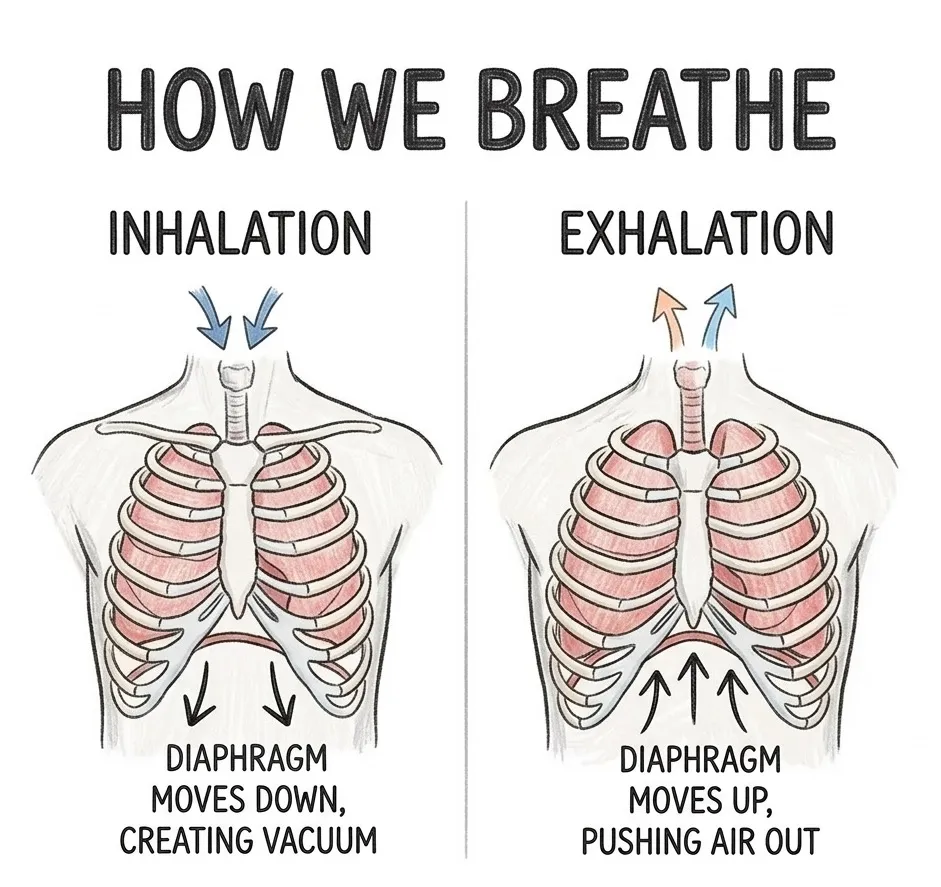
Breathing is the process of moving air in and out of your body. Your body needs to breathe every moment of every day to stay alive. When you breathe in, you bring oxygen into your body, and when you breathe out, you remove carbon dioxide that your body does not need.
Your lungs are two spongy organs inside your chest that do the important work of breathing. When you breathe in, muscles in your chest pull your ribs up and out. This makes your chest get bigger, and air rushes into your lungs through your nose or mouth. Inside your lungs, oxygen—a gas your body needs to work properly—moves into your blood. Think of oxygen like fuel for a car; your body needs it to create energy for running, thinking, and growing.
When you breathe out, your chest muscles relax and your chest gets smaller. This pushes air out of your lungs. The air you breathe out contains carbon dioxide, a waste gas that your body makes when it uses oxygen. Your body must get rid of carbon dioxide because too much of it can be harmful.
Breathing happens automatically, which means you do not have to think about it. You breathe when you are awake, when you are asleep, and even when you are not paying attention. An adult breathes about 12 to 20 times every minute!
Interesting Fact: You take about 20,000 breaths every single day! That means your lungs are working hard all the time, even while you sleep.
What do your lungs do?
Help you see betterHelp you breatheHelp you digest foodHelp you hear sounds
What gas does your body need?
Carbon dioxideNitrogenOxygenHelium
How many times does an adult breathe?
5 to 10 times per minute12 to 20 times per minute30 to 40 times per minute50 to 60 times per minute
Why does your chest get bigger?
To let air rush inTo push air outTo make you tallerTo hold more food
What happens when you breathe out?
Oxygen enters your bloodYour chest gets biggerCarbon dioxide leaves your bodyYour lungs fill with air
Why is oxygen like fuel?
It makes you sleepyIt gives your body energyIt makes you grow tallerIt helps you digest food
You breathe even when you sleep.
TrueFalse
What does automatically mean in the passage?
Happening very slowlyHappening without thinking about itHappening only at nightHappening when you exercise
Perfect For:
👩🏫 Teachers
• Reading comprehension practice
• Auto-graded assessments
• Literacy skill development
👨👩👧👦 Parents
• Reading practice at home
• Comprehension improvement
• Educational reading time
🏠 Homeschoolers
• Reading curriculum support
• Independent reading practice
• Progress monitoring
Reading Features:
📖
Reading Passage
Engaging fiction or nonfiction text
❓
Comprehension Quiz
Auto-graded questions
📊
Instant Feedback
Immediate results and scoring
📄
Printable Version
Download for offline reading
🔊
Read Aloud
Voice-over with word highlighting
Reviews & Ratings
No reviews yet. Be the first to share your experience!
Related Content
How Animals See Differently
This engaging 250-word reading passage introduces fourth-grade students to the fascinating world of animal vision and ey...
NGSS 4-LS1-1LS1.D
Animal Internal Structure
This engaging science passage for Grade 4-5 students explores animal internal structure and how organs work together to ...
NGSS 4-LS1-1
What Are Bones Made Of
This engaging 250-word reading passage introduces Grade 4 students to the structure and function of bones, aligned with ...
NGSS 4-LS1-1LS1.A
How Bones Protect Organs
This engaging 250-word reading passage helps Grade 4 students understand how bones protect organs, aligned with NGSS sta...
NGSS 4-LS1-1LS1.A
How Joints Connect Bones
This 250-word reading passage teaches fourth-grade students about joints and their role in the human skeletal system. Al...
NGSS 4-LS1-1LS1.A
How Muscles Move Bones
This comprehensive 250-word reading passage introduces fourth-grade students to the fundamental concept of how muscles a...
NGSS 4-LS1-1
Two Types of Muscles
This 250-word reading passage introduces fourth-grade students to the two main types of muscles in the human body: volun...
NGSS 4-LS1-1
What Are Muscles
This engaging 250-word reading passage introduces fourth-grade students to the essential concept of muscles and how they...
NGSS 4-LS1-1
How Skin Protects Body
This audio-integrated reading passage introduces fourth-grade students to the protective functions of skin, aligned with...
NGSS 4-LS1-1
Layers of the Skin
This engaging 250-word reading passage introduces fourth-grade students to the three layers of skin and their functions....
NGSS 4-LS1-1LS1.A
What Are Plant Structures
This engaging 250-word reading passage introduces fourth-grade students to the fundamental concept of plant structures a...
NGSS 4-LS1-1
Parts of Plant Stems
This engaging 250-word reading passage introduces fourth-grade students to the internal structure and function of plant ...
NGSS 4-LS1-1LS1.A
How Water Moves Inside Plants
This 250-word reading passage introduces fourth-grade students to the concept of water transport in plants, aligned with...
NGSS 4-LS1-1
Parts of a Flower
This comprehensive 250-word reading passage introduces fourth-grade students to the essential parts of a flower and thei...
NGSS 4-LS1-1LS1.A
How Fish Gills Work
This engaging 250-word reading passage introduces fourth-grade students to the concept of fish gills and how they functi...
NGSS 4-LS1-1
How Leaves Make Food
This engaging Grade 4 science reading passage explains how leaves make food through photosynthesis. Students discover th...
NGSS 4-LS1-1LS1.A
How Animal Hearts Work
This 250-word audio-integrated reading passage introduces fourth-grade students to the essential function of the heart a...
NGSS 4-LS1-1LS1.A
Animal Skeleton Structure
This 250-word reading passage introduces fourth grade students to animal skeleton structure, aligned with NGSS 4-LS1-1 a...
NGSS 4-LS1-1LS1.A
How Animal Lungs Work
This 250-word reading passage introduces fourth-grade students to how animal lungs work, aligned with NGSS standard 4-LS...
NGSS 4-LS1-1LS1.A
What Is Inside a Seed
This engaging 250-word reading passage helps Grade 4 students understand the internal structure of seeds, aligned with N...