Iroquois Great Law of Peace
Interactive passage with audio narration, comprehension questions, and printable PDF.
By completing this purchase you agree to our Terms of Use and Privacy Policy. Your subscription renews automatically until you cancel. You can cancel anytime from your account settings. All sales are final and non-refundable. Digital content is available for download in your account immediately upon purchase.
What's included
Iroquois Great Law of Peace preview and details
About this printable Iroquois Great Law of Peace reading passage (Grades 6-8)
Sample passage and quiz from Iroquois Great Law of Peace
Reading passage and comprehension quiz preview
Iroquois Great Law of Peace
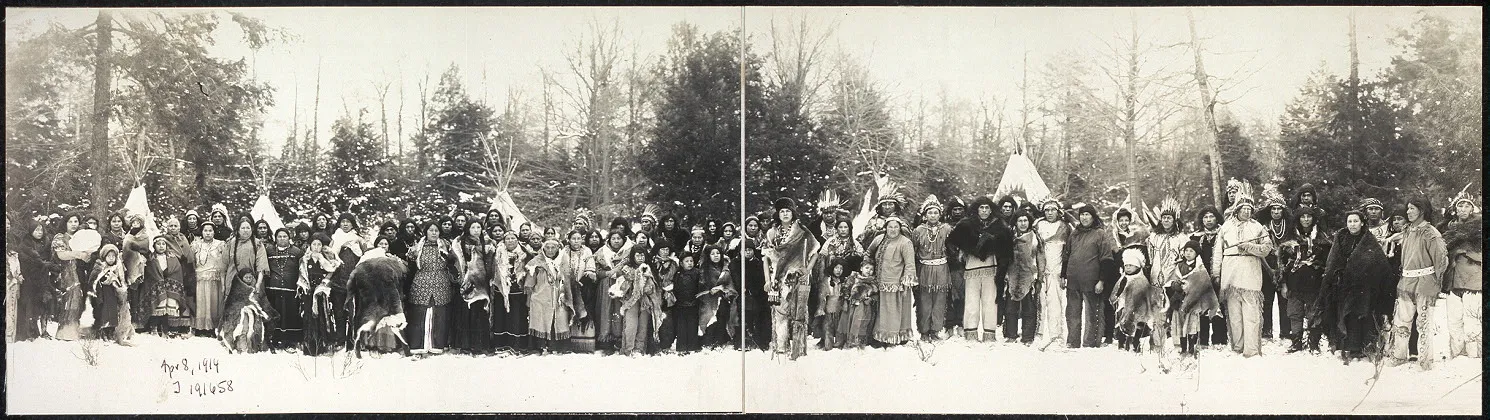
"1914 Panoramic View of Iroquois" by Uploaded to EN wiki by Chris 73 /
Source: Wikimedia Commons (Public domain).
The Iroquois Great Law of Peace was the foundation of the Haudenosaunee Confederacy, a powerful alliance of six Native American nations in northeastern North America. These nations—Mohawk, Oneida, Onondaga, Cayuga, Seneca, and later Tuscarora—formed a confederacy that promoted peace, unity, and collective strength. The Great Law of Peace was an oral constitution, a set of traditional rules and principles passed down through generations by spoken word and wampum belts.
Before the Great Law, the Iroquois nations struggled with frequent conflicts and cycles of revenge. These disputes weakened the nations and made them vulnerable to outside threats. To solve these problems, leaders known as sachems gathered and listened to the message of peace brought by two legendary figures—Deganawida, known as the Peacemaker, and his spokesperson Hiawatha. Together, they convinced the nations to unite under one system of governance.
The new system included a Grand Council, where representatives from each nation met to discuss important matters. This council was built on the ideas of equality, consensus, and respect for all voices. Decisions were reached through discussion and required agreement from all nations, which is called consensus. The Great Law also outlined rules for resolving disputes without violence, promoting justice and harmony instead of revenge. This system created a stable society based on cooperation rather than conflict.
One remarkable aspect of the Great Law was its commitment to balancing power among the nations. Each nation retained its own leaders and traditions but agreed to follow shared rules when acting together. This balance was symbolized by the Tree of Peace, an important image representing unity and security for all the people. The use of wampum belts—beaded records—helped preserve the constitution and marked important agreements.
The Haudenosaunee Confederacy lasted for centuries and became one of the most influential political systems in North America. The Great Law of Peace influenced the development of the United States Constitution. Early American leaders, such as Benjamin Franklin, studied the Iroquois model as they planned a union of the original thirteen colonies. Although there were differences, such as the role of women and the oral tradition, the Iroquois system inspired ideas about federalism and representative government.
However, the arrival of European settlers created new challenges for the Confederacy. Pressures from colonization, treaties, and wars forced changes in traditional ways of life. Even so, the principles of the Great Law—unity, peace, and respect—remain central to Haudenosaunee identity today. The Great Law of Peace continues to be honored and taught, reminding people of the power of cooperation and shared governance.
Interesting Fact: The Haudenosaunee were among the earliest societies to give women a central role in choosing leaders and making decisions within their government.
Comprehension quiz (8 questions)
1. Which nations formed the Iroquois Confederacy?
2. What symbolized unity among the Iroquois?
3. Who helped unite the Iroquois nations?
4. Why did the Iroquois create a confederacy?
5. What is consensus?
6. How did the Great Law influence the U.S.?
7. The Great Law is still important today. True or false?
8. What does 'governance' mean?
Perfect for the way you teach
- Build comprehension skills
- Auto-graded quiz
- Differentiated reading
- Read together at home
- Improve fluency
- Quiet reading time
- Reading curriculum support
- Independent practice
- Track Lexile growth