Multiple Solutions to Natural Hazards
Interactive passage with audio narration, comprehension questions, and printable PDF.
By completing this purchase you agree to our Terms of Use and Privacy Policy. Your subscription renews automatically until you cancel. You can cancel anytime from your account settings. All sales are final and non-refundable. Digital content is available for download in your account immediately upon purchase.
What's included
Multiple Solutions to Natural Hazards preview and details
About this printable Multiple Solutions to Natural Hazards science reading passage, NGSS-aligned (Grades 3-5)
Sample passage and quiz from Multiple Solutions to Natural Hazards
Reading passage and comprehension quiz preview
Multiple Solutions to Natural Hazards
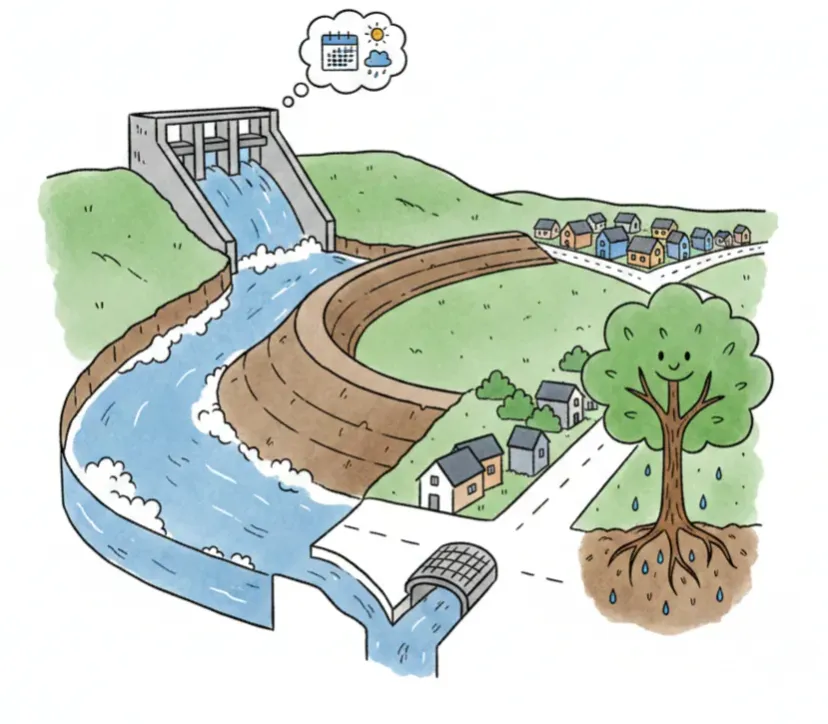
A natural hazard is an event in nature that can harm people or damage property, such as floods, earthquakes, or hurricanes. When a natural hazard threatens a community, engineers work to find ways to protect people. Often, there is more than one solution, or way to solve the problem. Each solution has strengths and weaknesses.
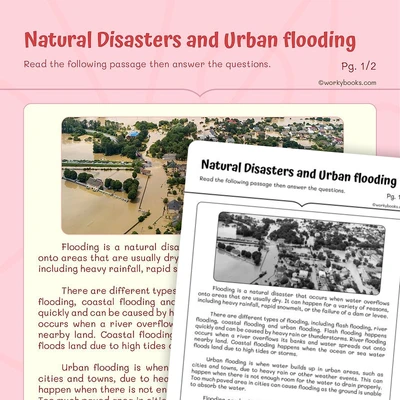
For example, imagine a town near a river that floods during heavy rain. Engineers might suggest three different solutions. First, they could build a levee, which is a wall along the river that keeps water from flowing into the town. A levee is less expensive and can be built quickly. However, if the water gets too high, the levee can break and cause sudden flooding.
Second, engineers could dig a deeper river channel, which is the path where the river flows. A deeper channel holds more water, so less water spills onto land. This solution works well but costs more money and takes longer to complete.
Third, engineers could move buildings away from the floodplain, the low area near the river that floods easily. Moving buildings protects people very well because they are far from danger. However, this solution is the most expensive and takes the longest time.
To compare solutions, engineers ask important questions: How well does it protect people? How much does it cost? How long does it last? Is it practical? By thinking about these trade-offs, or the good and bad parts of each choice, communities can pick the best solution for their needs.
Interesting Fact: The Netherlands has built over 17,000 miles of levees and dams to protect the country from flooding because much of the land is below sea level!
Comprehension quiz (8 questions)
1. What is a natural hazard?
2. What is a levee?
3. Which solution costs the most money?
4. Why might a deeper channel help?
5. What question helps compare solutions?
6. Why is moving buildings most effective?
7. A levee can break if water is too high.
8. What does floodplain mean?
Perfect for the way you teach
- Build comprehension skills
- Auto-graded quiz
- Differentiated reading
- Read together at home
- Improve fluency
- Quiet reading time
- Reading curriculum support
- Independent practice
- Track Lexile growth