This learning resource is available in interactive and printable formats. The interactive worksheet can be played online and assigned to students. The Printable PDF version can be downloaded and printed for completion by hand.
This audio-integrated reading passage introduces fourth-grade students to natural hazards as part of the NGSS 4-ESS3-2 standard. Students learn that natural hazards are dangerous events caused by Earth's natural processes, including earthquakes, volcanoes, tsunamis, severe storms, floods, droughts, and wildfires. The passage explains that these events have occurred throughout Earth's history and will continue to happen because they result from natural Earth processes. While humans cannot eliminate natural hazards, the passage emphasizes that scientists and engineers work to reduce their impacts through warning systems, building codes, and emergency plans. Written at a fourth-grade reading level, this passage uses clear explanations and real-world examples to help students understand the concept of natural hazards and the importance of preparedness. The content aligns with ESS3.B: Natural Hazards, focusing on how a variety of natural hazards result from natural processes and how humans can take steps to reduce their impacts. Activities include comprehension questions, writing prompts, and graphic organizers to reinforce understanding.
CONTENT PREVIEW
Expand content preview
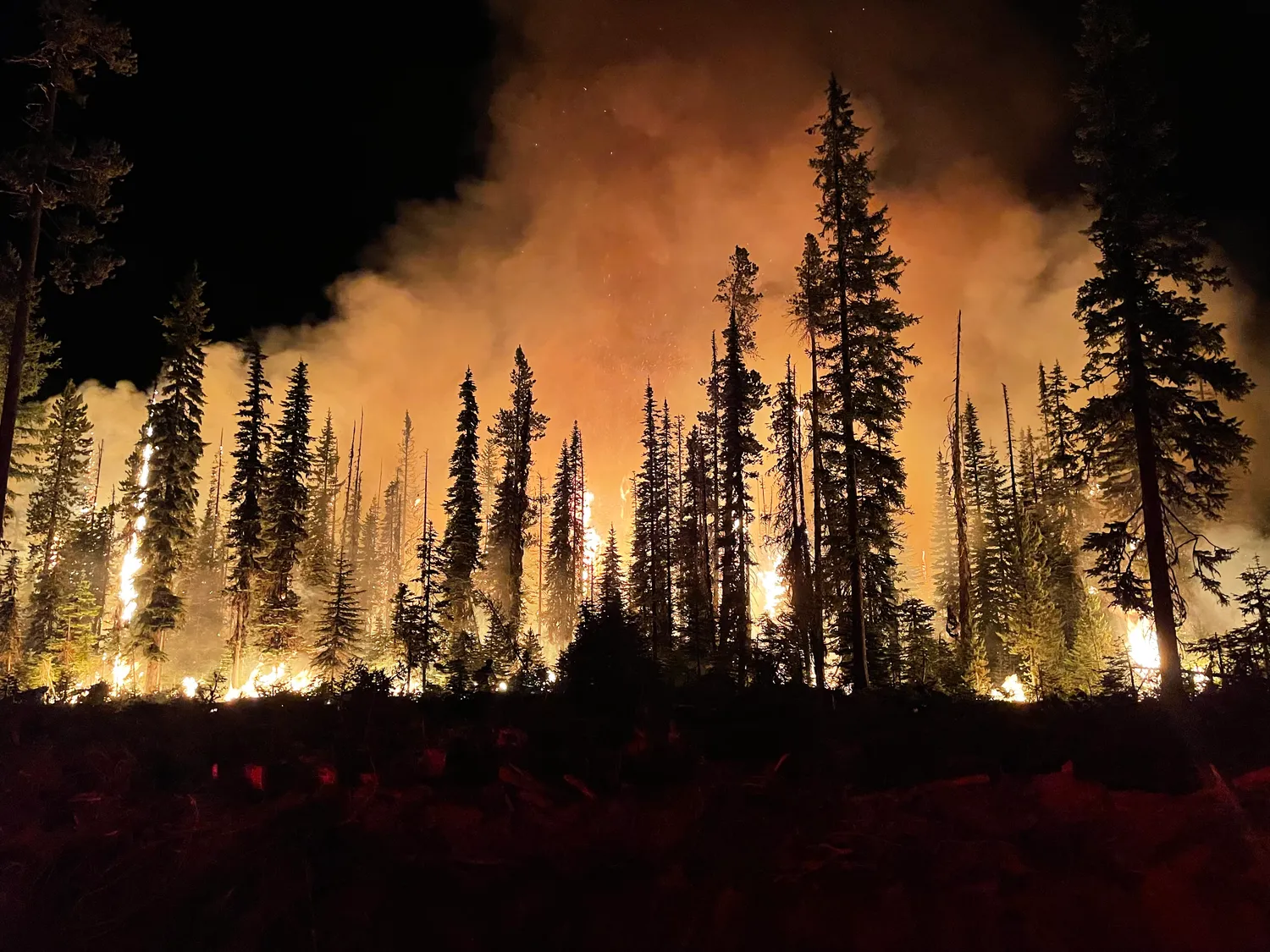
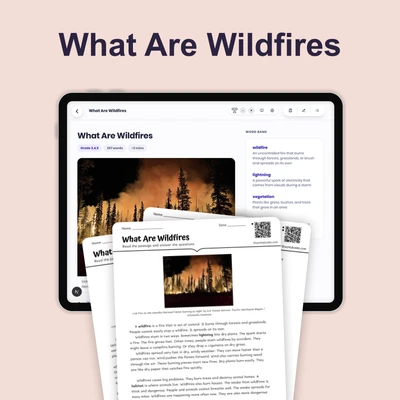
"Lick Fire on the Umatilla National Forest burning at night" by U.S. Forest Service- Pacific Northwest Region / Wikimedia Commons.
A natural hazard is a dangerous event caused by natural processes on Earth. Natural hazards include earthquakes, volcanoes, tsunamis, severe storms, floods, droughts, and wildfires. These events can harm people, damage buildings, and change the landscape around us.
Natural hazards are not caused by people. They happen because of the way Earth works. For example, earthquakes occur when pieces of Earth's outer layer suddenly move. Floods happen when too much rain falls in a short time or when snow melts quickly. Wildfires start when dry plants catch fire during hot, dry weather. These events have happened throughout Earth's history and will continue to happen.
Scientists study natural hazards to understand when and where they might occur. Engineers are people who design and build things. They create stronger buildings and warning systems to help protect people. Communities make emergency plans so people know what to do when a natural hazard happens. Think of it like wearing a helmet when you ride a bike—you cannot stop yourself from falling, but you can reduce the harm if you do fall.
We cannot stop natural hazards, but we can prepare for them. Warning systems give people time to move to safe places. Building codes help make structures stronger. By learning about natural hazards, communities can reduce damage and save lives.
Interesting Fact: The largest earthquake ever recorded happened in Chile in 1960 and measured 9.5 on the Richter scale. It was so powerful that it created tsunami waves that traveled across the entire Pacific Ocean!
What is a natural hazard?
A dangerous event caused by peopleA dangerous event from Earth's processesA helpful event from natureA type of weather prediction
What causes earthquakes to happen?
Too much rain falling quicklyDry plants catching on firePieces of Earth's outer layer movingSnow melting too fast
Which is an example of natural hazard?
A car accidentA wildfireA building being builtA person falling down
How do warning systems help people?
They stop natural hazards from happeningThey make buildings strongerThey give time to move somewhere safeThey predict all future hazards
Why do engineers create stronger buildings?
To stop earthquakes from happeningTo help protect people from hazardsTo make buildings look betterTo save money on construction
What does the helmet example teach us?
We can stop all accidentsWe should never ride bikesWe can reduce harm even if not prevent itHelmets prevent all injuries
Natural hazards are caused by people.
TrueFalse
What does the word 'engineer' mean?
Someone who studies weather patternsSomeone who designs and builds thingsSomeone who predicts earthquakesSomeone who fights wildfires
Perfect For:
👩🏫 Teachers
• Reading comprehension practice
• Auto-graded assessments
• Literacy skill development
👨👩👧👦 Parents
• Reading practice at home
• Comprehension improvement
• Educational reading time
🏠 Homeschoolers
• Reading curriculum support
• Independent reading practice
• Progress monitoring
Reading Features:
📖
Reading Passage
Engaging fiction or nonfiction text
❓
Comprehension Quiz
Auto-graded questions
📊
Instant Feedback
Immediate results and scoring
📄
Printable Version
Download for offline reading
🔊
Read Aloud
Voice-over with word highlighting
Reviews & Ratings
No reviews yet. Be the first to share your experience!
Related Content
Natural Disasters and Urban flooding
This reading comprehension worksheet focuses on the topic of natural disasters, specifically urban flooding. Following t...
RI.4.44-ESS3ESS3.B4-ESS3-1
Rainstorms and Natural Disasters
This reading comprehension worksheet is focused on the topic of rainstorm-induced disasters. Students will be required t...
W.4.8-1ESS3.B4-ESS3-2
How Earthquakes Affect People
This 250-word informational reading passage introduces Grade 4 students to the ways earthquakes affect people and commun...
NGSS 4-ESS3-2ESS3.B
What Are Weather Hazards
This Grade 4 science reading passage introduces students to weather hazards as part of the NGSS 4-ESS3-2 standard focusi...
NGSS 4-ESS3-2ESS3.B
Hazard Emergency Preparedness
This 250-word reading passage introduces fourth-grade students to the essential concept of hazard emergency preparedness...
NGSS 4-ESS3-2ESS3.B
Multiple Solutions to Natural Hazards
This Grade 4 science reading passage introduces students to the concept that there are often multiple solutions to natur...
NGSS 4-ESS3-2ESS3.B
What Are Tsunamis
This Grade 4 science reading passage introduces students to tsunamis, aligning with NGSS standard 4-ESS3-2. Students lea...
NGSS 4-ESS3-2
How Tsunamis Affect People
This engaging 250-word reading passage introduces fourth-grade students to the devastating impacts of tsunamis on coasta...
NGSS 4-ESS3-2
What Are Avalanches
This engaging 250-word reading passage introduces fourth-grade students to avalanches and their impact on mountain commu...
NGSS 4-ESS3-2
Landslides
This engaging 350-word reading passage introduces Grade 4-5 students to landslides as powerful natural events where soil...
NGSS 4-ESS3-2
What Are Earthquakes
This engaging 250-word reading passage introduces fourth-grade students to the concept of earthquakes as natural hazards...
NGSS 4-ESS3-2
What Are Volcanoes
This engaging 250-word reading passage introduces fourth-grade students to volcanoes and volcanic activity, aligned with...
NGSS 4-ESS3-2
How Volcanoes Affect People
This 250-word reading passage introduces fourth-grade students to the ways volcanic eruptions affect people and communit...
NGSS 4-ESS3-2
What Are Tornadoes
This engaging Grade 4 science reading passage introduces students to tornadoes, one of nature's most powerful and danger...
NGSS 4-ESS3-2
What Are Hurricanes
This Grade 4 science reading passage introduces students to hurricanes and their impact on coastal communities, aligned ...
NGSS 4-ESS3-2
What Are Floods
This engaging 250-word reading passage introduces fourth-grade students to floods as natural hazards, aligned with NGSS ...
NGSS 4-ESS3-2
What Are Wildfires
This 250-word reading passage explains what wildfires are and introduces Grade 4 students to key concepts about these na...
NGSS 4-ESS3-2
What Are Droughts
This 250-word reading passage introduces fourth-grade students to the concept of droughts as defined in NGSS 4-ESS3-2. S...
NGSS 4-ESS3-2
Why We Cannot Stop Natural Hazards
This 250-word reading passage introduces fourth-grade students to the concept that natural hazards are caused by natural...