Why We Cannot Stop Natural Hazards — Reading Comprehension
Rate this
Premium Resource
Present
Present in classroom. No work saved
Assign
Classroom with student accounts, Track progress
Quick Play
No student accounts, assign with a link
Grades
3
4
5
Standards
NGSS 4-ESS3-2
PRINT+DIGITAL RESOURCE
This learning resource is available in interactive and printable formats. The interactive worksheet can be played online and assigned to students. The Printable PDF version can be downloaded and printed for completion by hand.
This 250-word reading passage introduces fourth-grade students to the concept that natural hazards are caused by natural Earth processes that humans cannot control, aligned with NGSS standard 4-ESS3-2. Students learn that while we cannot stop earthquakes, volcanic eruptions, or hurricanes from occurring, we are not helpless against these natural hazards. The passage explains how these processes have been happening on Earth for billions of years and will continue to happen in the future. Through age-appropriate language and real-world examples, students discover that scientists, engineers, and communities have developed many effective ways to reduce the damage natural hazards cause and keep people safer. The passage builds foundational understanding of natural hazards and sets up motivation for learning about hazard mitigation solutions. Audio-integrated features support diverse learners, while differentiated versions ensure all students can access the core science concepts. This passage prepares students for hands-on investigations and discussions about how communities prepare for and respond to natural hazards.
CONTENT PREVIEW
Expand content preview
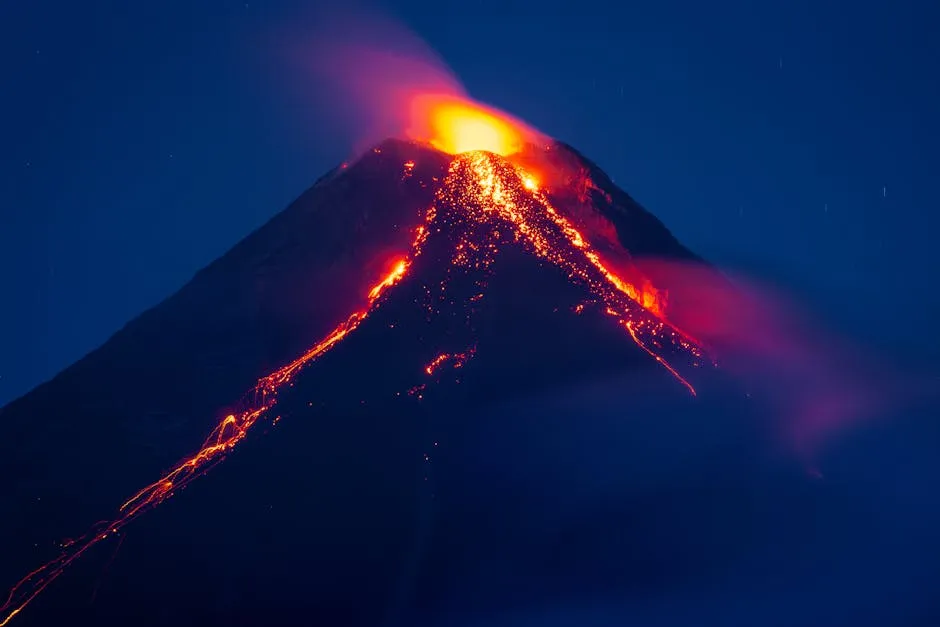
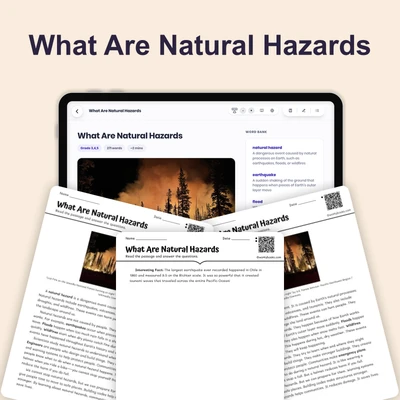
"Fiery eruption of Mayon Volcano in the Bicol region, showcasing a stunning natural phenomenon." by Sergey Guk / Pexels.
Natural hazards are dangerous events caused by natural Earth processes. A natural hazard includes earthquakes, volcanic eruptions, hurricanes, tornadoes, floods, and wildfires. These events happen because of the way Earth works.
Humans cannot control these Earth processes—the natural actions and changes that happen on our planet. We cannot stop the ground from shaking during an earthquake. We cannot prevent a volcano from erupting. We cannot stop a hurricane from forming over the ocean. These processes have been happening on Earth for billions of years and will continue to happen.
Even though we cannot stop natural hazards, we are not helpless. Scientists study natural hazards to understand when and where they might happen. Engineers—people who design and build things to solve problems—create buildings that can survive earthquakes. They design warning systems that tell people when a hurricane is coming. Communities—groups of people living in the same area—make emergency plans and practice what to do when natural hazards occur.
Understanding that we cannot stop natural hazards is important. It helps us focus on what we can do: prepare for them, warn people about them, and build structures that protect us. By working together, we can reduce the damage—harm or destruction—that natural hazards cause and keep people safer.
Interesting Fact: Japan experiences about 1,500 earthquakes every year, so Japanese engineers have become experts at building earthquake-resistant buildings that can sway and bend without breaking!
What are natural hazards?
Dangerous events caused by natural Earth processesEvents that humans can control and stopOnly earthquakes and volcanoesProblems created by people
Can humans stop a volcano from erupting?
No, we cannot control Earth processesYes, with special machinesYes, by building walls around itOnly scientists can stop volcanoes
How long have natural hazards been happening?
For about 100 yearsSince people started building citiesFor billions of yearsOnly in modern times
Why do scientists study natural hazards?
To stop them from happeningTo understand when and where they happenTo make them happen more oftenTo control the weather
What do engineers design for natural hazards?
Machines to stop earthquakesBuildings and warning systems for protectionWays to prevent all natural hazardsTools to control volcanoes
How can communities reduce damage from hazards?
By stopping all natural hazardsBy ignoring the dangersBy preparing, warning people, and building protectionsBy moving to different planets
Natural hazards will continue to happen forever.
TrueFalse
What does 'damage' mean in the passage?
Harm or destruction caused by hazardsBuilding new structuresStudying natural eventsWarning systems for people
Perfect For:
👩🏫 Teachers
• Reading comprehension practice
• Auto-graded assessments
• Literacy skill development
👨👩👧👦 Parents
• Reading practice at home
• Comprehension improvement
• Educational reading time
🏠 Homeschoolers
• Reading curriculum support
• Independent reading practice
• Progress monitoring
Reading Features:
📖
Reading Passage
Engaging fiction or nonfiction text
❓
Comprehension Quiz
Auto-graded questions
📊
Instant Feedback
Immediate results and scoring
📄
Printable Version
Download for offline reading
🔊
Read Aloud
Voice-over with word highlighting
Reviews & Ratings
No reviews yet. Be the first to share your experience!
Related Content
What Are Tsunamis
This Grade 4 science reading passage introduces students to tsunamis, aligning with NGSS standard 4-ESS3-2. Students lea...
NGSS 4-ESS3-2
How Tsunamis Affect People
This engaging 250-word reading passage introduces fourth-grade students to the devastating impacts of tsunamis on coasta...
NGSS 4-ESS3-2
What Are Avalanches
This engaging 250-word reading passage introduces fourth-grade students to avalanches and their impact on mountain commu...
NGSS 4-ESS3-2
Landslides
This engaging 350-word reading passage introduces Grade 4-5 students to landslides as powerful natural events where soil...
NGSS 4-ESS3-2
What Are Earthquakes
This engaging 250-word reading passage introduces fourth-grade students to the concept of earthquakes as natural hazards...
NGSS 4-ESS3-2
How Earthquakes Affect People
This 250-word informational reading passage introduces Grade 4 students to the ways earthquakes affect people and commun...
NGSS 4-ESS3-2ESS3.B
What Are Volcanoes
This engaging 250-word reading passage introduces fourth-grade students to volcanoes and volcanic activity, aligned with...
NGSS 4-ESS3-2
How Volcanoes Affect People
This 250-word reading passage introduces fourth-grade students to the ways volcanic eruptions affect people and communit...
NGSS 4-ESS3-2
What Are Weather Hazards
This Grade 4 science reading passage introduces students to weather hazards as part of the NGSS 4-ESS3-2 standard focusi...
NGSS 4-ESS3-2ESS3.B
What Are Tornadoes
This engaging Grade 4 science reading passage introduces students to tornadoes, one of nature's most powerful and danger...
NGSS 4-ESS3-2
What Are Hurricanes
This Grade 4 science reading passage introduces students to hurricanes and their impact on coastal communities, aligned ...
NGSS 4-ESS3-2
What Are Floods
This engaging 250-word reading passage introduces fourth-grade students to floods as natural hazards, aligned with NGSS ...
NGSS 4-ESS3-2
What Are Wildfires
This 250-word reading passage explains what wildfires are and introduces Grade 4 students to key concepts about these na...
NGSS 4-ESS3-2
What Are Droughts
This 250-word reading passage introduces fourth-grade students to the concept of droughts as defined in NGSS 4-ESS3-2. S...
NGSS 4-ESS3-2
What Are Natural Hazards
This audio-integrated reading passage introduces fourth-grade students to natural hazards as part of the NGSS 4-ESS3-2 s...
NGSS 4-ESS3-2ESS3.B
Reducing Natural Hazard Impacts
This Grade 4 science reading passage introduces students to the concept of reducing natural hazard impacts, aligned with...
NGSS 4-ESS3-2
How Buildings Resist Earthquakes
This 250-word reading passage introduces fourth-grade students to earthquake-resistant building design, aligned with NGS...
NGSS 4-ESS3-2
How Scientists Monitor Volcanoes
This engaging 250-word reading passage introduces fourth-grade students to the important work of volcano monitoring, ali...
NGSS 4-ESS3-2
How Tsunami Warnings Work
This engaging 250-word reading passage introduces fourth-grade students to tsunami warning systems and how they protect ...