Phoenicians and Philistines
Interactive passage with audio narration, comprehension questions, and printable PDF.
By completing this purchase you agree to our Terms of Use and Privacy Policy. Your subscription renews automatically until you cancel. You can cancel anytime from your account settings. All sales are final and non-refundable. Digital content is available for download in your account immediately upon purchase.
What's included
Part of this bundle

Phoenicians and Philistines preview and details
About this printable Phoenicians and Philistines reading passage (Grades 5-8)
Sample passage and quiz from Phoenicians and Philistines
Reading passage and comprehension quiz preview
Phoenicians and Philistines
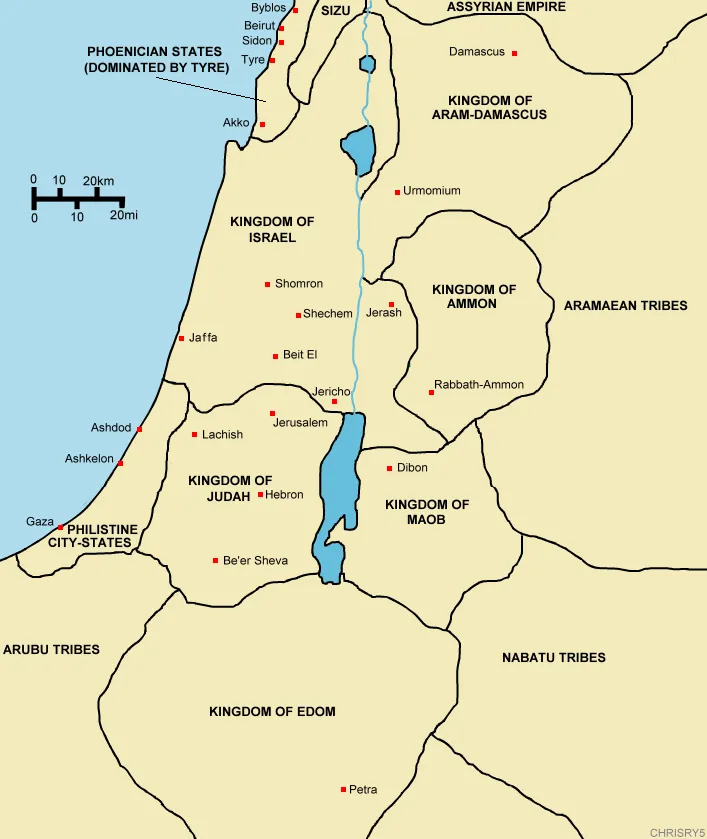
The eastern Mediterranean region around ancient Israel was home to a mix of powerful and diverse peoples. Among the most significant were the Phoenicians and the Philistines, who lived along the coast and interacted with the Israelites in complex ways. Their influence can be seen in archaeology, ancient texts, and the very languages spoken in the region.
The Phoenicians built wealthy city-states such as Tyre, Sidon, and Byblos between 1200 and 800 BCE, in what is now Lebanon. Their cities were independent but shared a culture based on seafaring and trade. The Phoenicians developed advanced navigation skills, which allowed them to sail across the Mediterranean Sea as far as Spain and North Africa. Archaeological evidence, such as Phoenician pottery and shipwrecks, shows they traded valuable goods like cedar wood, purple dye, and glass. One of their most lasting achievements was the creation of an alphabet. The Phoenician alphabet made writing simpler and influenced Greek and later Western scripts.
South of the Phoenicians, the Philistines settled on the coastal plain of Canaan by about 1200 BCE. Recent excavations at sites like Ashkelon and Gath show the Philistines were skilled in metallurgy, especially making iron tools and weapons. The Philistines organized themselves into five main city-states: Gaza, Ashkelon, Ashdod, Gath, and Ekron. Unlike the Phoenicians, they often clashed with their neighbors. The Hebrew Bible describes many conflicts between the Philistines and Israelites, such as the famous story of David and Goliath (around 1000 BCE). Some scholars debate the origins of the Philistines, but many believe they came from the Aegean region, bringing new technologies and styles of pottery.
Other groups, such as the Arameans and Edomites, also played important roles in the region. The Arameans controlled trade routes to the east, while the Edomites lived in the desert south of Israel. These peoples traded, fought, and sometimes formed alliances with each other and with Israel. Geography shaped their interactions: the coast allowed the Phoenicians to focus on trade, while the open plains led the Philistines to develop military strength. Over time, these relationships created a dynamic and sometimes unstable balance in the region.
The interactions between these peoples led to the exchange of ideas, technologies, and goods. The Phoenician alphabet, Philistine ironwork, and the movement of goods through trade routes all influenced daily life and the development of societies in ancient Israel and beyond. These connections and conflicts helped shape the course of ancient history in the eastern Mediterranean.
This topic connects to broader themes of cultural exchange, technological innovation, and the rise and fall of civilizations studied in ancient world history.
Interesting Fact: The word "Bible" comes from Byblos, a Phoenician city famous for exporting papyrus and scrolls.
Comprehension quiz (8 questions)
1. Where did the Phoenicians live?
2. What was a key Phoenician achievement?
3. Which group used iron tools and weapons?
4. Why did the Phoenicians sail far?
5. What effect did trade have on the region?
6. How did geography affect Phoenician life?
7. Philistines often clashed with Israelites. True or false?
8. What does 'metallurgy' mean?
Perfect for the way you teach
- Build comprehension skills
- Auto-graded quiz
- Differentiated reading
- Read together at home
- Improve fluency
- Quiet reading time
- Reading curriculum support
- Independent practice
- Track Lexile growth