Popes versus Kings
Interactive passage with audio narration, comprehension questions, and printable PDF.
By completing this purchase you agree to our Terms of Use and Privacy Policy. Your subscription renews automatically until you cancel. You can cancel anytime from your account settings. All sales are final and non-refundable. Digital content is available for download in your account immediately upon purchase.
What's included
Popes versus Kings preview and details
About this printable Popes versus Kings reading passage (Grades 5-8)
Sample passage and quiz from Popes versus Kings
Reading passage and comprehension quiz preview
Popes versus Kings
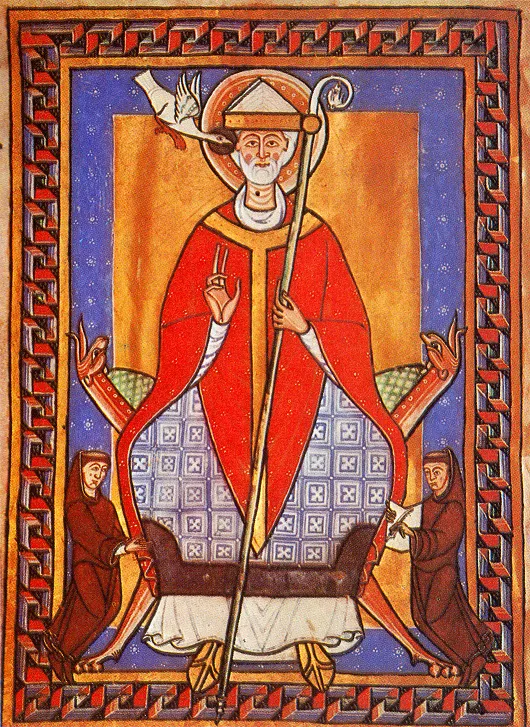
"Pope Gregory I illustration" by anonymous /
Source: Wikimedia Commons (Public domain).
During the Middle Ages, the question of who held ultimate authority in Europe was a major source of conflict. Both the pope, the spiritual leader of the Roman Catholic Church, and the king, the ruler of a European country, claimed the right to make important decisions that affected people’s lives. This struggle between religious and political power shaped the development of European society for centuries.
The Church was the most powerful institution in medieval Europe. Popes had the power to appoint bishops, control land, and even excommunicate, or officially exclude, people from the Church. Kings, on the other hand, wanted to control their own lands and appoint church officials who were loyal to them. This conflict reached a peak in the 11th century during the Investiture Controversy. In 1075, Pope Gregory VII issued a decree saying only the pope could appoint bishops. Holy Roman Emperor Henry IV disagreed, insisting he had the right to choose bishops in his own territory. The two leaders exchanged harsh letters, each claiming sovereignty over church matters. As a result, Pope Gregory excommunicated Henry IV, which meant Henry was cut off from the Church and many of his supporters turned against him.
Henry IV’s excommunication led to a dramatic event in 1077. Henry traveled to the castle of Canossa in Italy, where he stood barefoot in the snow to beg for forgiveness from Pope Gregory VII. This act showed the pope’s power, but the conflict was not over. Over the next decades, kings and popes continued to struggle for control. The dispute ended in 1122 with the Concordat of Worms, an agreement that shared the power to appoint bishops between the pope and the emperor. This compromise showed that neither side could fully dominate the other, and it helped define the boundaries between church and state.
This struggle for authority affected everyone in medieval society. Nobles and commoners alike were influenced by decisions about who could appoint church leaders or collect taxes. The power of the pope to excommunicate meant that even kings had to respect religious rules. The dispute also influenced the development of laws, as rulers tried to balance religious and secular authority. Geography played a role as well, since different parts of Europe had their own traditions and relationships between church and monarchy.
In the end, the struggle between popes and kings changed the structure of European society. It led to clearer divisions between religious and political authority, and it influenced later debates about the role of government and religion. Today, historians study these conflicts to understand how power was negotiated in the past and how it shaped the world we live in.
This example of conflict between church and state connects to the broader theme of how societies organize power and resolve disputes between different leaders and institutions.
Interesting Fact: In medieval Europe, the pope had the power to place an entire kingdom under interdict, which meant all churches would close and no religious ceremonies could take place until a dispute was settled.
Comprehension quiz (8 questions)
1. Who could excommunicate people?
2. Where did Henry IV beg for forgiveness?
3. What ended the Investiture Controversy?
4. Why did kings want to appoint bishops?
5. What did the pope use to control kings?
6. What was a major effect of these conflicts?
7. Popes always controlled kings. True or false?
8. What does 'sovereignty' mean?
Perfect for the way you teach
- Build comprehension skills
- Auto-graded quiz
- Differentiated reading
- Read together at home
- Improve fluency
- Quiet reading time
- Reading curriculum support
- Independent practice
- Track Lexile growth