Spread of Buddhism and Christianity
Interactive passage with audio narration, comprehension questions, and printable PDF.
By completing this purchase you agree to our Terms of Use and Privacy Policy. Your subscription renews automatically until you cancel. You can cancel anytime from your account settings. All sales are final and non-refundable. Digital content is available for download in your account immediately upon purchase.
What's included
Spread of Buddhism and Christianity preview and details
About this printable Spread of Buddhism and Christianity reading passage (Grades 5-8)
Sample passage and quiz from Spread of Buddhism and Christianity
Reading passage and comprehension quiz preview
Spread of Buddhism and Christianity
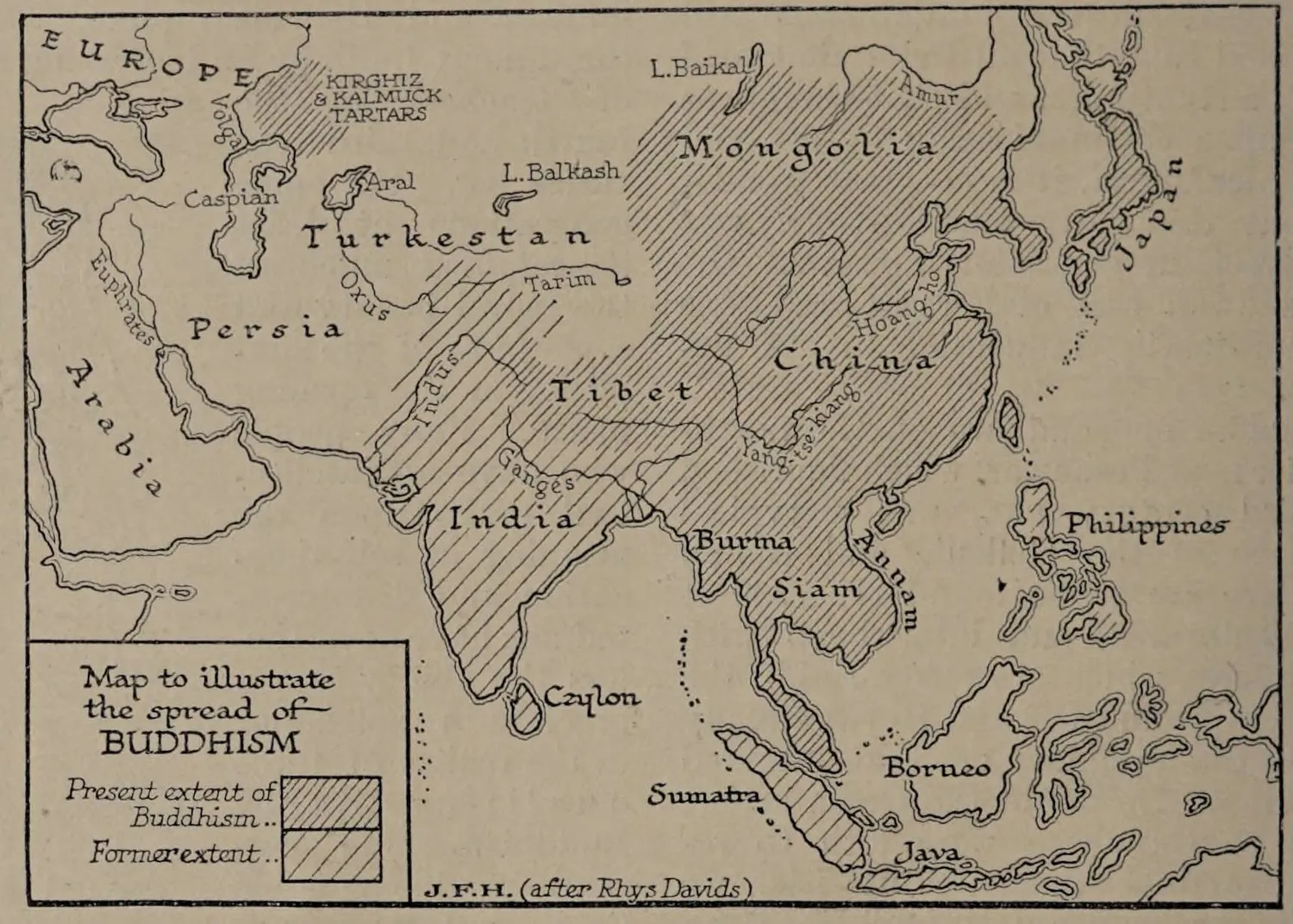
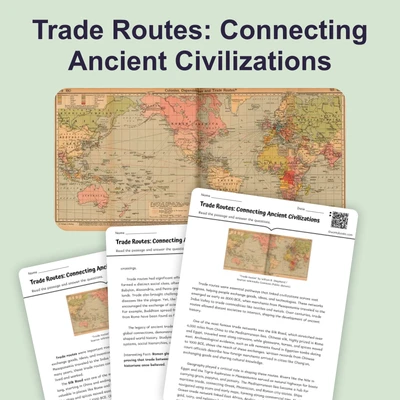
"Map to Illustrate the Spread of Buddhism, H. G. Wells' Outline of History, page 202" by J. F. Horrabin (Illustrator) / Wikimedia Commons (Public domain).
Trade routes like the Silk Road and Roman roads connected distant regions of the ancient world by 300 CE. These routes were not only for trading goods such as silk, spices, and gold, but also for exchanging ideas and beliefs. Two major world religions—Buddhism and Christianity—spread across continents using these networks, shaping societies far from their places of origin.
Buddhism began in northern India in the 5th century BCE with Siddhartha Gautama, known as the Buddha. By the 1st century CE, Buddhist monks traveled along the Silk Road, carrying sacred texts and statues. Archaeological evidence, such as the cave temples at Dunhuang in China, shows how Buddhist art and teachings reached Central and East Asia. The religion adapted to local cultures, blending with Chinese traditions like Confucianism. Merchants and travelers adopted Buddhism, seeking guidance for dealing with hardship and fortune.
Christianity emerged in the eastern Mediterranean in the 1st century CE, centered around the teachings of Jesus of Nazareth. Early Christians used the extensive Roman road system to spread their faith. Letters by Paul, an early Christian leader, traveled quickly between cities such as Corinth and Ephesus. Roman authorities often persecuted Christians, but the religion continued to grow. Archaeological finds, like underground catacombs in Rome, provide evidence of early Christian communities. By the 4th century CE, Emperor Constantine converted to Christianity, making it the official religion of the Roman Empire.
Both religions spread because of the mobility of people and cultural diffusion along trade routes. Trade routes allowed monks and missionaries to travel safely and reach new audiences. The exchange of goods created opportunities for interaction between different societies. Social hierarchies, like rulers and merchants, played a role in adopting and supporting these religions. Over time, Buddhism and Christianity influenced art, law, and daily life in many civilizations, leading to significant cultural change.
The spread of Buddhism and Christianity along trade routes demonstrates the power of human connection in shaping world history. These religions continue to impact societies today, showing the lasting importance of cultural exchange across geographic boundaries.
This topic connects to broader themes of cultural diffusion, the movement of people and ideas, and the ways trade shaped ancient civilizations.
Interesting Fact: The oldest known Christian church in China, built in the 7th century, was discovered along the Silk Road, showing the far reach of early Christianity.
Comprehension quiz (8 questions)
1. Where did Buddhism begin?
2. Who was the founder of Buddhism?
3. What did Paul do for Christianity?
4. How did Buddhism adapt in China?
5. Why were trade routes important for religions?
6. What role did merchants play?
7. Trade routes only carried goods. True or false?
8. What does 'cultural diffusion' mean?
Perfect for the way you teach
- Build comprehension skills
- Auto-graded quiz
- Differentiated reading
- Read together at home
- Improve fluency
- Quiet reading time
- Reading curriculum support
- Independent practice
- Track Lexile growth