The Middle Passage: Africans Forced Across the Atlantic
Interactive passage with audio narration, comprehension questions, and printable PDF.
By completing this purchase you agree to our Terms of Use and Privacy Policy. Your subscription renews automatically until you cancel. You can cancel anytime from your account settings. All sales are final and non-refundable. Digital content is available for download in your account immediately upon purchase.
What's included
The Middle Passage: Africans Forced Across the Atlantic preview and details
About this printable The Middle Passage: Africans Forced Across the Atlantic reading passage (Grades 5-8)
Sample passage and quiz from The Middle Passage: Africans Forced Across the Atlantic
Reading passage and comprehension quiz preview
Middle Passage
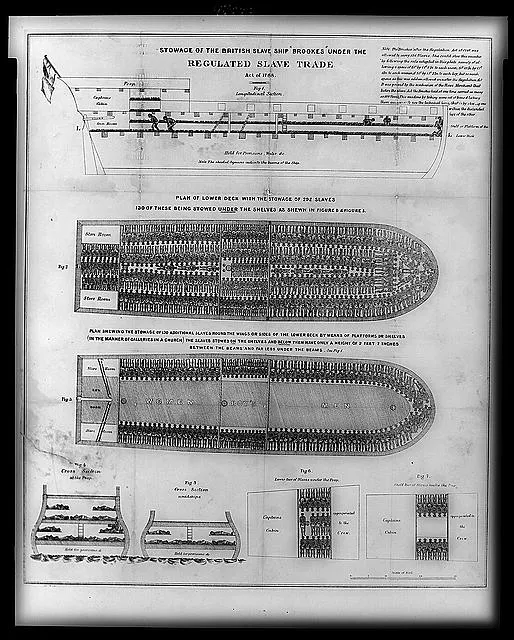
Source: Library of Congress - Printed Ephemera Collection DLC
The Middle Passage was the stage of the Atlantic Slave Trade when enslaved Africans were transported across the Atlantic Ocean to the Americas. This forced migration began in the early 1500s and continued for over 300 years. European traders, especially from Portugal, Britain, and the Netherlands, took millions of Africans from their homelands. These individuals were captured, sold, and shipped in crowded, brutal conditions. The Middle Passage is a key chapter in the history of Colonial America and shaped the economic and social systems of the New World.
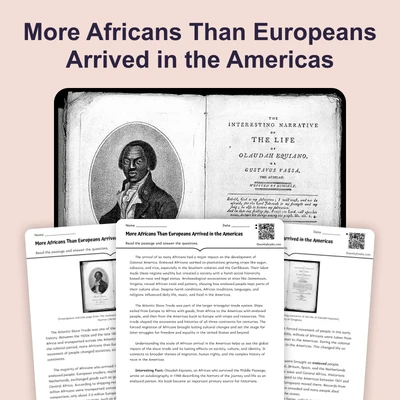
The journey across the Atlantic was extremely dangerous and inhumane. Enslaved Africans were packed tightly into the holds of ships, often chained together. According to the journal of Olaudah Equiano, a former enslaved person, the air below deck was "so hot and so crowded that it was almost impossible to breathe." Ships like the British Brookes could carry over 450 people, though some held even more. Disease, starvation, and abuse were common. It is estimated that between 15% and 20% of Africans died during the voyage, never reaching the Americas.
Primary sources, such as Equiano's autobiography and ship records from the Brookes, provide evidence of the suffering and resistance of those forced on the Middle Passage. Some Africans attempted to revolt against their captors or refused to eat as a form of protest. The journey typically lasted six to eight weeks, depending on weather and location. The ships often left from ports like Elmina in West Africa and arrived in places such as Charleston, South Carolina, or the Caribbean. The geographic position of these ports was chosen for their access to trade routes and plantations.
The impact of the Middle Passage was profound. It created a diaspora of African people and cultures in the Americas, but also led to immense suffering and loss. Enslaved Africans were forced into a strict social hierarchy, working on plantations and denied basic rights. Their labor helped build the wealth of Colonial America, especially in the South, where crops like tobacco, rice, and cotton were grown. The Middle Passage changed over time, with some improvements in ship conditions in later years, but the core brutality remained.
Studying the Middle Passage helps us understand the origins of racial inequality and the human cost of economic systems in history. By examining primary sources and archaeological evidence, historians piece together the experiences of those who endured this journey. The legacy of the Middle Passage still affects societies today and connects to broader themes of migration, resistance, and human rights.
Interesting Fact: About 12.5 million Africans were shipped through the Atlantic Slave Trade, but only around 10.7 million survived to reach the Americas.
Comprehension quiz (8 questions)
1. What was the Middle Passage?
2. Which ship carried over 450 people?
3. Where did many ships depart from?
4. Why was the journey dangerous?
5. What is a primary source?
6. What effect did the Middle Passage have?
7. The Middle Passage lasted six to eight weeks. True or false?
8. What does 'diaspora' mean?
Perfect for the way you teach
- Build comprehension skills
- Auto-graded quiz
- Differentiated reading
- Read together at home
- Improve fluency
- Quiet reading time
- Reading curriculum support
- Independent practice
- Track Lexile growth