Volcanic Eruptions and Products
Interactive passage with audio narration, comprehension questions, and printable PDF.
By completing this purchase you agree to our Terms of Use and Privacy Policy. Your subscription renews automatically until you cancel. You can cancel anytime from your account settings. All sales are final and non-refundable. Digital content is available for download in your account immediately upon purchase.
What's included
Volcanic Eruptions and Products preview and details
About this printable Volcanic Eruptions and Products science reading passage, NGSS-aligned (Grades 5-8)
Sample passage and quiz from Volcanic Eruptions and Products
Reading passage and comprehension quiz preview
Volcanic Eruptions and Products
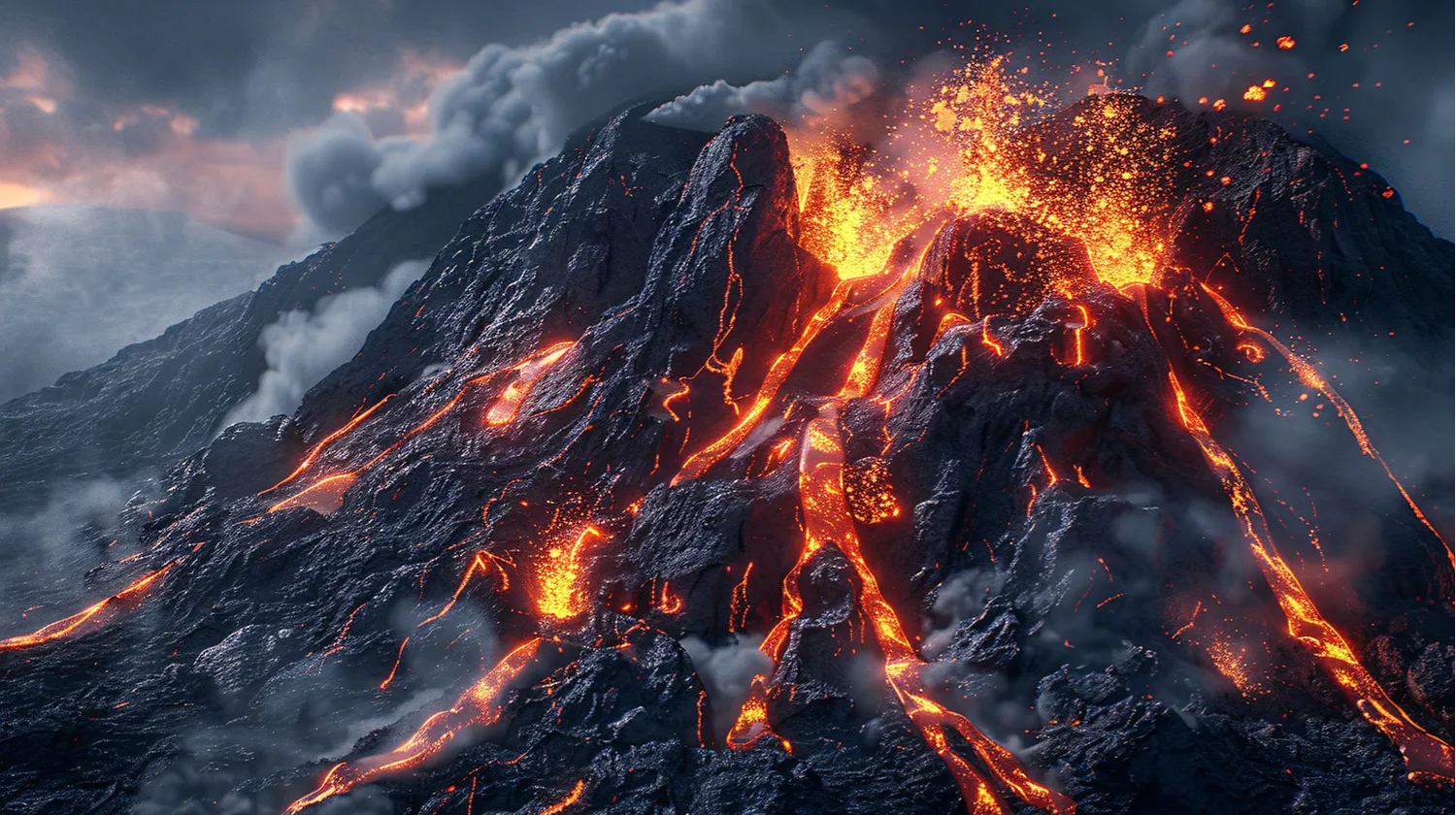
Volcanoes are dynamic features of Earth's surface, shaping landscapes and impacting ecosystems. When a volcano erupts, it discharges a variety of materials, each with unique properties and effects. Understanding what comes out of volcanoes helps scientists predict hazards and explain how Earth's surface changes over time. The products of eruptions include different types of lava flows, solid rock fragments, hot gases, and destructive mudflows known as lahars.
Lava Flows and Their Mechanisms
Lava is molten rock that emerges from a volcano during an eruption. It can flow in several forms. Pahoehoe lava is smooth and ropy, moving at speeds of up to a few kilometers per hour and forming when the lava is hot and fluid. In contrast, aa lava is rough and blocky, moving more slowly because it is cooler and thicker. Underwater eruptions create pillow lava, which forms rounded shapes as the hot lava cools instantly in water. The style of lava flow is determined by temperature, composition, and eruption rate. These flows can cover large areas, sometimes advancing several kilometers and altering landscapes for centuries.
Pyroclastic Material, Gases, and Lahars
Not all volcanic products are liquid. Explosive eruptions eject pyroclastic material, which includes rock fragments of various sizes. Volcanic ash is extremely fine and can travel thousands of kilometers, affecting air quality and climate. Lapilli are pebble-sized fragments, while volcanic bombs are large, semi-molten rocks. Pyroclastic flows are clouds of hot gas and rock fragments that travel downhill at speeds up to 700 km/h, destroying nearly everything in their path. Volcanoes also emit gases, primarily water vapor (over 60%), along with carbon dioxide and sulfur dioxide. These gases can contribute to air pollution and climate change. When volcanic ash and debris mix with rain or melting snow, they form lahars, which are fast-moving and highly destructive mudflows.
Types of Eruptions and Their Hazards
Eruptions can be classified by their explosiveness. Hawaiian eruptions are gentle and produce steady lava flows. Strombolian eruptions are more energetic, ejecting lava fragments into the air. Vulcanian and Plinian eruptions are highly explosive, generating massive ash clouds and pyroclastic flows. Scientists use seismic data, gas measurements, and satellite imagery to study and forecast volcanic activity. Understanding these processes helps communities prepare for hazards and reduce risks.
Volcanoes play a vital role in Earth's systems by recycling materials and shaping new land. However, their eruptions can have far-reaching impacts on climate, air quality, and human societies. By analyzing the products and mechanisms of volcanic eruptions, scientists improve their ability to predict future events and protect people and the environment.
Interesting Fact: The 1980 eruption of Mount St. Helens reduced the height of the volcano by 400 meters and produced a lateral blast that traveled at over 500 km/h.
Comprehension quiz (10 questions)
1. What is the main product of a Hawaiian eruption?
2. Which type of lava forms rough and blocky flows?
3. What are pyroclastic flows made of?
4. What is the most abundant gas released by volcanoes?
5. What does the word 'lahar' mean in the context of the passage?
6. What is the main difference between Pahoehoe and Aa lava?
7. Why are pyroclastic flows considered extremely dangerous?
8. How do lahars form according to the passage?
9. True or False: Plinian eruptions are the least explosive type of volcanic eruption.
10. True or False: Scientists use seismic data and satellite imagery to study volcanoes.
Perfect for the way you teach
- Build comprehension skills
- Auto-graded quiz
- Differentiated reading
- Read together at home
- Improve fluency
- Quiet reading time
- Reading curriculum support
- Independent practice
- Track Lexile growth