Wave Absorption
Interactive passage with audio narration, comprehension questions, and printable PDF.
By completing this purchase you agree to our Terms of Use and Privacy Policy. Your subscription renews automatically until you cancel. You can cancel anytime from your account settings. All sales are final and non-refundable. Digital content is available for download in your account immediately upon purchase.
What's included
Wave Absorption preview and details
About this printable Wave Absorption science reading passage, NGSS-aligned (Grades 5-8)
Sample passage and quiz from Wave Absorption
Reading passage and comprehension quiz preview
Wave Absorption
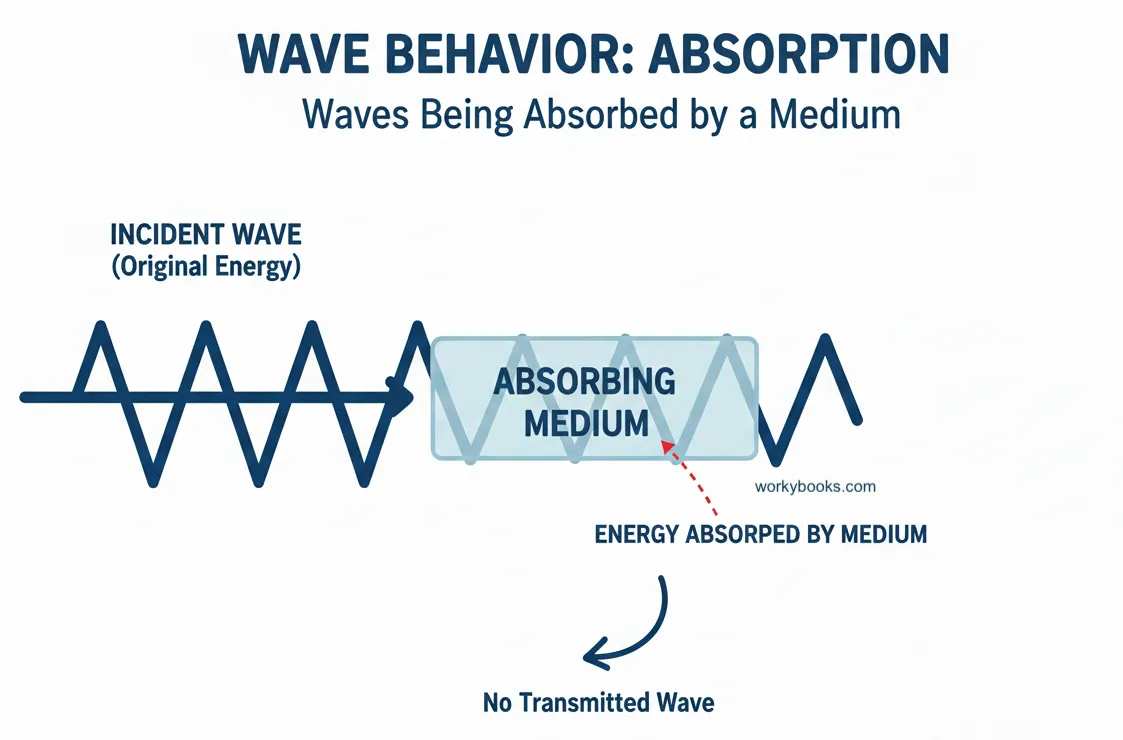
Absorption of waves is a key concept in understanding how energy moves through our world. When sunlight shines on a dark-colored shirt, the shirt becomes noticeably warmer than a light-colored one. This observation demonstrates how materials interact with waves and transform their energy. Scientists study absorption to design safer buildings, protective clothing, and even new medicines. Understanding how waves transfer energy through materials is essential for many technologies and daily life situations.
How Absorption Works
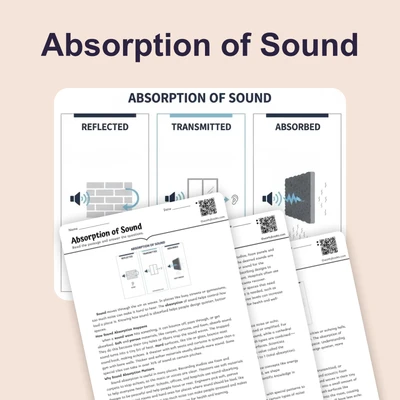
When a wave, such as light or sound, strikes a material, several things can happen: it can be reflected, transmitted, or absorbed. Absorption occurs when the energy of the wave is taken in by the material’s atoms or molecules. This process usually converts wave energy into thermal energy (heat). For example, when sunlight—a form of electromagnetic wave—hits a black shirt, the fabric’s molecules absorb more energy compared to a white shirt. Black materials can absorb up to 90% of visible light, while white materials reflect most of it. The absorbed energy increases the movement of molecules, raising the shirt’s temperature. In soundproof rooms, soft materials like foam absorb sound waves, reducing echoes by turning sound energy into tiny amounts of heat. The effectiveness of absorption depends on the material’s properties, thickness, and the wave’s frequency or wavelength.
Applications and Interactions
Absorption is not limited to light and sound. Sunscreen provides another example: it contains chemicals that absorb harmful ultraviolet (UV) rays from the sun before they can reach and damage your skin’s cells. Similarly, sunglasses use special coatings to absorb or block certain wavelengths of light, protecting our eyes. Engineers use the science of absorption to create insulation that keeps homes warm by absorbing infrared waves, or to develop better acoustic panels for theaters and classrooms. The interaction between wave energy and matter helps scientists solve problems ranging from noise pollution to energy efficiency.
Exceptions and Complexities
Not all waves are absorbed the same way. Some materials, like metal, reflect most waves and absorb little. Others, like glass, may allow light to pass through with minimal absorption but will absorb other types of waves, such as ultraviolet. The amount of energy absorbed can depend on the angle of incidence, the frequency of the wave, and the structure of the material. Scientists use precise measurements and experiments to test how different materials absorb various kinds of waves, leading to new materials with special properties.
Absorption is a fundamental part of how waves interact with matter, impacting technology, health, and our environment. By studying absorption, we can improve building designs, make safer products, and better understand natural processes. This concept connects to broader scientific ideas about energy transfer and conservation, showing how even invisible waves can change the world around us.
Interesting Fact:
Some animals, like the mantis shrimp, have body parts that absorb and reflect specific wavelengths of light, helping them communicate and survive in their environment!
Comprehension quiz (10 questions)
1. What happens to the energy of a wave when it is absorbed by a material?
2. Why does a black shirt get warmer than a white shirt in sunlight?
3. Which material is most likely to reflect waves rather than absorb them?
4. In the passage, what is one way sound absorption is used in real life?
5. What does the term "thermal energy" mean as used in the passage?
6. What is the "angle of incidence" as discussed in the passage?
7. Why do engineers study wave absorption when designing buildings?
8. If a material absorbs 90% of visible light, what is likely to happen to its temperature in sunlight?
9. True or False: Sunscreen protects skin by absorbing ultraviolet (UV) rays.
10. True or False: Glass always absorbs every type of wave that passes through it.
Perfect for the way you teach
- Build comprehension skills
- Auto-graded quiz
- Differentiated reading
- Read together at home
- Improve fluency
- Quiet reading time
- Reading curriculum support
- Independent practice
- Track Lexile growth