This learning resource is available in interactive and printable formats. The interactive worksheet can be played online and assigned to students. The Printable PDF version can be downloaded and printed for completion by hand.
This engaging Grade 4 science reading passage introduces students to blood vessels and their important role in the human body. Aligned with NGSS standard 4-LS1-1, the passage explains how blood vessels are tubes that carry blood throughout the body, forming a network like roads on a map. Students learn that blood vessels reach every part of the body, from head to toes, and come in different sizes. The passage uses age-appropriate language and relatable analogies to help students understand how blood vessels deliver what the body needs and carry away waste. Audio-integrated features support diverse learners. The passage includes differentiated versions for various reading levels, Spanish translations, vocabulary glossary, comprehension questions, writing activities, and graphic organizers. This resource builds foundational understanding of body systems and prepares students for hands-on investigations about how organisms function.
CONTENT PREVIEW
Expand content preview
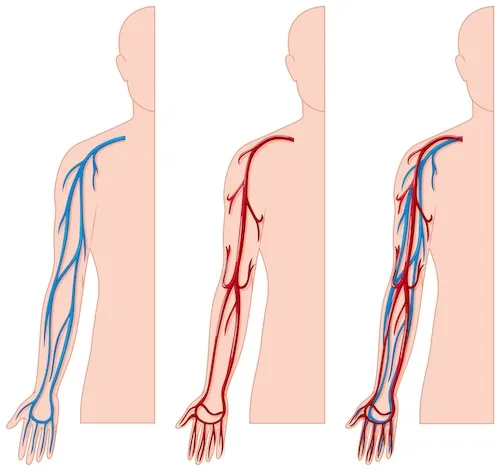
Blood vessels in human hand
Blood vessels are tubes inside your body that carry blood everywhere it needs to go. Blood vessels are the pathways that help blood travel from your heart to every single part of your body, including your brain, muscles, skin, and organs. Without blood vessels, blood would have no way to reach the places that need it.
Blood vessels form a network throughout your entire body. This network is like a system of roads on a map. Just as roads connect different towns and cities, blood vessels connect all the parts of your body. Some blood vessels are thick, almost as wide as a pencil. Others are so tiny you cannot see them without a microscope. All of these vessels work together to make sure blood reaches everywhere.
Blood carries important things your body needs to stay alive and healthy. It brings oxygen, which is a gas you breathe in that your cells need to work properly. Blood also carries nutrients, which are substances from the food you eat that give your body energy and help it grow. As blood travels through your blood vessels, it drops off oxygen and nutrients where they are needed.
Blood vessels also help remove waste from your body. When your cells use oxygen and nutrients, they create waste products. Blood picks up this waste and carries it away through the blood vessels. The waste is then removed from your body. This keeps your body clean and healthy on the inside.
Interesting Fact: If you could line up all the blood vessels in your body end to end, they would stretch about 60,000 miles—that's enough to circle the Earth more than twice!
What are blood vessels?
Tubes that carry blood throughout the bodyOrgans that pump bloodCells that make bloodBones that protect the heart
What is the network of blood vessels like?
A ladderRoads on a mapA single straight lineA circle
What does blood carry to your body parts?
Only waterOnly airOxygen and nutrientsOnly waste
Why do blood vessels remove waste from the body?
To make room for more bloodTo keep the body clean and healthyTo make the blood redTo help you breathe
How do blood vessels help deliver oxygen?
They create oxygen in the bodyThey carry blood with oxygen to all partsThey store oxygen for later useThey turn food into oxygen
What would happen without blood vessels in your body?
Blood would still reach all body partsBlood could not travel where neededYour heart would work betterYou would have more energy
All blood vessels are the same size.
TrueFalse
What are nutrients?
Gases you breathe outSubstances from food that give energyTubes that carry bloodWaste products from cells
Perfect For:
👩🏫 Teachers
• Reading comprehension practice
• Auto-graded assessments
• Literacy skill development
👨👩👧👦 Parents
• Reading practice at home
• Comprehension improvement
• Educational reading time
🏠 Homeschoolers
• Reading curriculum support
• Independent reading practice
• Progress monitoring
Reading Features:
📖
Reading Passage
Engaging fiction or nonfiction text
❓
Comprehension Quiz
Auto-graded questions
📊
Instant Feedback
Immediate results and scoring
📄
Printable Version
Download for offline reading
🔊
Read Aloud
Voice-over with word highlighting
Reviews & Ratings
No reviews yet. Be the first to share your experience!
Related Content
How Animals See Differently
This engaging 250-word reading passage introduces fourth-grade students to the fascinating world of animal vision and ey...
NGSS 4-LS1-1LS1.D
Animal Internal Structure
This engaging science passage for Grade 4-5 students explores animal internal structure and how organs work together to ...
NGSS 4-LS1-1
What Are Bones Made Of
This engaging 250-word reading passage introduces Grade 4 students to the structure and function of bones, aligned with ...
NGSS 4-LS1-1LS1.A
How Bones Protect Organs
This engaging 250-word reading passage helps Grade 4 students understand how bones protect organs, aligned with NGSS sta...
NGSS 4-LS1-1LS1.A
How Joints Connect Bones
This 250-word reading passage teaches fourth-grade students about joints and their role in the human skeletal system. Al...
NGSS 4-LS1-1LS1.A
How Muscles Move Bones
This comprehensive 250-word reading passage introduces fourth-grade students to the fundamental concept of how muscles a...
NGSS 4-LS1-1
Two Types of Muscles
This 250-word reading passage introduces fourth-grade students to the two main types of muscles in the human body: volun...
NGSS 4-LS1-1
What Are Muscles
This engaging 250-word reading passage introduces fourth-grade students to the essential concept of muscles and how they...
NGSS 4-LS1-1
How Skin Protects Body
This audio-integrated reading passage introduces fourth-grade students to the protective functions of skin, aligned with...
NGSS 4-LS1-1
Layers of the Skin
This engaging 250-word reading passage introduces fourth-grade students to the three layers of skin and their functions....
NGSS 4-LS1-1LS1.A
What Are Plant Structures
This engaging 250-word reading passage introduces fourth-grade students to the fundamental concept of plant structures a...
NGSS 4-LS1-1
Parts of Plant Stems
This engaging 250-word reading passage introduces fourth-grade students to the internal structure and function of plant ...
NGSS 4-LS1-1LS1.A
How Water Moves Inside Plants
This 250-word reading passage introduces fourth-grade students to the concept of water transport in plants, aligned with...
NGSS 4-LS1-1
Parts of a Flower
This comprehensive 250-word reading passage introduces fourth-grade students to the essential parts of a flower and thei...
NGSS 4-LS1-1LS1.A
How Fish Gills Work
This engaging 250-word reading passage introduces fourth-grade students to the concept of fish gills and how they functi...
NGSS 4-LS1-1
How Leaves Make Food
This engaging Grade 4 science reading passage explains how leaves make food through photosynthesis. Students discover th...
NGSS 4-LS1-1LS1.A
How Animal Hearts Work
This 250-word audio-integrated reading passage introduces fourth-grade students to the essential function of the heart a...
NGSS 4-LS1-1LS1.A
Animal Skeleton Structure
This 250-word reading passage introduces fourth grade students to animal skeleton structure, aligned with NGSS 4-LS1-1 a...
NGSS 4-LS1-1LS1.A
How Animal Lungs Work
This 250-word reading passage introduces fourth-grade students to how animal lungs work, aligned with NGSS standard 4-LS...
NGSS 4-LS1-1LS1.A
What Is Inside a Seed
This engaging 250-word reading passage helps Grade 4 students understand the internal structure of seeds, aligned with N...