What Are Stars
Interactive passage with audio narration, comprehension questions, and printable PDF.
By completing this purchase you agree to our Terms of Use and Privacy Policy. Your subscription renews automatically until you cancel. You can cancel anytime from your account settings. All sales are final and non-refundable. Digital content is available for download in your account immediately upon purchase.
What's included
What Are Stars preview and details
About this printable What Are Stars science reading passage, NGSS-aligned (Grades 5-8)
Sample passage and quiz from What Are Stars
Reading passage and comprehension quiz preview
What Are Stars
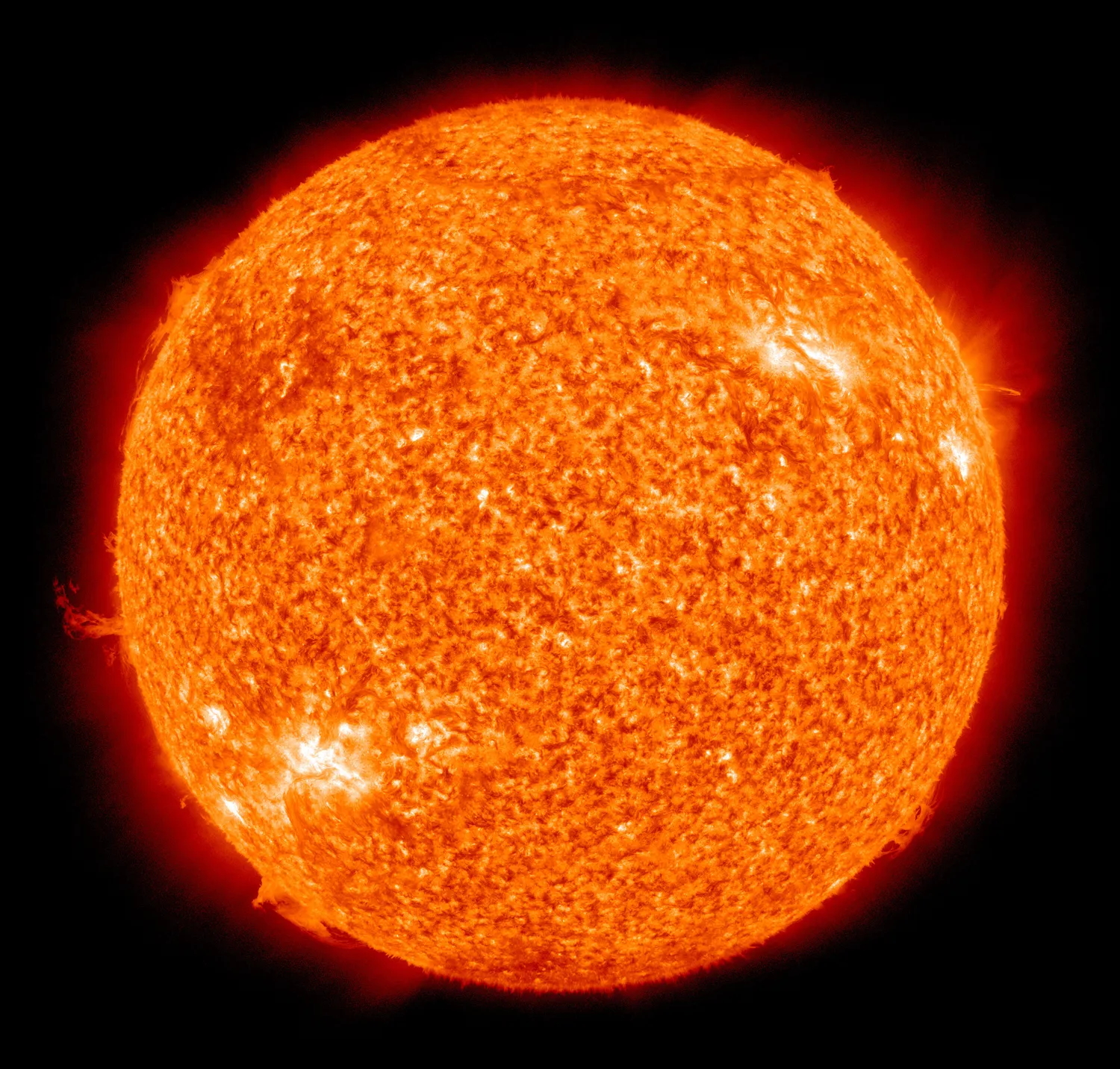
Stars are massive balls of extremely hot gas held together by gravity. They produce enormous amounts of energy through a process called nuclear fusion in their cores. This energy radiates outward as light and heat, making stars shine brightly in space. Scientists explain that stars are not solid objects but are made of plasma, which is a fourth state of matter beyond solid, liquid, and gas.
The process of nuclear fusion occurs when hydrogen atoms in a star's core combine under extreme pressure and temperature to form helium. This process releases tremendous energy that pushes outward against gravity. Evidence shows that gravity pulls the star's material inward while fusion energy pushes outward. These two forces balance each other, keeping the star stable for millions or billions of years. Without this balance, a star would either collapse or explode.
Stars vary greatly in size, temperature, and brightness, which scientists call luminosity. The smallest stars, called red dwarfs, can be just one-tenth the mass of our Sun. The largest stars, known as blue supergiants, can be more than 100 times the mass of our Sun. A star's mass determines its color, temperature, and how long it will live. Blue supergiants burn extremely hot and bright but use up their fuel quickly. Red dwarfs burn cooler and dimmer but can shine for trillions of years.
Our Sun is actually an average-sized yellow star located in the Milky Way galaxy. Scientists observe that the universe contains an estimated 200 billion trillion stars. Every star you see at night is actually a sun, and many are far larger than ours. The nearest star to Earth, besides our Sun, is Proxima Centauri, which is about 4.2 light-years away. This means light from that star takes over four years to reach us.
Understanding stars matters because they are the building blocks of galaxies and the universe itself. Stars produce the elements that make up planets and even our own bodies. When massive stars explode at the end of their lives, they scatter these elements across space. This material can eventually form new stars, planets, and potentially life. By studying stars, scientists learn about the past, present, and future of our universe.
Interesting Fact: The light from some stars we see tonight actually left those stars thousands of years ago. When you look at the night sky, you are literally looking back in time.
Comprehension quiz (10 questions)
1. What are stars made of?
2. What process produces energy in a star's core?
3. What does the term 'luminosity' mean in the context of stars?
4. Based on the passage, what is the relationship between a star's mass and its lifespan?
5. Why do stars remain stable for millions or billions of years?
6. Which type of star is the largest and hottest?
7. How does studying stars help scientists understand the universe?
8. What can you infer about why we see starlight from thousands of years ago?
9. All stars are exactly the same size and temperature.
10. Nuclear fusion in a star's core combines hydrogen atoms to form helium.
Perfect for the way you teach
- Build comprehension skills
- Auto-graded quiz
- Differentiated reading
- Read together at home
- Improve fluency
- Quiet reading time
- Reading curriculum support
- Independent practice
- Track Lexile growth