What Are Sunspots
Interactive passage with audio narration, comprehension questions, and printable PDF.
By completing this purchase you agree to our Terms of Use and Privacy Policy. Your subscription renews automatically until you cancel. You can cancel anytime from your account settings. All sales are final and non-refundable. Digital content is available for download in your account immediately upon purchase.
What's included
What Are Sunspots preview and details
About this printable What Are Sunspots science reading passage, NGSS-aligned (Grades 5-8)
Sample passage and quiz from What Are Sunspots
Reading passage and comprehension quiz preview
What Are Sunspots
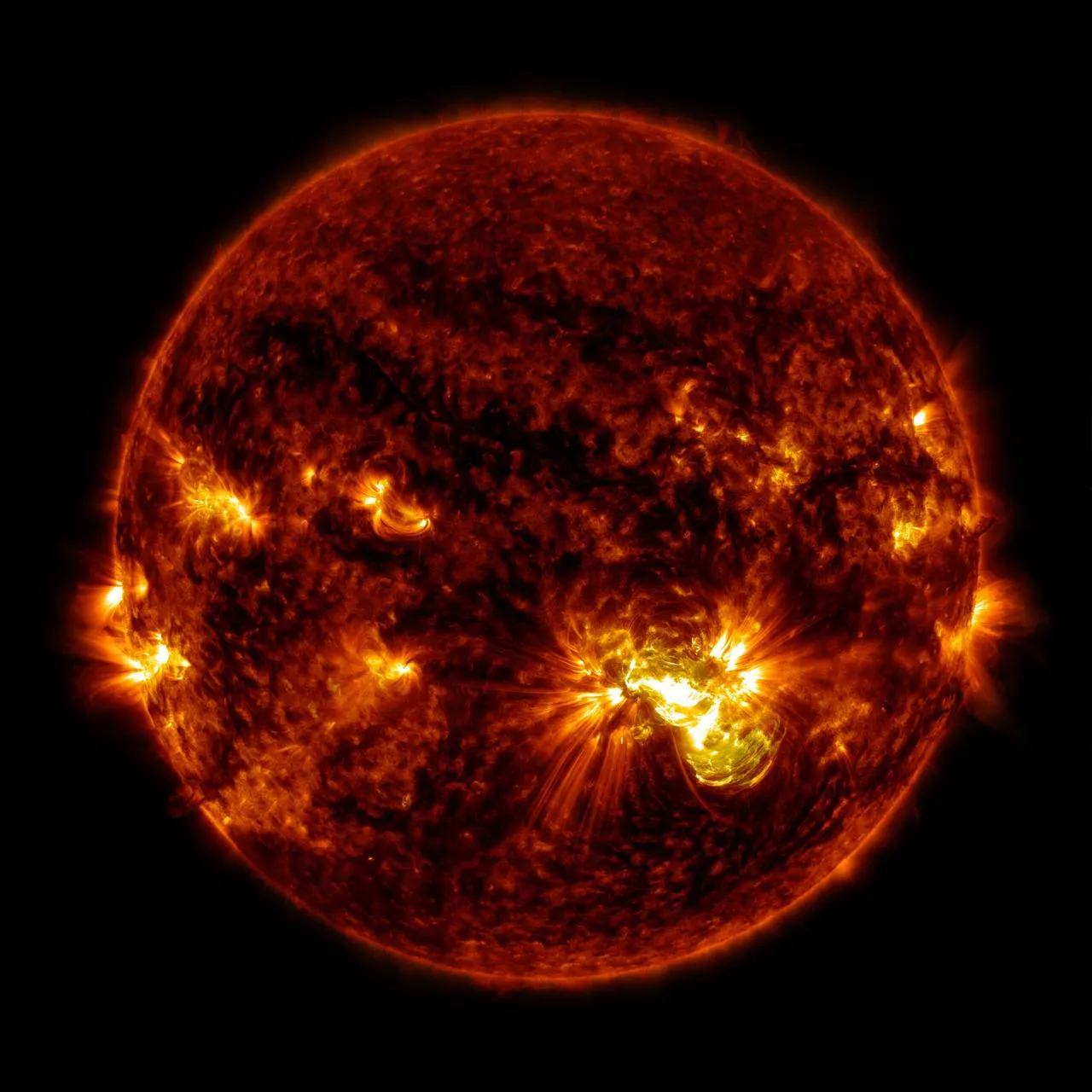
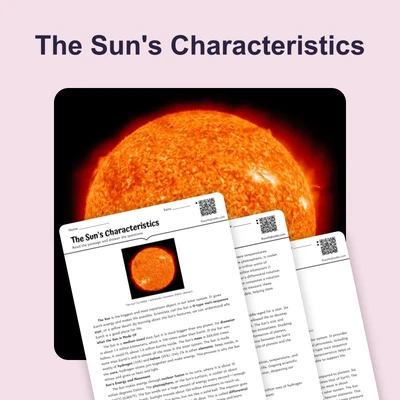
This image shows extreme ultraviolet light that highlights the hot solar material in the sun's atmosphere.Giant Sunspot Erupts on October 24, 2014" / NASA (Public domain).
Sunspots are cooler, darker patches that appear on the Sun's surface. Scientists explain that these dark areas form where intense magnetic fields push through the photosphere, which is the visible layer of the Sun. These powerful magnetic fields slow the flow of heat rising from deeper inside the Sun. As a result, sunspots become cooler than the surrounding areas.
Sunspots may look completely dark, but they still glow extremely hot. Evidence shows that a typical sunspot has a temperature around 6,500°F. The surrounding photosphere burns much hotter at about 10,000°F. Sunspots appear dark only by comparison to the brighter areas around them. If you could see a sunspot by itself, it would shine brightly.
Scientists observe that the number of sunspots changes in a predictable pattern. The solar cycle lasts approximately 11 years from start to finish. During solar maximum, the Sun can display dozens or even hundreds of sunspots at once. During solar minimum, the Sun may show very few sunspots or none at all. This cycle signals changes in the Sun's magnetic activity.
The solar cycle affects Earth in important ways. When sunspot numbers increase, the Sun releases more solar flares and coronal mass ejections. These powerful bursts of energy and particles can reach Earth. They may disrupt satellites, radio communications, and power grids. They also create beautiful auroras near Earth's poles. In 1859, a massive solar storm called the Carrington Event caused telegraph systems to fail across North America and Europe. Scientists study sunspots to predict when similar events might occur.
Understanding sunspots helps scientists learn how the Sun works and how it influences Earth. By tracking the solar cycle, researchers can better prepare for space weather events. This knowledge protects technology that modern society depends on every day.
Interesting Fact: Some sunspots grow larger than Earth itself. The largest sunspot ever recorded stretched more than 80,000 miles across!
Comprehension quiz (10 questions)
1. What causes sunspots to form on the Sun's surface?
2. What is the approximate temperature of a typical sunspot?
3. How long does one complete solar cycle last?
4. What does the term 'photosphere' mean in the passage?
5. What does 'solar maximum' refer to in the context of sunspot activity?
6. Based on the passage, why do sunspots appear dark?
7. What can happen on Earth when the number of sunspots increases?
8. How might understanding the solar cycle help scientists protect modern technology?
9. Sunspots are actually completely dark areas with no light or heat.
10. The Carrington Event in 1859 was caused by a massive solar storm that disrupted telegraph systems.
Perfect for the way you teach
- Build comprehension skills
- Auto-graded quiz
- Differentiated reading
- Read together at home
- Improve fluency
- Quiet reading time
- Reading curriculum support
- Independent practice
- Track Lexile growth