What Causes Volcanic Eruptions?
Interactive passage with audio narration, comprehension questions, and printable PDF.
By completing this purchase you agree to our Terms of Use and Privacy Policy. Your subscription renews automatically until you cancel. You can cancel anytime from your account settings. All sales are final and non-refundable. Digital content is available for download in your account immediately upon purchase.
What's included
What Causes Volcanic Eruptions? preview and details
About this printable What Causes Volcanic Eruptions? science reading passage, NGSS-aligned (Grades 5-8)
Sample passage and quiz from What Causes Volcanic Eruptions?
Reading passage and comprehension quiz preview
What Causes Volcanic Eruptions?
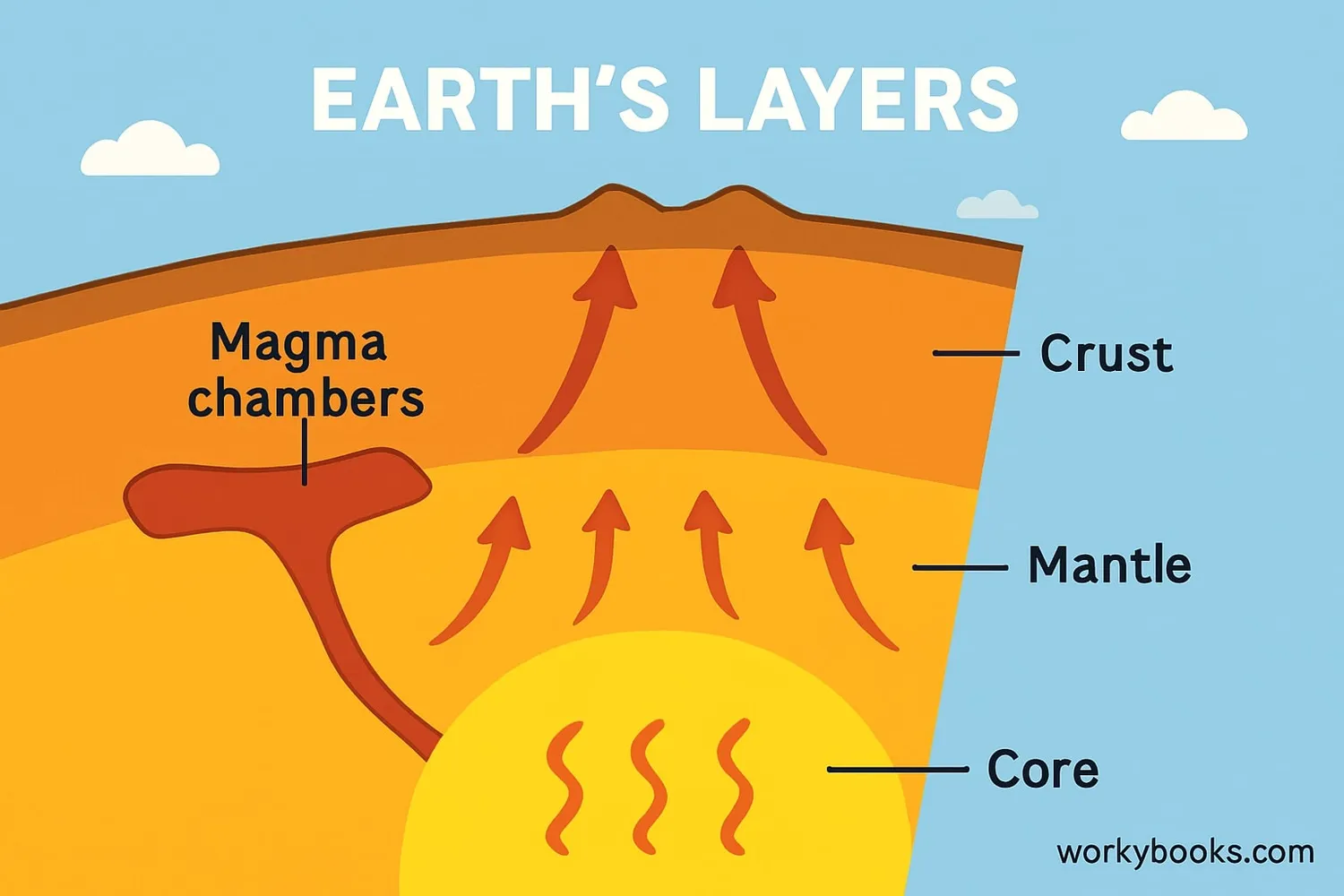
Volcanoes are some of Earth's most powerful and fascinating natural features. Across the globe, volcanic eruptions shape landscapes, affect climate, and impact human life. Scientists study volcanoes to understand the forces that drive these events and to predict their behavior. Understanding what causes volcanic eruptions requires knowledge of Earth's interior processes and the properties of molten rock called magma.
How Magma Forms and Moves
Deep beneath Earth's surface, high temperatures and pressures cause rocks to melt, forming magma. This magma contains not only melted rock but also dissolved gases, such as water vapor and carbon dioxide. Magma is less dense than the surrounding solid rock, so it tends to rise upward through cracks and weak spots in Earth's crust. As magma moves closer to the surface, the pressure decreases and the dissolved gases begin to expand. This expansion increases the upward force on the magma, sometimes causing it to break through the surface as an eruption. Once magma reaches the surface, it is called lava.
What Determines the Style of an Eruption?
Not all volcanic eruptions are the same. The characteristics of the magma play a key role in determining how a volcano erupts. One important factor is the silica content of the magma. Magma with high silica content is very viscous, meaning it is thick and sticky. This type of magma traps gases more easily, so pressure builds up until it's released in a violent, explosive eruption. In contrast, low-silica magma is more fluid, or effusive. Gases can escape more easily, resulting in slower, flowing eruptions where lava pours out steadily. Temperature also affects magma viscosity—hotter magma is less viscous and flows more easily. Scientific instruments can measure these properties, helping volcanologists predict eruption styles and hazards.
Where Does Magma Form?
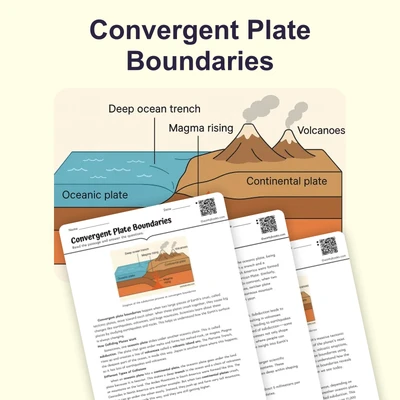
Magma forms in specific regions where conditions allow rocks to melt. Three main settings exist: subduction zones, mid-ocean ridges, and hot spots. In subduction zones, one tectonic plate slides beneath another, and water released from the sinking plate helps melt the mantle above it. The Pacific "Ring of Fire" is famous for this type of volcanism. Mid-ocean ridges are underwater mountain chains where plates pull apart, allowing magma to rise and create new ocean crust. Hot spots occur when plumes of hot material rise from deep within the mantle, melting rock above them. The Hawaiian Islands are a classic example of volcanoes formed by a hot spot. These different environments produce different types of magma and eruptions.
Understanding volcanic eruptions helps people prepare for and respond to natural disasters. Volcanic ash can affect air travel, climate, and agriculture. By studying magma composition and movement, scientists develop better models to predict eruptions and protect communities. The study of volcanoes also connects to larger Earth science principles, showing how Earth's internal energy drives surface changes and shapes our planet over time.
Interesting Fact:
Some volcanic eruptions inject millions of tons of ash and gases into the atmosphere, sometimes cooling Earth's climate for several years!
Comprehension quiz (10 questions)
1. What is magma?
2. What causes magma to rise towards the Earth's surface?
3. What is the difference between magma and lava?
4. Which type of magma is likely to cause an explosive eruption?
5. What does the word 'effusive' mean in the context of volcanic eruptions?
6. What is a subduction zone?
7. Why can volcanic eruptions sometimes cool Earth's climate?
8. True or False: High-silica magma is thin and runny.
9. True or False: Hotter magma is less viscous and flows more easily.
10. Which of the following is NOT a place where magma forms?
Perfect for the way you teach
- Build comprehension skills
- Auto-graded quiz
- Differentiated reading
- Read together at home
- Improve fluency
- Quiet reading time
- Reading curriculum support
- Independent practice
- Track Lexile growth