How Climate Change Affects Ocean Acidification — Reading Comprehension
Rate this
Premium Resource
Present
Present in classroom. No work saved
Assign
Classroom with student accounts, Track progress
Quick Play
No student accounts, assign with a link
Grades
6
7
8
PRINT+DIGITAL RESOURCE
This learning resource is available in interactive and printable formats. The interactive worksheet can be played online and assigned to students. The Printable PDF version can be downloaded and printed for completion by hand.
This comprehensive science passage explores how climate change impacts ocean acidification and why this process is important for the health of our oceans. Designed for grades 6-8 and aligned with NGSS standards, students learn how increased carbon dioxide (CO2) from human activities leads to changes in ocean chemistry, making seawater more acidic. Key concepts such as the carbon cycle, pH scale, and effects on marine organisms like corals and shellfish are explained with clear definitions and real-life examples. The passage includes a glossary of important science terms, a Spanish translation, a multiple-choice quiz, and writing prompts to encourage deeper thinking. This resource is perfect for classrooms seeking interactive, audio-integrated content to build science literacy, vocabulary, and critical thinking skills related to environmental science and climate change.
CONTENT PREVIEW
Expand content preview
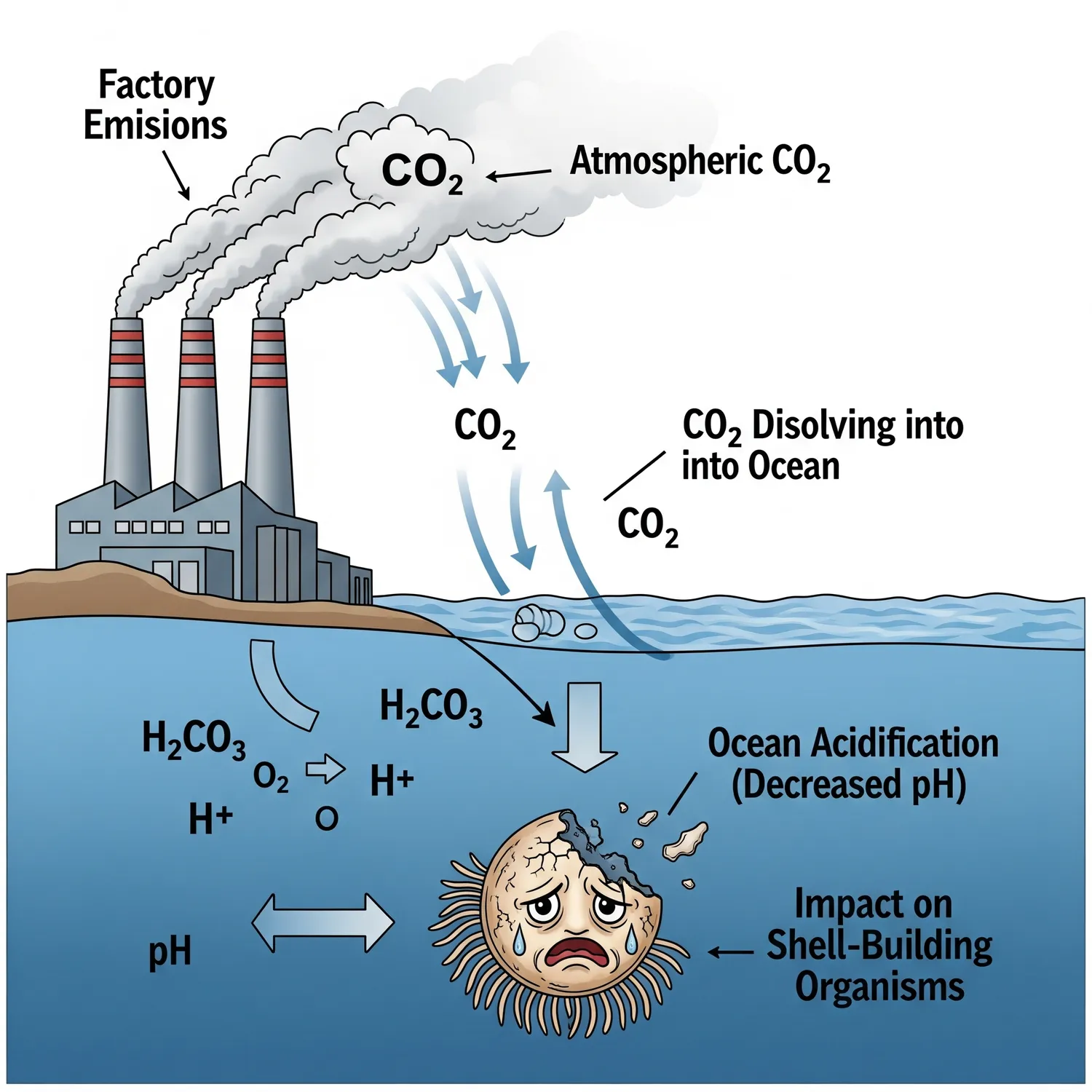
When the ocean becomes more acidic, it affects the entire marine food web.
Climate change is causing many changes on Earth, including rising temperatures and shifting weather patterns. One important effect of climate change is called ocean acidification. This is a process that makes the ocean more acidic, which can harm ocean life.
When people burn fossil fuels like coal, oil, and gas, they release a gas called carbon dioxide (CO2) into the air. Some of this CO2 stays in the atmosphere, trapping heat and causing global warming. But about 30% of this CO2 is absorbed by the ocean. When CO2 mixes with seawater, it forms a weak acid called carbonic acid. This process lowers the pH of the ocean, making it more acidic.
The pH scale measures how acidic or basic a substance is. Pure water has a pH of 7, which is neutral. Numbers lower than 7 mean the water is acidic, and numbers higher than 7 mean it is basic. Before the Industrial Revolution, the ocean’s average pH was about 8.2. Now, because of extra CO2, the pH has dropped to about 8.1. This may not seem like a big change, but even small drops in pH can make it harder for some sea creatures to survive.
Many marine animals, such as corals, oysters, and plankton, build their shells or skeletons out of a mineral called calcium carbonate. When the ocean becomes more acidic, it is harder for these animals to make their shells strong. Their shells can even begin to dissolve. This affects the entire marine food web because many animals depend on these tiny creatures for food.
For example, coral reefs are home to thousands of species. If corals cannot build their skeletons, entire reef ecosystems can be damaged. In some places, oyster farms have had trouble growing young oysters because the water is too acidic. Scientists are studying ways to reduce CO2 emissions and protect ocean life, such as using renewable energy and planting more trees to absorb CO2.
Interesting Fact: Some types of plankton, called coccolithophores, make tiny shells that help remove CO2 from the atmosphere. Ocean acidification can affect how well they do this important job!
What gas causes ocean acidification?
Carbon dioxide (CO2)OxygenNitrogenHydrogen
What does pH measure?
Acidity or basicityTemperatureSalinitySize
What do corals use to build skeletons?
Calcium carbonateIronSaltSilicon
Why is ocean acidification harmful to oysters?
Shells can't form wellWater is too saltyNo food availableOcean too cold
Lower pH makes it easier for shells to form.
TrueFalse
What is one way to reduce CO2?
Plant more treesBurn more coalDump trashUse more plastic
Which group is part of the marine food web?
PlanktonTigersEaglesPenguins
What does 'acidification' mean?
Becoming more acidicGetting colderGetting lighterBecoming less salty
Perfect For:
👩🏫 Teachers
• Reading comprehension practice
• Auto-graded assessments
• Literacy skill development
👨👩👧👦 Parents
• Reading practice at home
• Comprehension improvement
• Educational reading time
🏠 Homeschoolers
• Reading curriculum support
• Independent reading practice
• Progress monitoring
Reading Features:
📖
Reading Passage
Engaging fiction or nonfiction text
❓
Comprehension Quiz
Auto-graded questions
📊
Instant Feedback
Immediate results and scoring
📄
Printable Version
Download for offline reading
🔊
Read Aloud
Voice-over with word highlighting
Reviews & Ratings
No reviews yet. Be the first to share your experience!
Related Content
What Is Earth Science?
This engaging middle school science passage introduces students to the field of Earth science, aligning with NGSS standa...
MS-ESS1MS-ESS2MS-ESS3SEP
Transportation and Climate Change
This engaging science passage for grades 6-8 explores the vital role that transportation plays in climate change. Studen...
Tools and Technology in Earth Science
This middle school science reading passage explores the wide range of tools and technologies used in Earth science, from...
MS-ESS2-2MS-ESS3-2MS-ETS1-1MS-PS4-3
Climate Change: Solutions and Mitigation
This passage explores scientific solutions and mitigation strategies for climate change, designed for middle school scie...
MS-ESS3-4MS-ESS3-5
Extreme Weather and Climate Change
This Grade 6-8 science passage, aligned to NGSS standards, explores the impact of climate change on extreme weather even...
Climate Change: Causes
This comprehensive middle school science passage explores the causes of climate change by examining both natural and hum...
MS-ESS3-5MS-LS2-4
Effects of Climate Change
This comprehensive middle school science passage explores the effects of climate change on Earth's systems and life, ali...
MS-ESS3-5MS-LS4-4
Climate Change Bird Migration
This educational passage, audio integrated, explores how climate change affects bird migration patterns. Students will l...
MS-LS2-4: CONSTRUCT AN ARGUMENT SUPPORTED BY EMPIRICAL EVIDENCE THAT CHANGES TO PHYSICAL OR BIOLOGICAL COMPONENTS OF AN ECOSYSTEM AFFECT POPULATIONS.
Climate Through Earth's History
This engaging passage for grades 6-8 explores how Earth's climate has naturally changed over millions of years, highligh...
MS-ESS1-4MS-ESS2-6
How Deforestation Contributes to Climate Change
This engaging science passage, aligned with NGSS standards, explains how deforestation contributes to climate change for...
Climate Change: Vulnerable Ecosystems
This middle school science passage, aligned with NGSS standards MS-ESS3-5 and MS-LS2-4, helps students understand how cl...
MS-ESS3-5MS-LS2-4
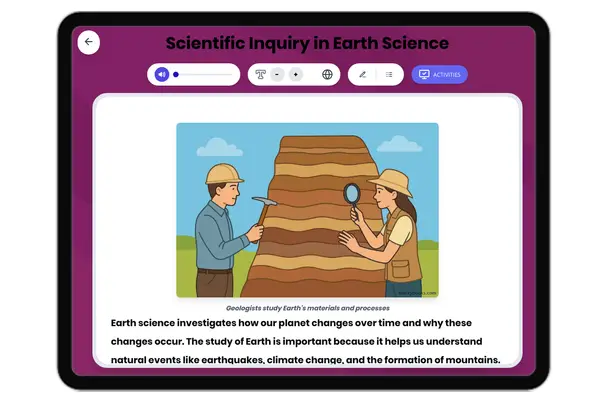
Scientific Inquiry in Earth Science
This passage explores scientific inquiry in Earth science for grades 6-8, aligned with NGSS standards MS-ESS1-4, MS-ESS2...
MS-ESS1-4MS-ESS2-1MS-ESS3-5SEP
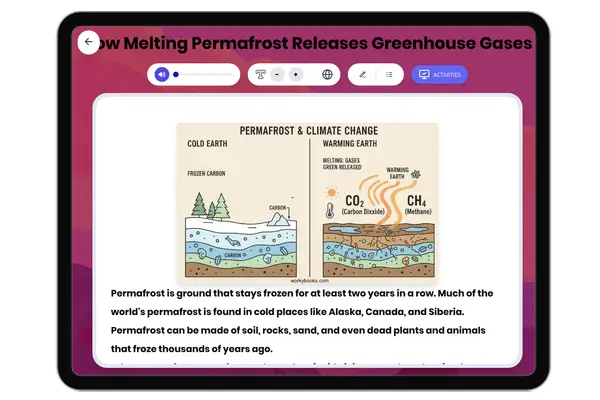
Permafrost and Climate Change
This engaging, NGSS-aligned science passage for grades 6-8 explores how melting permafrost releases greenhouse gases, im...
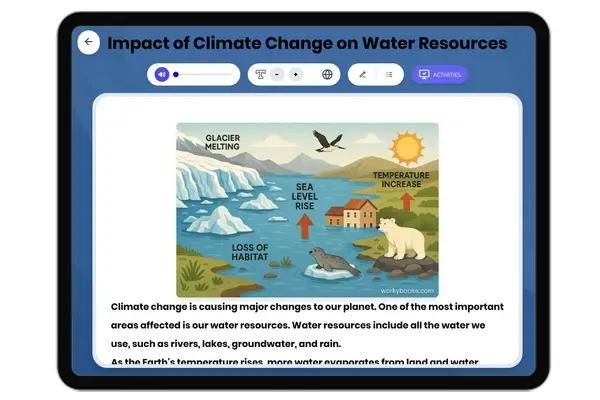
Impact of Climate Change on Water Resources
This engaging science passage for grades 6-8 explores the impact of climate change on water resources, aligning with NGS...
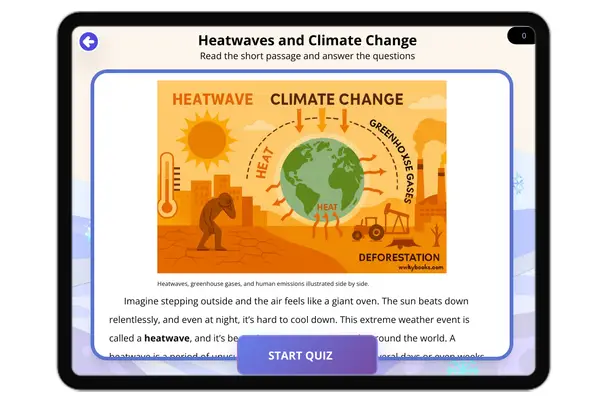
Heatwaves and Climate Change
This educational resource features an engaging, audio-integrated reading passage titled 'Heatwaves and Climate Change,' ...
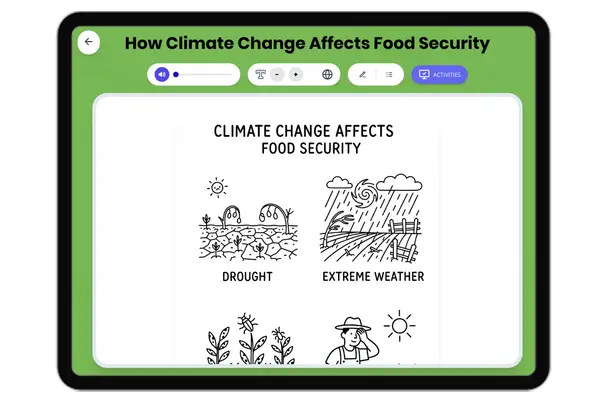
How Climate Change Affects Food Security
This grade 6-8 science passage, aligned with the NGSS standards, explores how climate change affects food security aroun...
Addressing Climate Change
This middle school science passage, aligned with NGSS standards MS-ESS3-4 and MS-ESS3-5, explores the mechanisms and sol...
MS-ESS3-4MS-ESS3-5
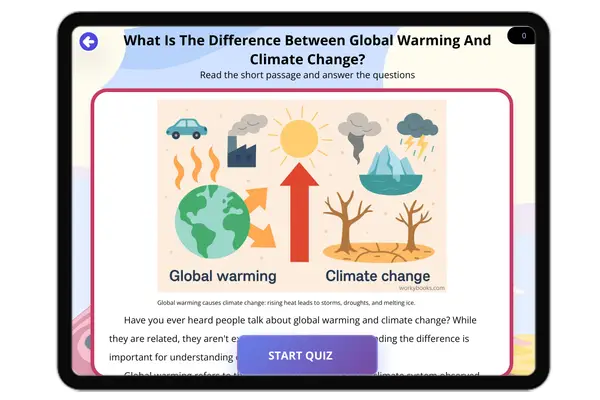
What Is The Difference Between Global Warming And Climate Change?
This educational content, audio integrated, explores the crucial differences between global warming and climate change. ...
Climate Change: Species Responses
This middle school science passage explores how species respond to climate change, aligning with NGSS standards MS-LS4-4...
MS-LS4-4MS-LS4-6
Climate Refugees
This engaging science passage for grades 6-8 introduces students to the topic of climate refugees and human migration. A...