What Is the Habitable Zone
Interactive passage with audio narration, comprehension questions, and printable PDF.
By completing this purchase you agree to our Terms of Use and Privacy Policy. Your subscription renews automatically until you cancel. You can cancel anytime from your account settings. All sales are final and non-refundable. Digital content is available for download in your account immediately upon purchase.
What's included
What Is the Habitable Zone preview and details
About this printable What Is the Habitable Zone science reading passage, NGSS-aligned (Grades 5-8)
Sample passage and quiz from What Is the Habitable Zone
Reading passage and comprehension quiz preview
What Is the Habitable Zone
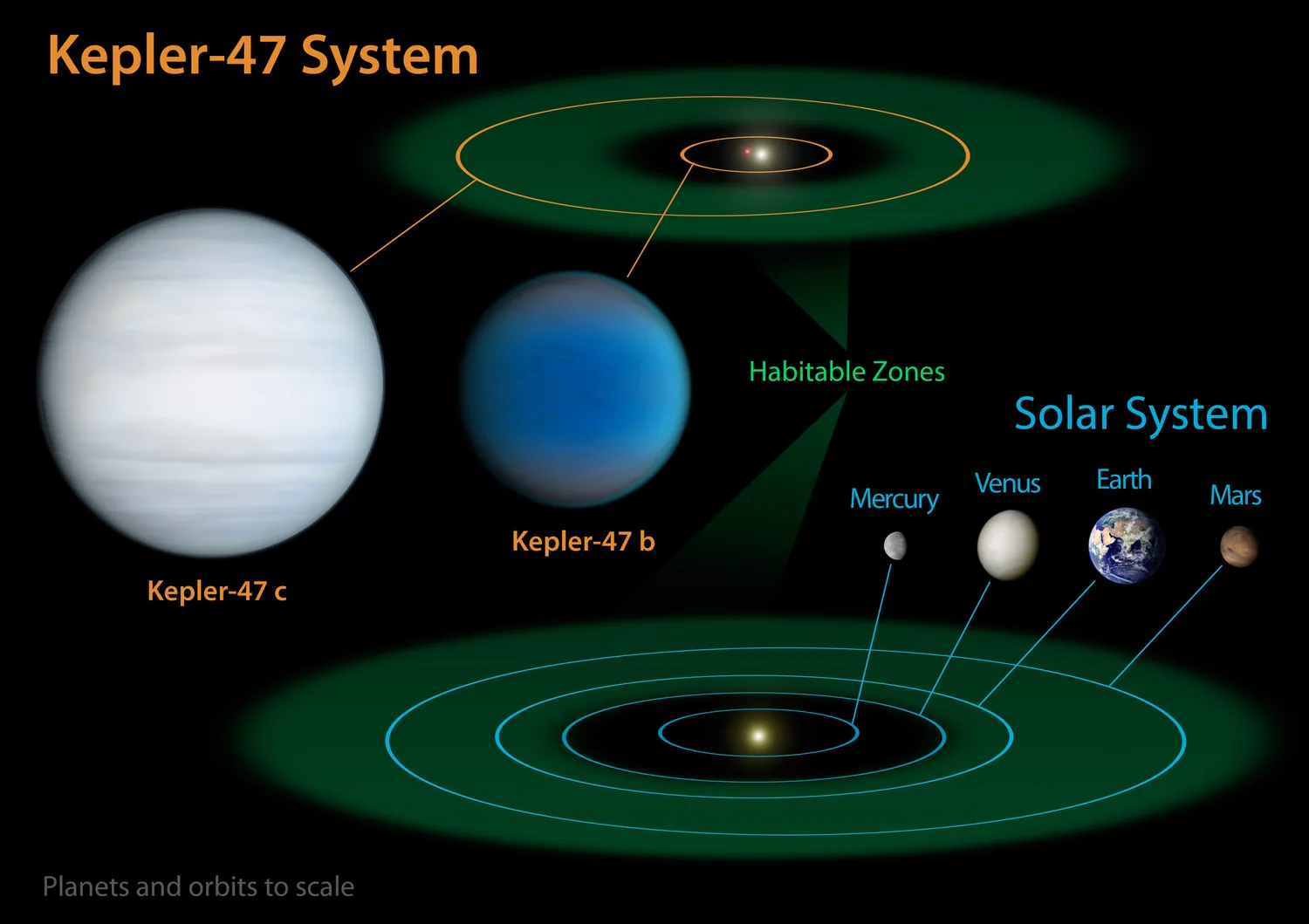
The habitable zone is the region around a star where temperatures allow liquid water to exist on a planet's surface. Scientists sometimes call this area the "Goldilocks zone" because conditions are not too hot and not too cold. Distance from a star determines whether a planet can maintain the right temperature for liquid water. This matters because liquid water is essential for life as we know it.
A planet's distance from its star controls how much energy it receives. Planets close to their star receive intense heat and light. This energy can cause water to evaporate completely into gas. Planets far from their star receive much less energy. Water on these distant worlds freezes solid into ice. Only planets at just the right distance can keep water in its liquid form. The habitable zone boundaries depend on the star's size and temperature.
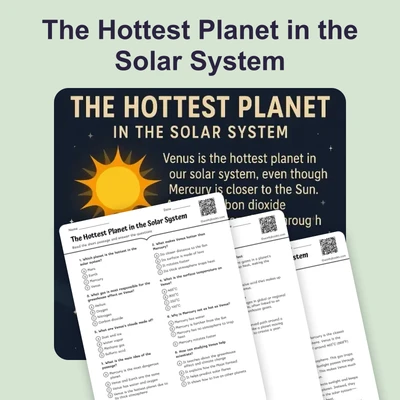
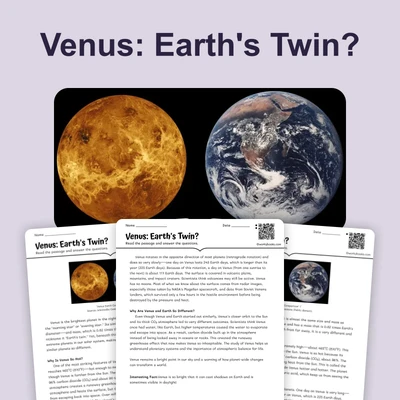
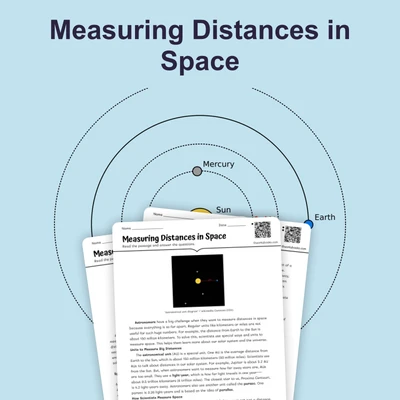
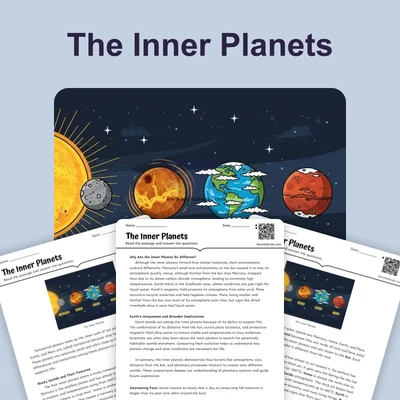
Earth sits comfortably inside the Sun's habitable zone. Our planet orbits about 93 million miles from the Sun. This distance allows Earth's average surface temperature to stay around 59 degrees Fahrenheit. Evidence shows that liquid water has existed on Earth's surface for billions of years. Mars orbits near the outer edge of our Sun's habitable zone. Scientists have found evidence of ancient water flows on Mars. Venus, closer to the Sun, is too hot for liquid water today.
Understanding the habitable zone helps scientists search for planets that might support life beyond Earth. Different stars have habitable zones at different distances. A small, cool star has a habitable zone closer to it. A large, hot star has a habitable zone much farther away. Astronomers have discovered thousands of exoplanets orbiting other stars. Some of these planets orbit within their star's habitable zone. This discovery suggests that conditions suitable for life may exist elsewhere in the universe.
Interesting Fact: The habitable zone around our Sun extends from about 0.95 to 1.37 astronomical units, which means Earth sits near the inner edge of this life-friendly region.
Comprehension quiz (10 questions)
1. What is the habitable zone?
2. Why is the habitable zone sometimes called the 'Goldilocks zone'?
3. What happens to water on planets that are too close to their star?
4. In the passage, what does the term 'energy' refer to?
5. Based on the passage, why is Earth able to maintain liquid water on its surface?
6. Which planet mentioned in the passage is too hot for liquid water?
7. How does the size of a star affect its habitable zone?
8. What can scientists learn by studying exoplanets in habitable zones?
9. True or False: Liquid water is essential for life as we know it.
10. True or False: Mars is closer to the Sun than Earth.
Perfect for the way you teach
- Build comprehension skills
- Auto-graded quiz
- Differentiated reading
- Read together at home
- Improve fluency
- Quiet reading time
- Reading curriculum support
- Independent practice
- Track Lexile growth