Where Volcanoes Form
Interactive passage with audio narration, comprehension questions, and printable PDF.
By completing this purchase you agree to our Terms of Use and Privacy Policy. Your subscription renews automatically until you cancel. You can cancel anytime from your account settings. All sales are final and non-refundable. Digital content is available for download in your account immediately upon purchase.
What's included
Where Volcanoes Form preview and details
About this printable Where Volcanoes Form science reading passage, NGSS-aligned (Grades 5-8)
Sample passage and quiz from Where Volcanoes Form
Reading passage and comprehension quiz preview
Where Volcanoes Form
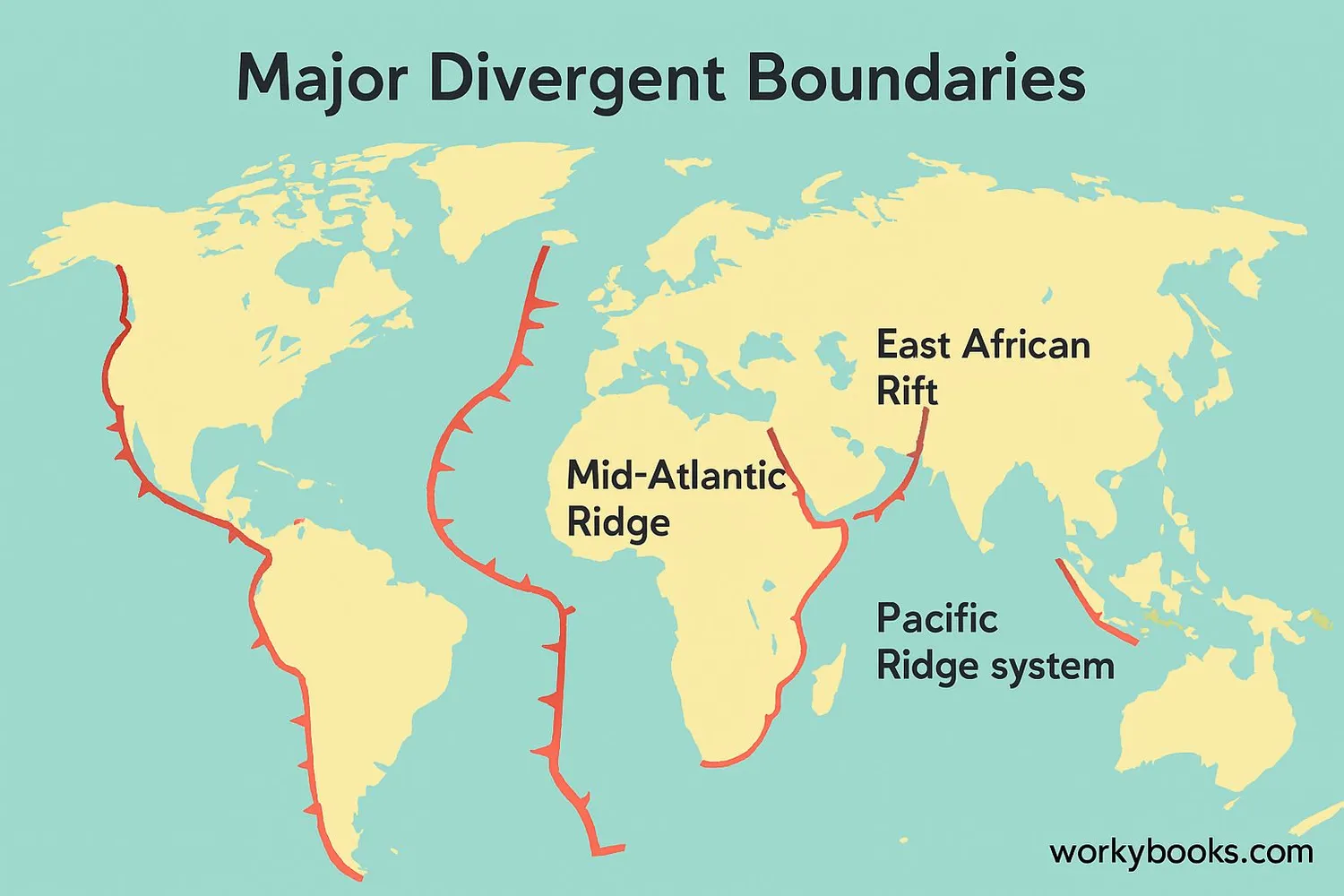
Volcanoes are powerful natural features that shape Earth's surface. Most volcanoes do not appear randomly, but are found in specific regions. Scientists noticed that volcanoes tend to cluster in certain patterns around the world. This leads to an important scientific question: why do volcanoes form in some places and not others? The answer involves the movement and interaction of Earth's tectonic plates and the forces deep inside our planet.
Plate Boundaries and Volcano Formation
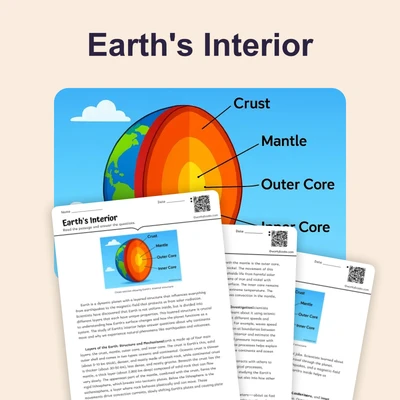
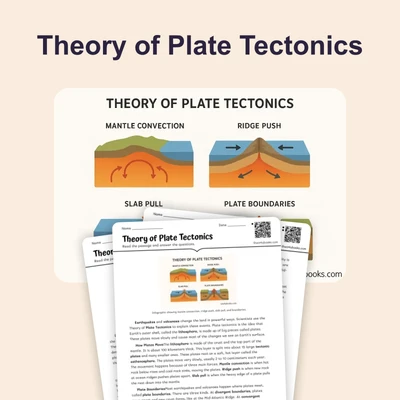
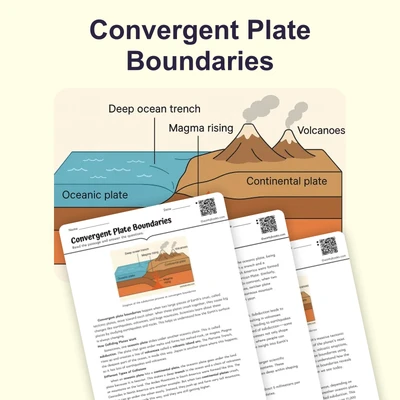
Earth's outer shell, called the lithosphere, is broken into large pieces known as tectonic plates. These plates move slowly, sometimes only a few centimeters per year. Volcanoes most commonly form at the edges where these plates meet, called plate boundaries. One major type of plate boundary is a subduction zone. Here, one plate slides beneath another, pushing material down into the mantle. This process causes melting, which produces magma that can rise to the surface and create volcanoes. The Ring of Fire, which encircles the Pacific Ocean, is a famous example. About 75% of the world's volcanoes and 90% of earthquakes occur here. Island arcs, like Japan, and continental volcanic arcs, such as the Andes, also form at subduction zones.
Other Volcanic Environments: Divergent Boundaries and Hot Spots
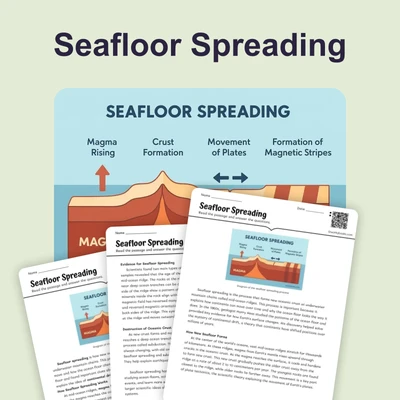
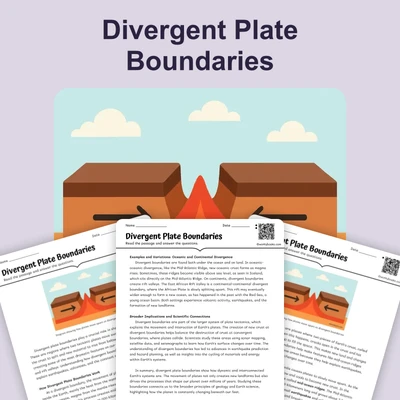
Volcanoes also form at divergent boundaries, where plates move apart. In these regions, magma rises to fill the gap, creating new crust. The mid-ocean ridges, like the Mid-Atlantic Ridge, are the longest volcanic features on Earth. Some divergent boundaries occur on land, such as Iceland or East Africa's Rift Valley, resulting in visible volcanoes. Another important setting is a hot spot. Hot spots are areas where a plume of very hot material rises from deep within the mantle, creating volcanoes as a tectonic plate moves over it. The Hawaiian Islands and Yellowstone are famous examples. Hot spots help scientists track the movement of tectonic plates over time.
Why Some Areas Have No Volcanoes
Not all parts of Earth have volcanoes. Stable continental interiors, far from plate boundaries or hot spots, rarely experience volcanic eruptions. This is because the processes that create magma—such as subduction or plate separation—don’t occur there. As a result, large regions, like much of central North America, lack active volcanoes. Scientists classify volcanoes as active (erupted recently), dormant (not currently erupting but could erupt again), or extinct (unlikely to ever erupt again). These classifications help people understand volcanic risks.
Understanding where volcanoes form helps scientists predict eruptions, protect communities, and learn about Earth’s dynamic systems. The global distribution of volcanoes is strong evidence for the theory of plate tectonics, which explains many geological phenomena. The study of volcanoes also helps us understand the history and future of our planet.
Interesting Fact: The Ring of Fire contains more than 450 volcanoes, making it the most volcanically active region on Earth.
Comprehension quiz (10 questions)
1. Where do most volcanoes form on Earth?
2. What is a subduction zone?
3. According to the passage, about what percentage of the world's volcanoes are found in the Ring of Fire?
4. What is a hot spot?
5. Which of the following best describes a dormant volcano?
6. What does the word 'lithosphere' most closely mean in the passage?
7. Which statement can you infer about areas far from plate boundaries and hot spots?
8. How do hot spots help scientists understand plate movement?
9. True or False: The Ring of Fire is the least volcanically active region on Earth.
10. True or False: Plate tectonics explain the global distribution of volcanoes.
Perfect for the way you teach
- Build comprehension skills
- Auto-graded quiz
- Differentiated reading
- Read together at home
- Improve fluency
- Quiet reading time
- Reading curriculum support
- Independent practice
- Track Lexile growth