Why You Can't Feel Earth Spinning
Interactive passage with audio narration, comprehension questions, and printable PDF.
By completing this purchase you agree to our Terms of Use and Privacy Policy. Your subscription renews automatically until you cancel. You can cancel anytime from your account settings. All sales are final and non-refundable. Digital content is available for download in your account immediately upon purchase.
What's included
Why You Can't Feel Earth Spinning preview and details
About this printable Why You Can't Feel Earth Spinning science reading passage, NGSS-aligned (Grades 5-8)
Sample passage and quiz from Why You Can't Feel Earth Spinning
Reading passage and comprehension quiz preview
Why You Can't Feel Earth Spinning
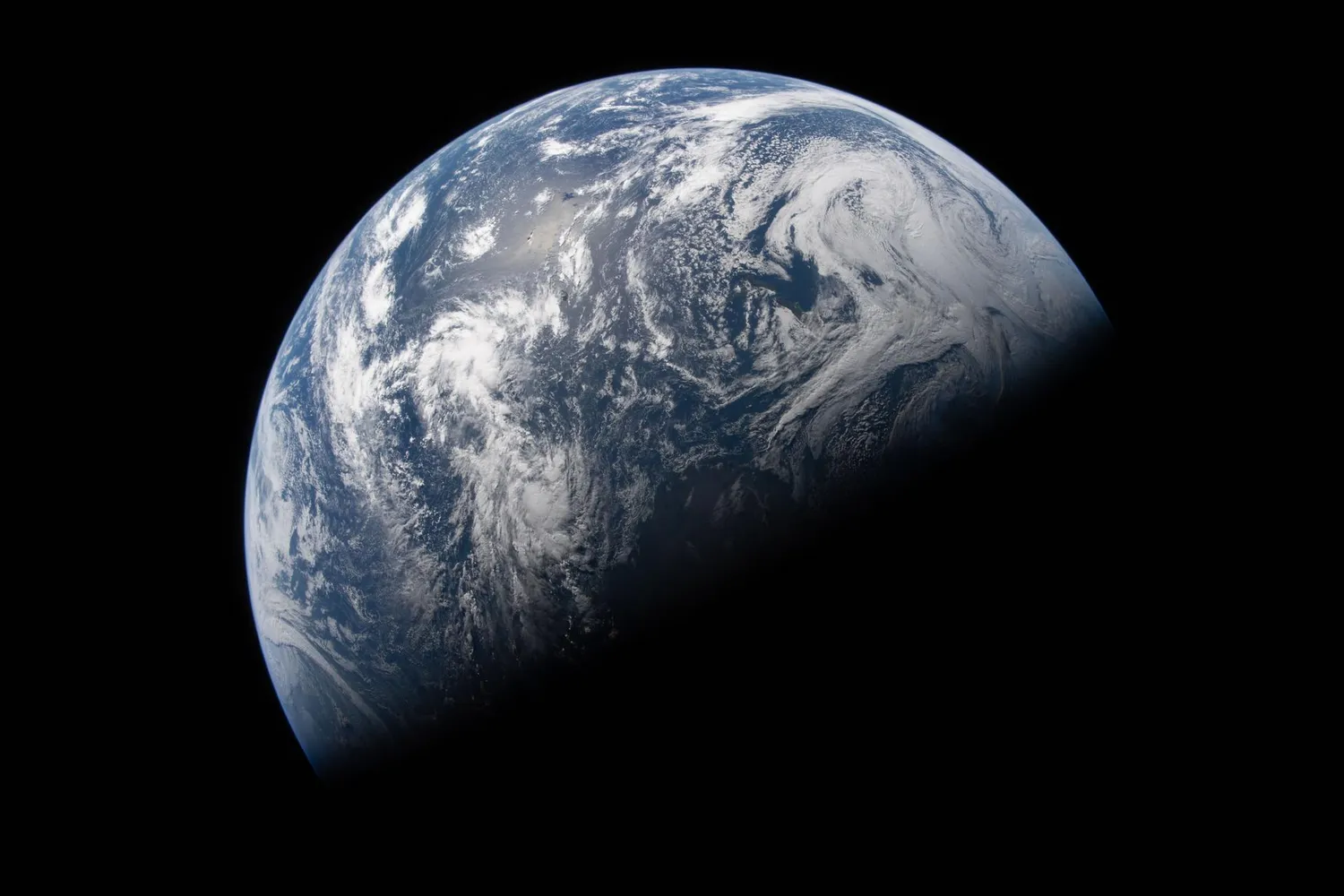
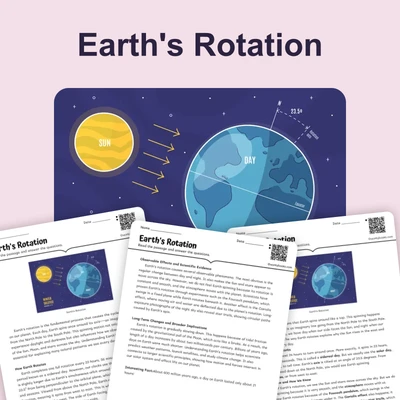
Earth spins at approximately 1,600 kilometers per hour at the equator. Yet you feel nothing as you stand, walk, or sit. The reason is simple: you are moving with Earth at a constant speed. Our bodies can only detect changes in motion, not steady motion itself.
Scientists explain this phenomenon using the concept of inertia. Inertia is the tendency of objects to resist changes in their motion. When you move at a constant velocity, your body experiences no force pushing or pulling you. Velocity describes both the speed and direction of movement. Everything on Earth moves together: the ground, the air, buildings, and you. This shared motion creates what scientists call a reference frame. Within this frame, nothing appears to move relative to anything else.
Your body can sense acceleration, which means any change in speed or direction. When a car speeds up, slows down, or turns a corner, you feel pushed against your seat. This sensation occurs because your body resists the change in motion. However, when the car moves at a steady speed on a straight road, you feel no motion at all. The same principle applies to Earth's rotation. Earth spins at a constant rate in the same direction. No acceleration occurs, so your body detects nothing.
Evidence shows that only changes in motion create forces we can feel. Imagine riding in an airplane at 900 kilometers per hour. You can walk down the aisle, pour water, and toss a ball normally. The plane's constant velocity makes everything inside move together. Scientists observe the same effect on Earth. Our planet rotates smoothly without speeding up or slowing down noticeably. The atmosphere rotates with the solid Earth, so wind does not constantly blow from the east at 1,600 kilometers per hour.
This concept matters because it helps us understand motion in the universe. Planets, stars, and galaxies all move at tremendous speeds. Yet observers within these systems feel stationary. Understanding relative motion allows scientists to study how objects move in space. It also explains why early astronomers struggled to accept Earth's rotation. Without feeling motion, people naturally assumed Earth stood still.
Interesting Fact: If Earth suddenly stopped spinning, everything not attached to the ground would continue moving eastward at 1,600 kilometers per hour due to inertia. This would cause catastrophic destruction across the planet.
Comprehension quiz (10 questions)
1. According to the passage, approximately how fast does Earth spin at the equator?
2. Why can't we feel Earth spinning?
3. What does the term 'inertia' mean in the context of this passage?
4. What does 'velocity' describe?
5. According to the passage, when do you feel motion while riding in a car?
6. What can scientists observe about motion in an airplane traveling at 900 kilometers per hour?
7. Why does wind not constantly blow from the east at 1,600 kilometers per hour?
8. How does understanding relative motion help scientists?
9. True or False: Our bodies can sense constant velocity without any change in speed or direction.
10. True or False: If Earth suddenly stopped spinning, everything not attached to the ground would continue moving eastward due to inertia.
Perfect for the way you teach
- Build comprehension skills
- Auto-graded quiz
- Differentiated reading
- Read together at home
- Improve fluency
- Quiet reading time
- Reading curriculum support
- Independent practice
- Track Lexile growth