This learning resource is available in interactive and printable formats. The interactive worksheet can be played online and assigned to students. The Printable PDF version can be downloaded and printed for completion by hand.
A Light-Emitting Diode (LED) is a high-efficiency semiconductor device that produces light through a process called electroluminescence, where an electric current triggers the release of photons within a p-n junction. Unlike traditional incandescent bulbs that waste energy as heat, LEDs offer a sustainable and durable alternative for modern electronics and illumination. In the classroom, this technology comes to life through the game topic "The Luminous Lab," a circuit-building simulation where students apply Ohm’s Law to power virtual environments without damaging sensitive components.
By engaging with diverse question types—such as identifying anodes and cathodes, performing lumens-per-watt comparative analyses, and using predictive modeling for circuit resistance—learners bridge the gap between abstract physics and real-world engineering. The educational benefits are significant, as this topic fosters STEM literacy and critical thinking while directly satisfying NGSS standards for Energy Transfer (PS3) and Electromagnetic Radiation (PS4). Ultimately, studying LEDs provides students with a practical understanding of how semiconductor physics drives global sustainability efforts and technological innovation.
Perfect For:
👩🏫 Teachers
• Interactive classroom activities
• Auto-graded game assignments
• Student engagement tools
👨👩👧👦 Parents
• Fun learning at home
• Educational screen time
• Progress tracking
🏠 Homeschoolers
• Interactive curriculum
• Self-paced gaming
• Engaging practice
Game Features:
🎮
Interactive Gameplay
Engaging educational game experience
📊
Auto-Grading
Instant feedback and scoring
📝
Assignable
Perfect for homework and classwork
📄
Printable Components
Additional offline materials
Reviews & Ratings
No reviews yet. Be the first to share your experience!
Related Resources
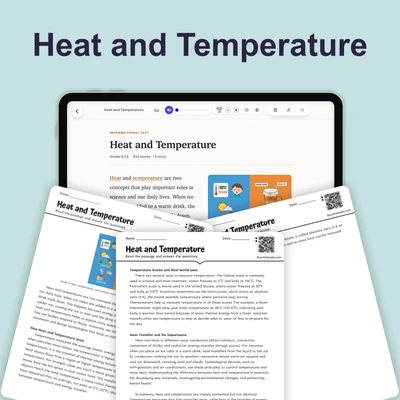
Heat and Temperature
This comprehensive passage for grades 6-8 explores the important differences between heat and temperature, emphasizing t...
MS-PS3-3MS-PS3-4
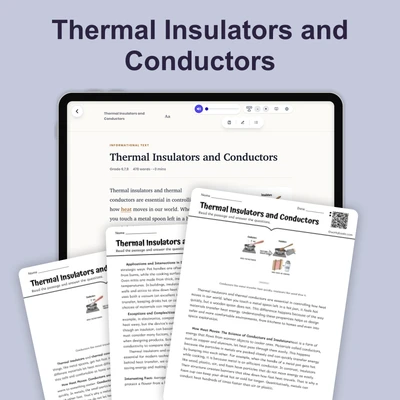
Thermal Insulators and Conductors
This passage for grades 6-8 explores the science of thermal insulators and conductors, aligning with NGSS MS-PS3-3. Stud...
MS-PS3-3
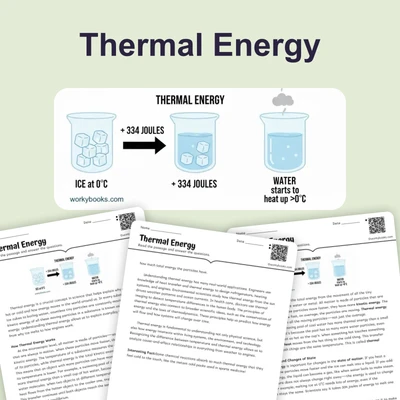
Thermal Energy
This comprehensive passage explores the concept of thermal energy, aligning with NGSS standards MS-PS3-3 and MS-PS3-4. S...
MS-PS3-3MS-PS3-4
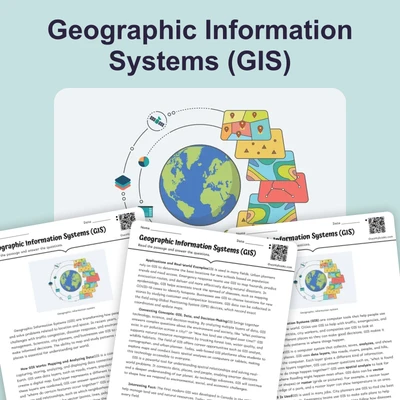
Geographic Information Systems (GIS)
This engaging middle school science passage introduces students to Geographic Information Systems (GIS), aligning with N...
MS-ESS3-3MS-ETS1-1MS-ETS1-2MS-ETS1-3
Remote Sensing
This middle school science passage introduces students to the concept of remote sensing—the collection of information ab...
MS-ESS3-3MS-PS4-2MS-ETS1-1MS-ETS1-3
The Electromagnetic Spectrum
This comprehensive science reading passage introduces middle school students (grades 6-8) to the electromagnetic spectru...
MS-PS4-1MS-PS4-2
Visible Light and Color
This comprehensive science passage for grades 6-8 explores visible light as the part of the electromagnetic spectrum tha...
MS-PS4-2
Light Waves
This middle school science passage introduces students in grades 6-8 to the concept of light as an electromagnetic wave,...
MS-PS4-2
Wave Absorption
This engaging science passage for grades 6-8 explores the mechanism of wave absorption, where waves transfer energy to m...
MS-PS4-2
Wave Behavior: Transmission
This informational science reading passage for grades 6-8 explores the concept of wave behavior, focusing on transmissio...
MS-PS4-2
Wave Refraction
This comprehensive science passage introduces middle school students to the concept of refraction, a key phenomenon in w...
MS-PS4-2
Wave Reflection
This middle school science passage explores the behavior of waves during reflection, focusing on how and why waves bounc...
MS-PS4-2
Reflection and Mirrors
This engaging passage explores the science behind reflection and mirrors, designed for students in grades 6-8. Aligned w...
MS-PS4-2
Lasers
This passage explores the science of lasers for middle school students, aligning with NGSS standard MS-PS4-2. Students l...
MS-PS4-2
How We See
This informational science passage for grades 6-8 explores the mechanisms behind human vision, focusing on how light ent...
MS-PS4-2
Optical Instruments
This passage introduces middle school students to the fascinating world of optical instruments. Aligned to NGSS standard...
MS-PS4-2
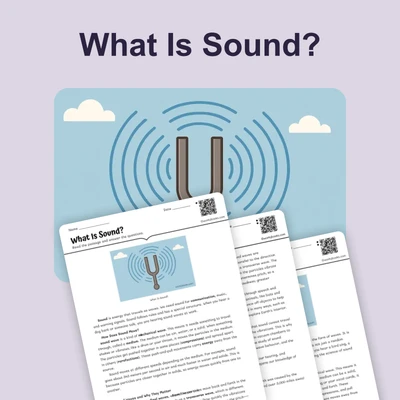
What Is Sound?
This passage explores the science of sound for middle school students, aligned with NGSS standards MS-PS4-1 and MS-PS4-2...
MS-PS4-1MS-PS4-2
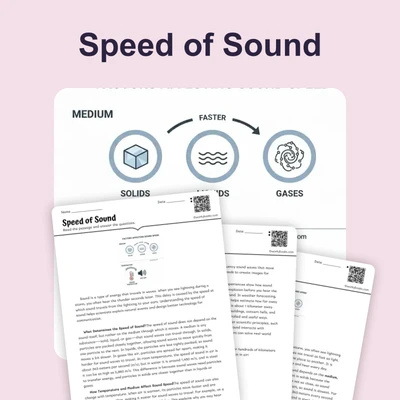
Speed of Sound
This comprehensive passage for grades 6-8 explores the science behind the speed of sound and how it varies depending on ...
MS-PS4-1MS-PS4-2
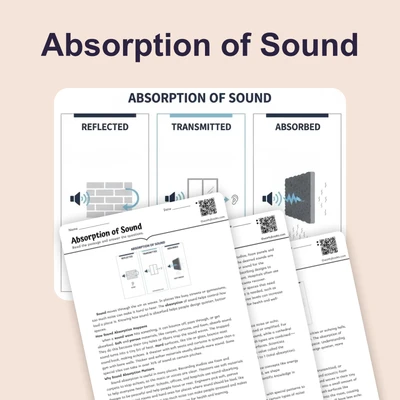
Absorption of Sound
This comprehensive passage, aligned to NGSS MS-PS4-2, explores the science behind the absorption of sound. Students in g...