Are Mammoths Dinosaurs
Interactive passage with audio narration, comprehension questions, and printable PDF.
By completing this purchase you agree to our Terms of Use and Privacy Policy. Your subscription renews automatically until you cancel. You can cancel anytime from your account settings. All sales are final and non-refundable. Digital content is available for download in your account immediately upon purchase.
What's included
Are Mammoths Dinosaurs preview and details
About this printable Are Mammoths Dinosaurs science reading passage, NGSS-aligned (Grades 5-8)
Sample passage and quiz from Are Mammoths Dinosaurs
Reading passage and comprehension quiz preview
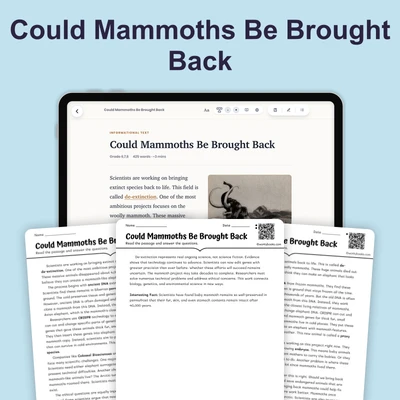
Are Mammoths Dinosaurs
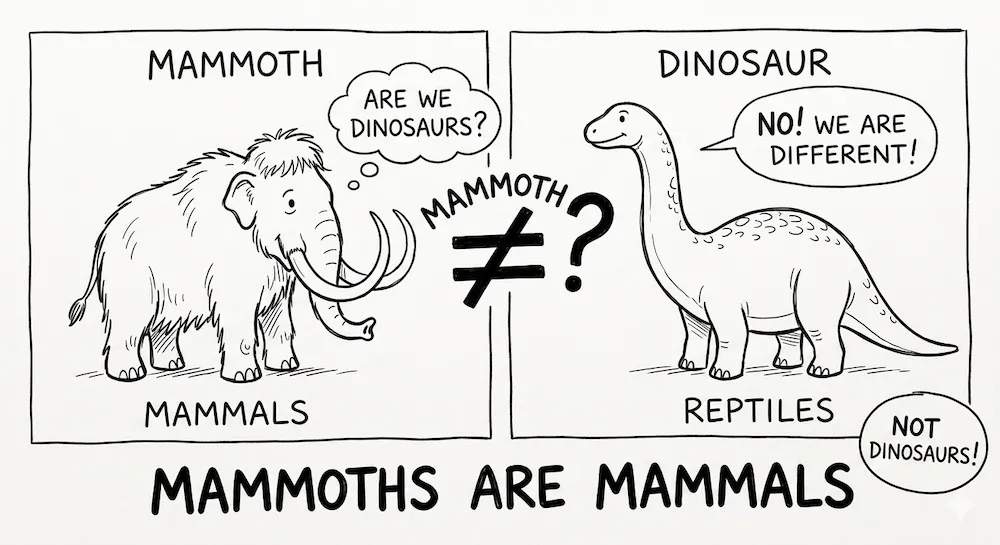
Many people think mammoths were dinosaurs, but this is not correct. Mammoths were actually mammals, just like modern elephants. Scientists explain that mammoths and elephants share a close evolutionary relationship. Understanding this difference helps us learn about Earth's long history.
Mammoths lived during a time called the Pleistocene Ice Ages. This period lasted from about 2.6 million years ago until about 11,700 years ago. During this time, early humans walked the Earth alongside these giant creatures. Evidence shows that humans hunted mammoths and used their bones and tusks for tools and shelter. In contrast, dinosaurs went extinct over 65 million years before the first mammoths appeared. Dinosaurs lived during the Mesozoic Era, which ended when a massive asteroid struck Earth. This means mammoths and dinosaurs never existed at the same time.
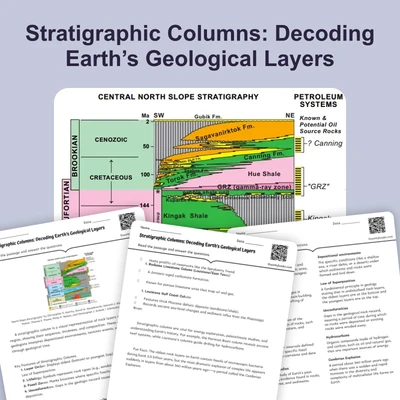
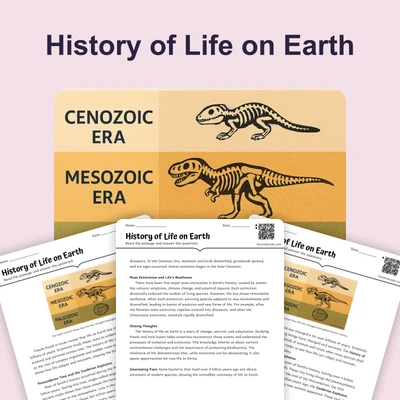
The key difference between these animals involves their classification. Dinosaurs were reptiles that dominated Earth for about 165 million years. Mammoths belonged to a group of mammals called proboscideans. These animals had trunks, large bodies, and tusks. Mammoths lived during the Cenozoic Era, which is sometimes called the Age of Mammals. This era began after dinosaurs disappeared and continues today. Scientists observe that mammoths had hair covering their bodies to stay warm in cold climates. Dinosaurs, however, had scales or feathers and lived in much warmer conditions.
In 2013, scientists discovered a remarkably preserved mammoth on a remote island in Siberia. The frozen mammoth still had blood in its veins after thousands of years. This discovery provided valuable information about mammoth biology and their environment. Such fossils help researchers understand how these animals lived and why they eventually became extinct about 4,000 years ago. The last mammoths survived on Wrangel Island long after most had disappeared from mainland areas.
Understanding the difference between mammoths and dinosaurs matters for several reasons. It helps us accurately interpret Earth's geologic timeline and the history of life. Scientists use this knowledge to study how species adapt to changing environments. The mammoth extinction teaches us about climate change and human impact on large animals. Being big and ancient does not make something a dinosaur. Proper classification helps us understand how different groups of animals evolved and responded to Earth's changing conditions over millions of years.
Interesting Fact: The last woolly mammoths died out around the same time ancient Egyptians were building the pyramids, showing how recently these Ice Age giants still walked the Earth.
Comprehension quiz (10 questions)
1. What type of animals were mammoths?
2. During which time period did mammoths live?
3. How long ago did dinosaurs go extinct?
4. What does the word 'proboscideans' refer to in the passage?
5. What does 'extinct' mean in the context of this passage?
6. Why is the Cenozoic Era sometimes called the Age of Mammals?
7. What remarkable discovery did scientists make in Siberia in 2013?
8. Based on the passage, what can we infer about the relationship between mammoths and climate?
9. Why does understanding the difference between mammoths and dinosaurs matter for science?
10. True or False: Mammoths and dinosaurs lived at the same time.
Perfect for the way you teach
- Build comprehension skills
- Auto-graded quiz
- Differentiated reading
- Read together at home
- Improve fluency
- Quiet reading time
- Reading curriculum support
- Independent practice
- Track Lexile growth