Are We in Sixth Mass Extinction
Interactive passage with audio narration, comprehension questions, and printable PDF.
By completing this purchase you agree to our Terms of Use and Privacy Policy. Your subscription renews automatically until you cancel. You can cancel anytime from your account settings. All sales are final and non-refundable. Digital content is available for download in your account immediately upon purchase.
What's included
Are We in Sixth Mass Extinction preview and details
About this printable Are We in Sixth Mass Extinction science reading passage, NGSS-aligned (Grades 5-8)
Sample passage and quiz from Are We in Sixth Mass Extinction
Reading passage and comprehension quiz preview
Are We in Sixth Mass Extinction
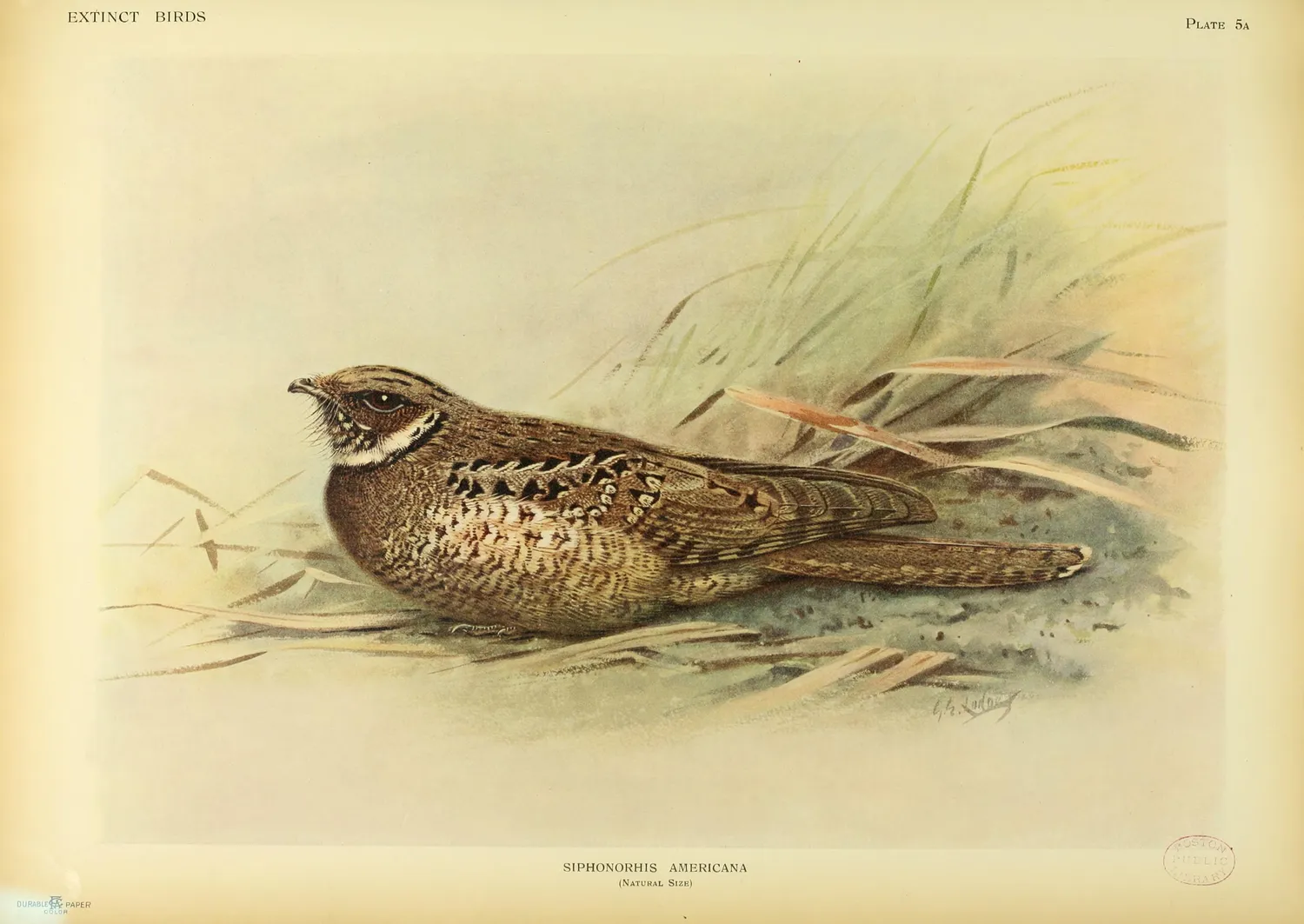
Extinct birds : an attempt to unite in one volume a short account of those birds which have become extinct in historical times : that is, within the last six or seven hundred years : to which are added a few which still exist, but are on the verge of extinction. Extinct birds (Plate 5a) BHL38665721" by Rothschild, Lionel Walter Rothschild / Wikimedia Commons
Evidence shows that Earth may be entering a sixth mass extinction. Scientists observe that species are disappearing much faster than normal. The current extinction rate is 100 to 1,000 times higher than the natural rate. This means animals and plants are vanishing at alarming speeds.
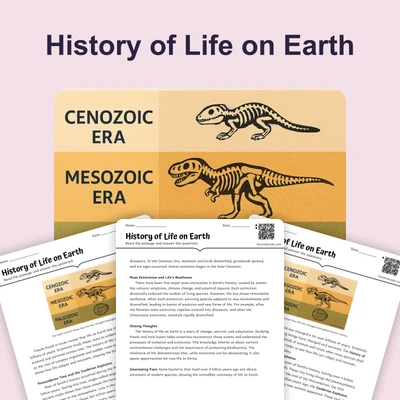
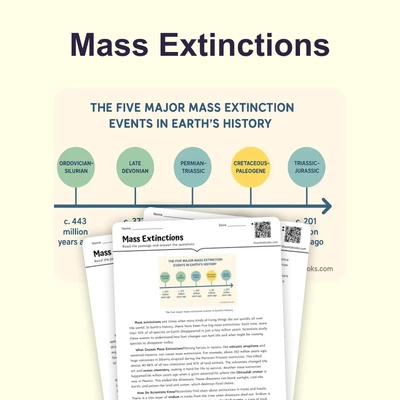
A mass extinction occurs when many species die out in a short time. Earth has experienced five major mass extinctions in the past. The most famous happened 66 million years ago when an asteroid struck Earth. This event killed the dinosaurs and about 75 percent of all species. Another mass extinction occurred 252 million years ago due to massive volcanic eruptions. These natural disasters changed Earth's climate and destroyed habitats worldwide.
Today's extinction crisis has different causes. Habitat loss is the biggest threat to species survival. Humans cut down forests, drain wetlands, and convert wild areas into farms and cities. Animals lose their homes and food sources. Climate change also harms species by altering temperatures and weather patterns. Many organisms cannot adapt quickly enough to survive. Pollution poisons air, water, and soil, making environments unsafe for wildlife.
Scientists studied extinction rates by examining fossil records and modern data. They found that normally, one to five species go extinct per year. Currently, dozens of species disappear each day. The Amazon rainforest provides a clear example. Deforestation destroys habitats for thousands of species. Scientists estimate that 137 plant and animal species vanish from rainforests daily. Many disappear before researchers can even study them.
This potential sixth mass extinction matters because biodiversity supports all life on Earth. Each species plays a role in its ecosystem. When species disappear, food chains break down. Humans depend on healthy ecosystems for clean air, fresh water, and food. Unlike past extinctions caused by asteroids or volcanoes, humans are the primary cause this time. Scientists explain that our actions determine whether this extinction continues or slows down.
Interesting Fact: Scientists estimate that Earth is home to about 8.7 million species, but humans have only identified and named about 1.2 million of them. Many species may go extinct before we ever discover they existed.
Comprehension quiz (10 questions)
1. How much faster is the current extinction rate compared to the natural rate?
2. What caused the mass extinction that killed the dinosaurs 66 million years ago?
3. What does the term 'habitat loss' mean in the passage?
4. According to the passage, what is biodiversity?
5. Based on the passage, why does habitat loss threaten species survival?
6. How many plant and animal species vanish from rainforests daily, according to scientists?
7. What can you infer about the relationship between human actions and the current extinction crisis?
8. If climate change continues to alter temperatures rapidly, what would likely happen to many species?
9. True or False: Past mass extinctions on Earth were caused by human activities.
10. True or False: Scientists have identified and named all species living on Earth.
Perfect for the way you teach
- Build comprehension skills
- Auto-graded quiz
- Differentiated reading
- Read together at home
- Improve fluency
- Quiet reading time
- Reading curriculum support
- Independent practice
- Track Lexile growth