Could Mammoths Be Brought Back
Interactive passage with audio narration, comprehension questions, and printable PDF.
By completing this purchase you agree to our Terms of Use and Privacy Policy. Your subscription renews automatically until you cancel. You can cancel anytime from your account settings. All sales are final and non-refundable. Digital content is available for download in your account immediately upon purchase.
What's included
Could Mammoths Be Brought Back preview and details
About this printable Could Mammoths Be Brought Back science reading passage, NGSS-aligned (Grades 5-8)
Sample passage and quiz from Could Mammoths Be Brought Back
Reading passage and comprehension quiz preview
Could Mammoths Be Brought Back
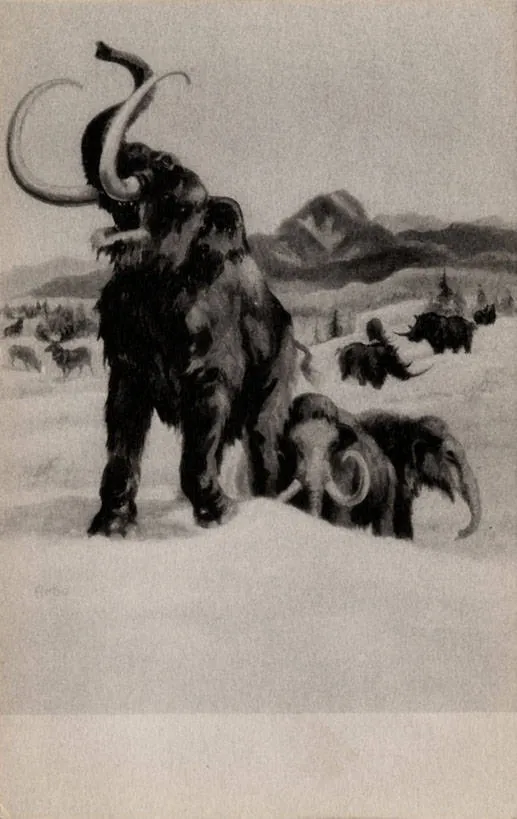
"Mammoth (NBY 416370)" by Grant Schmalgemeier Century of Progress Collection / Wikimedia Commons
Scientists are working on bringing extinct species back to life. This field is called de-extinction. One of the most ambitious projects focuses on the woolly mammoth. These massive animals disappeared about 4,000 years ago. Today, researchers believe they can create a mammoth-like elephant using modern technology.
The process begins with ancient DNA extracted from frozen mammoth remains. Scientists find these remains in Siberian permafrost, which is permanently frozen ground. The cold preserves tissue and genetic material for thousands of years. However, ancient DNA is often damaged and incomplete. Scientists cannot simply clone a mammoth from this DNA. Instead, they use a different approach involving the Asian elephant, which is the mammoth's closest living relative.
Researchers use CRISPR technology to edit elephant DNA. CRISPR is a tool that can cut and change specific parts of genetic code. Scientists identify mammoth genes that gave these animals thick fur, small ears, and fat layers for cold climates. They then insert these genes into elephant cells. The goal is not to create an exact mammoth copy. Instead, scientists aim to produce an elephant with mammoth traits that can survive in cold environments. This animal is sometimes called a proxy species.
Companies like Colossal Biosciences are actively working on this project. They face many scientific challenges. One major problem involves growing embryos. Scientists need either elephant surrogate mothers or artificial wombs. Both options present technical difficulties. Another challenge is habitat. Where would these mammoth-like animals live? The Arctic tundra has changed significantly since mammoths roamed there. Scientists must consider whether suitable ecosystems still exist.
The ethical questions are equally important. Should we bring back extinct species? Some scientists argue that resources should focus on saving endangered species that still exist. Others believe de-extinction could help restore damaged ecosystems. Woolly mammoths once shaped Arctic landscapes by knocking down trees and spreading grass. Similar efforts target other extinct animals, including dodos and thylacines. Each project raises questions about priorities, costs, and consequences.
De-extinction represents real ongoing science, not science fiction. Evidence shows that technology continues to advance. Scientists can now edit genes with greater precision than ever before. Whether these efforts will succeed remains uncertain. The mammoth project may take decades to complete. Researchers must solve numerous technical problems and address ethical concerns. This work connects biology, genetics, and environmental science in new ways.
Interesting Fact: Scientists have found baby mammoth remains so well-preserved in permafrost that their fur, skin, and even stomach contents remain intact after 40,000 years.
Comprehension quiz (10 questions)
1. What is de-extinction?
2. Where do scientists find frozen mammoth remains?
3. What does CRISPR technology allow scientists to do?
4. Which animal is the woolly mammoth's closest living relative?
5. What is a proxy species?
6. What is one major scientific challenge mentioned in bringing back mammoths?
7. Why do some scientists question de-extinction efforts?
8. How did woolly mammoths once shape Arctic landscapes?
9. True or False: Scientists can create an exact mammoth clone from ancient DNA found in permafrost.
10. True or False: De-extinction represents real ongoing science, not science fiction.
Perfect for the way you teach
- Build comprehension skills
- Auto-graded quiz
- Differentiated reading
- Read together at home
- Improve fluency
- Quiet reading time
- Reading curriculum support
- Independent practice
- Track Lexile growth