Catholic Church and Renaissance
Interactive passage with audio narration, comprehension questions, and printable PDF.
By completing this purchase you agree to our Terms of Use and Privacy Policy. Your subscription renews automatically until you cancel. You can cancel anytime from your account settings. All sales are final and non-refundable. Digital content is available for download in your account immediately upon purchase.
What's included
Catholic Church and Renaissance preview and details
About this printable Catholic Church and Renaissance reading passage (Grades 5-8)
Sample passage and quiz from Catholic Church and Renaissance
Reading passage and comprehension quiz preview
Church and Renaissance Art
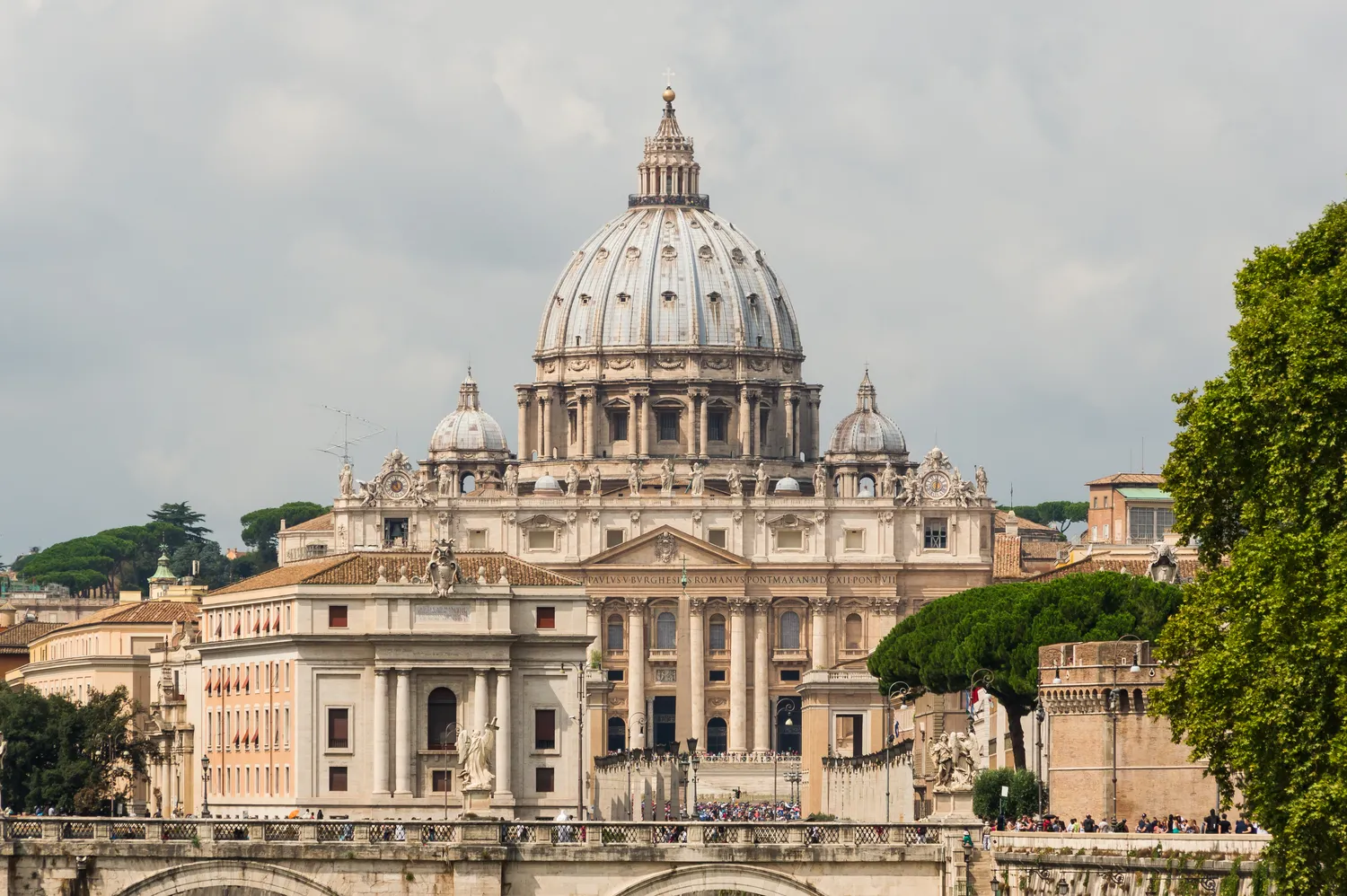
"Saint Peter's Basilica facade, Rome, Italy" by Jebulon / Wikimedia Commons.
The Catholic Church was one of the most important patrons of the arts during the European Renaissance. From the 14th to the 17th centuries, church leaders used their wealth and influence to commission stunning works of art and architecture. This period saw a flourishing of creativity that transformed the way people thought about religion, beauty, and the world around them.
During the Renaissance, Italy became a center of artistic innovation. The Church, especially in city-states like Florence and Rome, provided financial support for artists to create paintings, sculptures, and buildings. Many of these works focused on religious subjects, such as scenes from the Bible or images of saints. Popes like Julius II and Leo X sponsored grand projects to display the Church’s power and inspire faith. For example, Pope Julius II commissioned Michelangelo to paint the ceiling of the Sistine Chapel in Vatican City between 1508 and 1512. This masterpiece, which includes the famous fresco "The Creation of Adam," remains one of the most celebrated works of Western art.
The Church’s role as a patron was not limited to paintings. It also funded the construction of magnificent cathedrals and churches. The building of St. Peter’s Basilica in Rome involved several renowned artists and architects, including Bramante, Raphael, and Michelangelo. These projects required teamwork among painters, sculptors, and architects, reflecting the Renaissance belief in human achievement and collaboration. Many artists, such as Leonardo da Vinci, produced altarpieces and murals for local churches, blending religious messages with new styles of realism and perspective.
The relationship between the Church and artists also shaped daily life and social hierarchy. Artists gained fame and social status by working for powerful patrons, but they often had to follow strict guidelines about religious content. At the same time, the Church used art to communicate religious ideas to people who could not read. Through vibrant colors and lifelike figures, faith and creativity came together in a shared visual language that united communities across Europe.
The Church’s sponsorship of art during the Renaissance had lasting effects. It encouraged the development of new artistic techniques, such as perspective and fresco painting, and helped spread Renaissance culture throughout Europe. Today, many of the world’s most famous masterpieces owe their existence to the faith and vision of the Church’s leaders. This period reminds us how religion, art, and society can influence each other and shape history.
As you study world history, consider how the Church’s role as a patron of the arts connects to broader themes of cultural exchange, innovation, and human identity.
Interesting Fact: Michelangelo was originally a sculptor, but Pope Julius II insisted he paint the Sistine Chapel ceiling, even though Michelangelo felt unsure about his painting skills!
Comprehension quiz (8 questions)
1. What city-state was key for Renaissance art?
2. Who painted the Sistine Chapel ceiling?
3. Which building did Bramante work on?
4. What did the Church use art to do?
5. How did Church art affect society?
6. Why did artists follow Church rules?
7. Michelangelo painted the Sistine Chapel. True or false?
8. What does 'fresco' mean?
Perfect for the way you teach
- Build comprehension skills
- Auto-graded quiz
- Differentiated reading
- Read together at home
- Improve fluency
- Quiet reading time
- Reading curriculum support
- Independent practice
- Track Lexile growth