Florence Renaissance
Interactive passage with audio narration, comprehension questions, and printable PDF.
By completing this purchase you agree to our Terms of Use and Privacy Policy. Your subscription renews automatically until you cancel. You can cancel anytime from your account settings. All sales are final and non-refundable. Digital content is available for download in your account immediately upon purchase.
What's included
Florence Renaissance preview and details
About this printable Florence Renaissance reading passage (Grades 5-8)
Sample passage and quiz from Florence Renaissance
Reading passage and comprehension quiz preview
Florence Renaissance
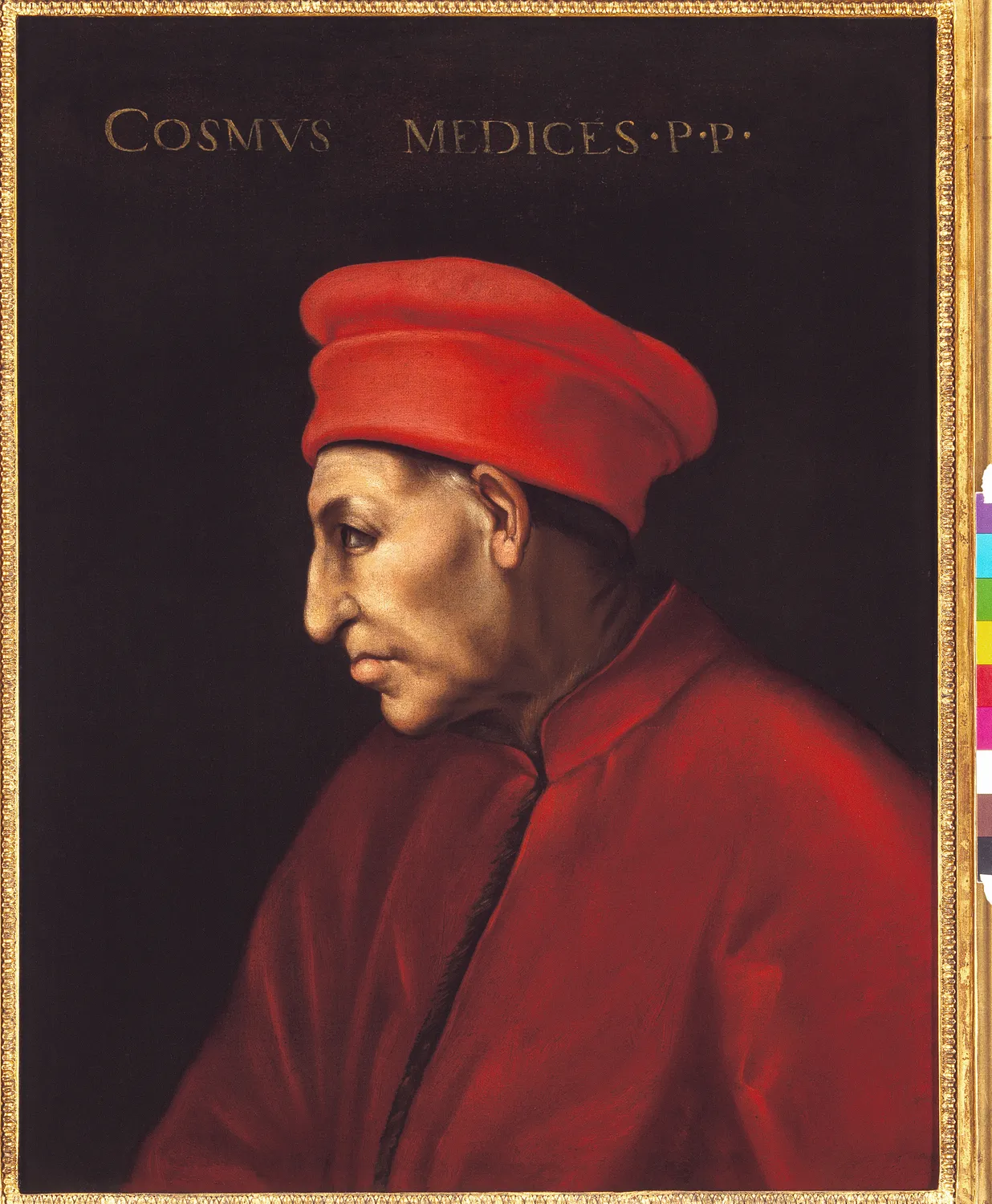
"Cosimo de' Medici Rubens" by Peter Paul Rubens / Wikimedia Commons.
Florence, a city-state in northern Italy, became the birthplace of the Renaissance during the late 1300s and 1400s. This era marked a period of renewed interest in art, learning, and culture across Europe. Florence’s unique geography, wealth, and political structure allowed it to become a center of creative and intellectual activity that influenced the entire continent.
Florence’s position on the Arno River made it an important center for trade and banking. By the 14th century, families like the Medici had become extremely wealthy by lending money and conducting international business. Their wealth allowed them to become patrons, or supporters, of artists and thinkers. Cosimo de’ Medici, for example, sponsored public libraries and invited scholars to the city in the early 1400s. This helped spread new ideas and texts from ancient Greece and Rome, which shaped the city’s intellectual climate.
Competition among artists also fueled Florence’s cultural richness. The city’s government and citizens often held contests for the best artwork or architecture. In 1401, the competition to design the bronze doors of the Baptistery drew talented sculptors like Lorenzo Ghiberti and Filippo Brunelleschi. Brunelleschi later engineered the massive dome of the Florence Cathedral, known as the Duomo, completed in 1436. These projects required new methods and creativity, pushing artists to experiment with perspective and realistic human forms. The words of Leonardo da Vinci, a Florentine artist and scientist, reflected the Renaissance spirit: “Learning never exhausts the mind.”
The Renaissance in Florence also saw changes in daily life and social hierarchy. Many citizens learned to read and write, and people from different backgrounds could rise in society through talent or skill. However, divisions remained: wealthy merchants and noble families held most political power, while laborers and artisans worked for them. The city’s churches, public squares, and homes were decorated with paintings, statues, and architecture inspired by humanism, which valued individual achievement and classical learning.
Florence’s blend of wealth, competition, and new ideas made it the model for the Renaissance in other parts of Europe. Artists like Michelangelo and Botticelli began their careers in Florence before spreading their influence elsewhere. The city’s art and literature continue to inspire the world today.
Florence’s story connects to the broader theme of how geography, economy, and social forces can shape cultural change.
Interesting Fact: The Medici family’s support for art was so great that some historians call them the “Godfathers of the Renaissance.”
Comprehension quiz (8 questions)
1. Which city was the birthplace of the Renaissance?
2. Which family was a major patron in Florence?
3. What year was the Baptistery door contest?
4. Why did Florence become wealthy?
5. How did artistic competition help Florence?
6. What is humanism?
7. Florence is a city-state. True or false?
8. What does patron mean?
Perfect for the way you teach
- Build comprehension skills
- Auto-graded quiz
- Differentiated reading
- Read together at home
- Improve fluency
- Quiet reading time
- Reading curriculum support
- Independent practice
- Track Lexile growth