This learning resource is available in interactive and printable formats. The interactive worksheet can be played online and assigned to students. The Printable PDF version can be downloaded and printed for completion by hand.
This reading passage explores the lives and contributions of women during the Renaissance period in Europe. Students will learn about the social restrictions women faced, as well as the achievements of notable female artists and writers like Sofonisba Anguissola and Christine de Pizan. The passage examines how education and opportunities for women were limited, but also highlights exceptional women who challenged societal norms. Rich vocabulary and primary source evidence invite students to analyze cause and effect, change over time, and historical significance. The passage is accompanied by activities, a multiple-choice quiz, writing prompts, graphic organizers, and a timeline. Read aloud audio and a Spanish translation support diverse learners. This resource aligns with CA HSS 7.8.7 and CCSS RI.6-8.1, making it ideal for studying world history and ELA standards together.
CONTENT PREVIEW
Expand content preview
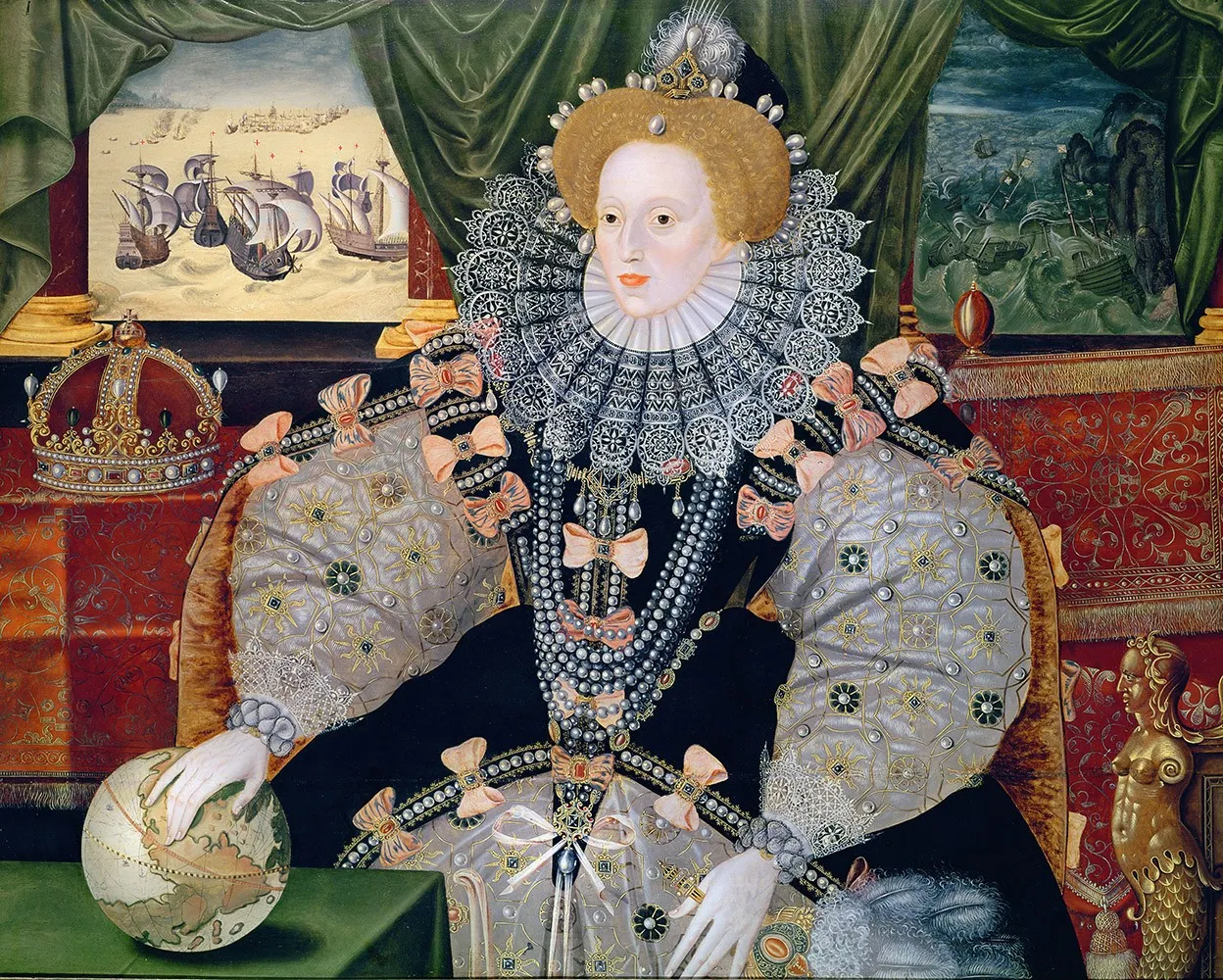
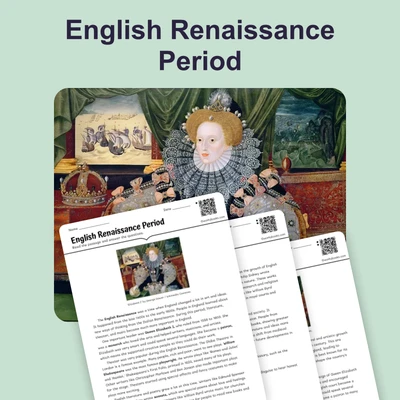
"Elizabeth I (Armada Portrait)" by Formerly attributed to George Gower / Wikimedia Commons.
The Renaissance was a period of great cultural and artistic change in Europe, beginning in the 1300s in Italian city-states such as Florence and Venice. While men are often celebrated for their achievements during this time, the roles and lives of women were much more limited. Women were expected to focus on family and home, and their opportunities for education and public life were greatly restricted compared to men.
For most women, daily life involved household work and raising children. Girls from wealthy families were sometimes taught to read and write, but very few had the chance to study subjects like mathematics, literature, or the arts at a high level. In many Renaissance city-states, laws and customs kept women out of universities and professional guilds. This meant that very few women could become artists, writers, or scholars. Primary sources such as letters, diaries, and legal documents from the time show that even wealthy women had limited independence and were usually controlled by male relatives.
Despite these restrictions, some women managed to make remarkable contributions. For example, Sofonisba Anguissola (1532–1625), an Italian painter, became famous for her portraits. She was trained by her father and gained support from the Spanish court, which was unusual for a woman. Another example is Christine de Pizan (1364–c.1430), a writer who lived in France and is considered one of the first women in Europe to earn a living through writing. Her book, "The Book of the City of Ladies," defended women's intelligence and abilities. Although these women were exceptions, their work survives in museums and libraries today, providing evidence of women's talents.
There were also women involved in music, science, and business, but they often worked behind the scenes or published under male names. Social hierarchy strongly shaped women's roles, with noblewomen having more access to learning than peasants. Over time, a few changes occurred. For example, in the late 1500s, some Italian academies began to accept women members. However, true equality and widespread education for women would not come for centuries.
The story of women in the Renaissance helps us understand how gender and society shaped opportunities in the past. By looking at both the limits and the achievements of these women, we see how slowly change can happen and how individuals can still make a difference.
Interesting Fact: In Renaissance Venice, some women managed family businesses when their husbands were away, showing that women sometimes held important economic roles despite social limits.
Where did the Renaissance begin?
Italian city-statesEnglandGermanyRussia
Who was Sofonisba Anguissola?
A painterA queenA scientistA merchant
What book did Christine de Pizan write?
The Book of the City of LadiesThe PrinceThe Divine ComedyUtopia
Why were most women kept out of universities?
Laws and customsBad weatherNo interestLack of teachers
How did women like Anguissola break barriers?
They became artists and writersThey became soldiersThey traveled the worldThey became kings
Why is social hierarchy important in this context?
It shaped women's opportunitiesIt decided city sizeIt created artIt ended education
True or False: All women could join guilds.
TrueFalse
What does 'primary sources' mean?
Original documents from the timeStories told todayModern art piecesFiction books
Perfect For:
👩🏫 Teachers
• Reading comprehension practice
• Auto-graded assessments
• Literacy skill development
👨👩👧👦 Parents
• Reading practice at home
• Comprehension improvement
• Educational reading time
🏠 Homeschoolers
• Reading curriculum support
• Independent reading practice
• Progress monitoring
Reading Features:
📖
Reading Passage
Engaging fiction or nonfiction text
❓
Comprehension Quiz
Auto-graded questions
📊
Instant Feedback
Immediate results and scoring
📄
Printable Version
Download for offline reading
🔊
Read Aloud
Voice-over with word highlighting
Reviews & Ratings
No reviews yet. Be the first to share your experience!
Related Content
Renaissance Clothing
This passage explores the fascinating world of Renaissance fashion clothing in Europe, focusing on how clothing reflecte...
Renaissance Poetry
This engaging world history reading passage introduces students to the Renaissance sonnet, focusing on the influential w...
Renaissance Philosophy
This passage explores the main ideas of Renaissance philosophy, which emerged in Europe during the 14th to 16th centurie...
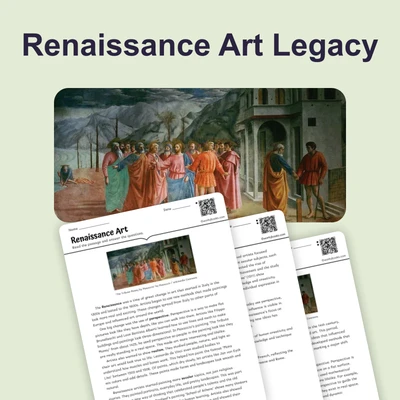
Renaissance Art
This reading passage examines the enduring legacy of Renaissance art in world history, focusing on key techniques such a...
CA HSS 7.8.3CCSS RH.6-8.2CCSS W.6.2
Renaissance Anatomy Art
This engaging passage explores the intersection of art, science, and society during the Renaissance through the lens of ...
French Renaissance
This passage explores the rich culture of the French Renaissance, focusing on the influence of Italian art and architect...
Northern Renaissance
This passage examines the development and significance of Northern Renaissance art, focusing on how Renaissance ideas sp...
Renaissance Art and Artists
This history reading passage delves into the world of Renaissance art, focusing on the revolutionary works and lives of ...
Florence Renaissance
This history reading passage examines Florence during the Renaissance, highlighting its cultural richness, the influence...
Renaissance Humanism
This passage introduces students to the transformative concept of Renaissance Humanism, a philosophical movement that em...
Renaissance Oil Painting
This passage explores the development of oil painting techniques during the Renaissance, focusing on the comparison betw...
Renaissance Impact Today
This engaging world history passage examines the enduring impact of the Renaissance on modern society, focusing on how R...
English Renaissance
This comprehensive passage explores the English Renaissance, a transformative period in England marked by a flourishing ...
Renaissance Education
This engaging history reading passage examines the transformation of education during the Renaissance and its impact on ...
Renaissance Medicine
This engaging world history reading passage explores medical advances during the Renaissance in Europe, focusing on chan...
Renaissance Music
This world history reading passage examines the development of music during the Renaissance, a period of profound cultur...
Renaissance Festivals Celebrations
This passage explores the vibrant role of festivals and celebrations during the Renaissance, focusing on how public spec...
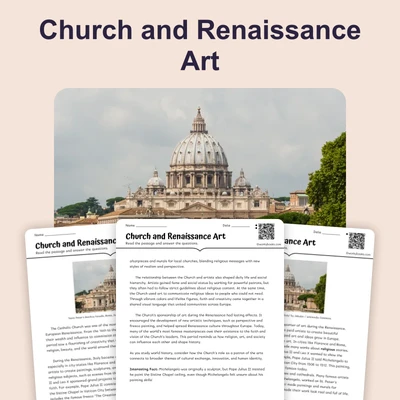
Catholic Church and Renaissance
This passage explores the major role the Catholic Church played as a patron of Renaissance art in Europe. It examines ho...
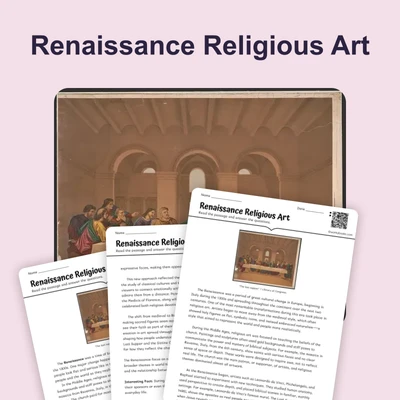
Renaissance Religious Art
This passage explores the dramatic changes in religious art during the Renaissance, focusing on the shift from medieval ...