Renaissance Poetry
Interactive passage with audio narration, comprehension questions, and printable PDF.
By completing this purchase you agree to our Terms of Use and Privacy Policy. Your subscription renews automatically until you cancel. You can cancel anytime from your account settings. All sales are final and non-refundable. Digital content is available for download in your account immediately upon purchase.
What's included
Renaissance Poetry preview and details
About this printable Renaissance Poetry reading passage (Grades 5-8)
Sample passage and quiz from Renaissance Poetry
Reading passage and comprehension quiz preview
Renaissance Poetry
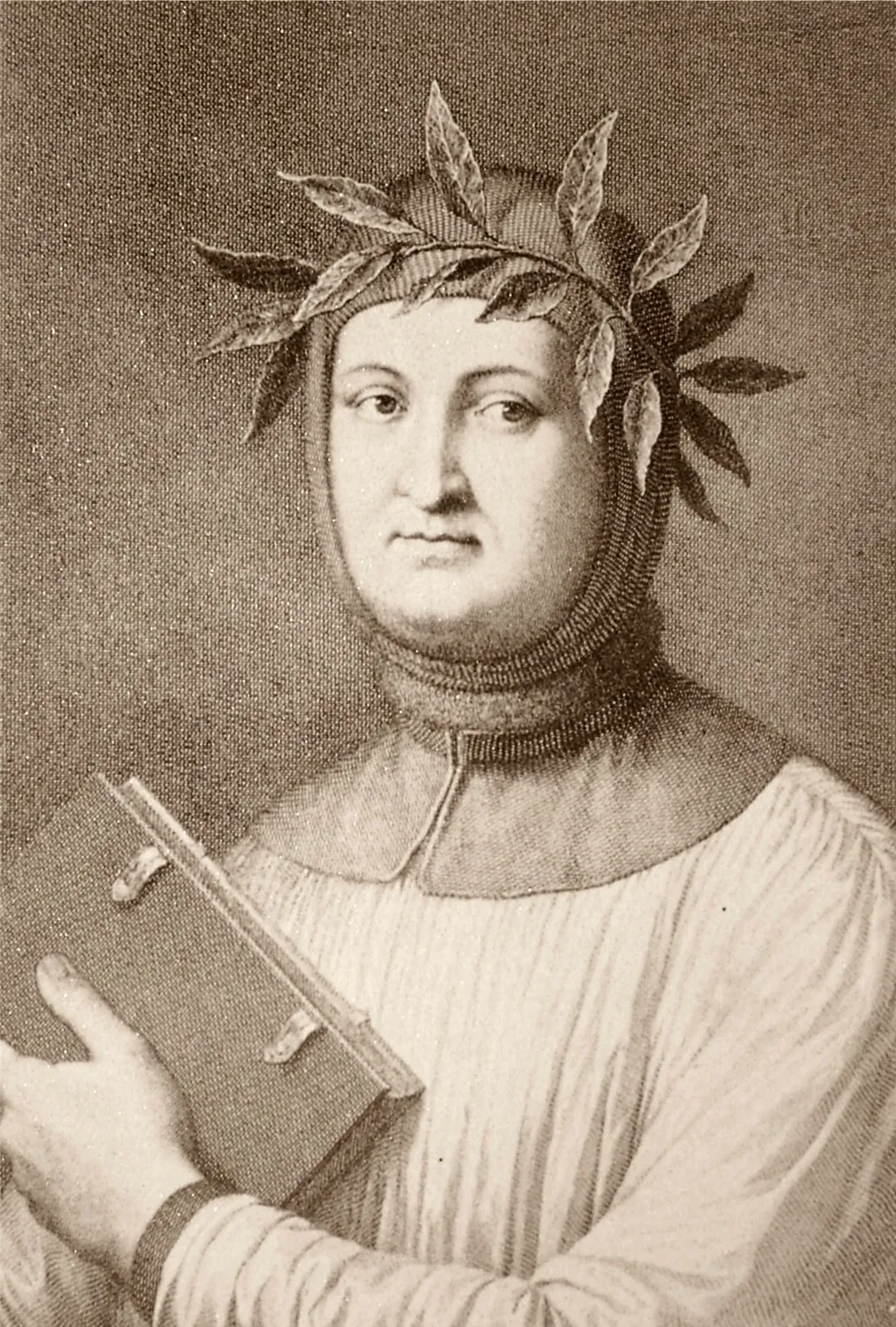
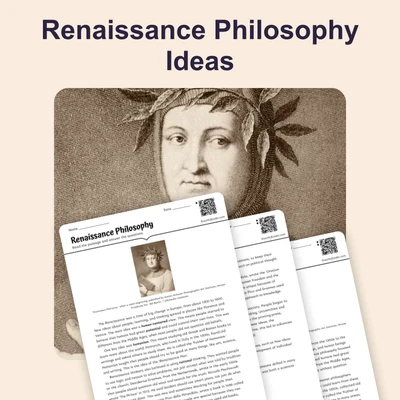
"Francesco Petrarca." After a steel engraving, published by Gustav Schauer Photographic Art Institute, Grosse Friedrichs Str. 188 Berlin / Wikimedia Commons.
The Renaissance period, starting in Italy during the 1300s, was a time of great cultural change and artistic growth in Europe. Among its many achievements, the development of the sonnet became a significant literary innovation. This poetic form, structured with fourteen lines and a specific rhyme scheme, allowed writers to explore deep emotions and complex ideas, often focusing on themes such as love, beauty, and nature.
The Italian poet Francesco Petrarch is widely credited with popularizing the sonnet form in the 14th century. Living in the city-state of Florence, Petrarch wrote hundreds of sonnets, many dedicated to a woman named Laura. His poems expressed intense feelings of love and longing, using vivid imagery drawn from nature. For example, Petrarch compared Laura’s eyes to the brightness of stars and described the spring landscape to reflect his emotional state. The Petrarchan sonnet followed a strict structure, divided into an eight-line octave and a six-line sestet. This format influenced many poets across Europe.
By the late 1500s, the sonnet had spread to England, where William Shakespeare adapted the form. Shakespeare’s sonnets often focused on themes of time, beauty, and the power of poetry to preserve memory. Unlike Petrarch, Shakespeare used a different rhyme scheme and grouped his sonnets into three four-line sections called quatrains followed by a two-line couplet. In Sonnet 18, Shakespeare famously asks, "Shall I compare thee to a summer’s day?" Here, he uses nature imagery to praise a friend’s lasting beauty while also reflecting on how poetry can achieve immortality. Shakespeare’s work broadened the emotional range of sonnets and demonstrated their versatility.
The Renaissance sonnet tradition also reflected the social and intellectual changes of the period. In city-states like Florence, educated people valued classical learning and artistic expression. Poets used sonnets to express individual feelings and to experiment with language. The spread of the printing press made it possible for sonnets to reach a wider audience, helping to shape literary traditions across Europe. The lasting popularity of the sonnet, from Petrarch and Shakespeare to modern poets, demonstrates its enduring power to capture human experiences.
Today, the sonnet remains a respected poetic form, studied and written by poets around the world. Its influence on language, literature, and the expression of emotion continues to be significant. The Renaissance sonnet is a key example of how historical movements can create lasting cultural traditions.
Interesting Fact: The first printed collection of Shakespeare’s sonnets was published in London in 1609, and many of the poems remain widely read and studied today.
This topic connects to broader themes of cultural exchange, innovation, and the impact of the Renaissance on world history.
Comprehension quiz (8 questions)
1. Who popularized the sonnet in Italy?
2. Where did the Renaissance begin?
3. When was Shakespeare's sonnets first published?
4. What does imagery mean in poetry?
5. How did the printing press affect sonnets?
6. Why were sonnets important during the Renaissance?
7. Sonnets have 12 lines. True or false?
8. What is a 'couplet'?
Perfect for the way you teach
- Build comprehension skills
- Auto-graded quiz
- Differentiated reading
- Read together at home
- Improve fluency
- Quiet reading time
- Reading curriculum support
- Independent practice
- Track Lexile growth