Renaissance Music
Interactive passage with audio narration, comprehension questions, and printable PDF.
By completing this purchase you agree to our Terms of Use and Privacy Policy. Your subscription renews automatically until you cancel. You can cancel anytime from your account settings. All sales are final and non-refundable. Digital content is available for download in your account immediately upon purchase.
What's included
Renaissance Music preview and details
About this printable Renaissance Music reading passage (Grades 5-8)
Sample passage and quiz from Renaissance Music
Reading passage and comprehension quiz preview
Renaissance Music
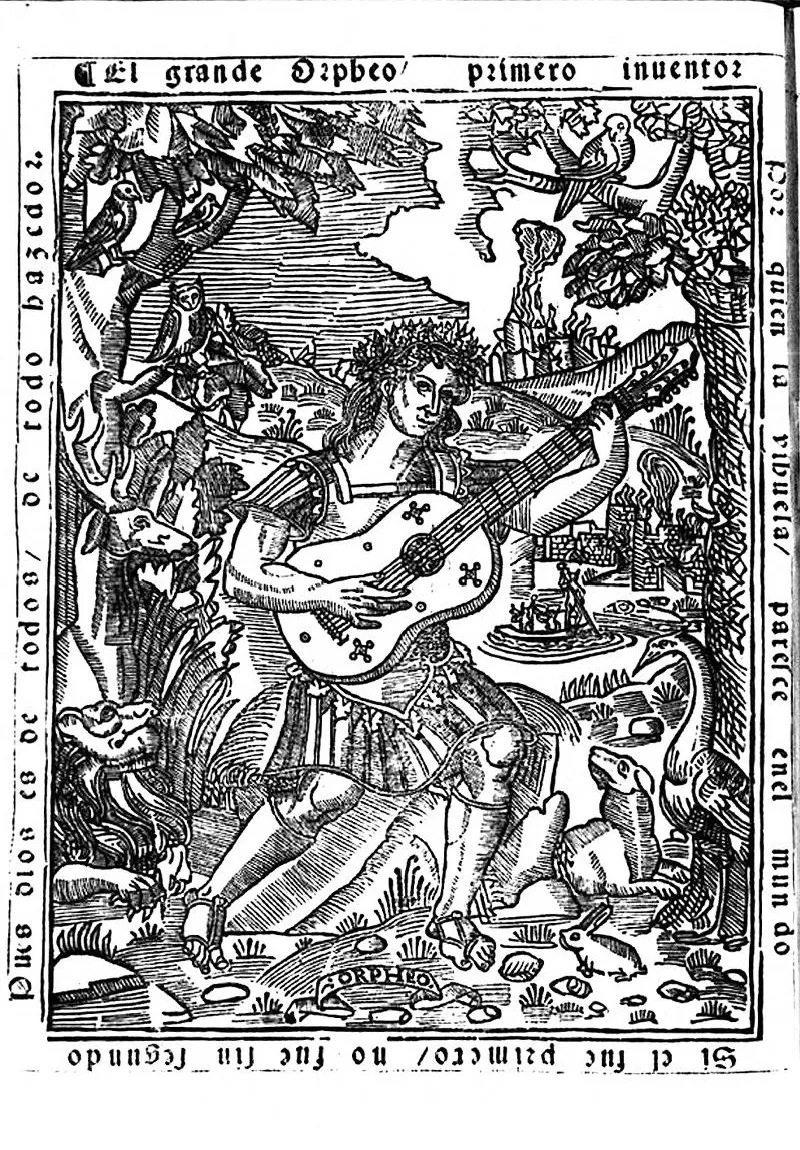
Orpheus in El Maestro by Luys Milan, Wikimedia Commons
The Renaissance was a period of cultural rebirth in Europe, lasting from about 1400 to 1600. During this time, music experienced dramatic changes as composers and musicians explored new ideas, techniques, and forms of expression. Music became an important part of daily life, not only in churches but also in courts, city-states, and homes across Italy, France, and beyond.
One of the most important innovations during the Renaissance was the development of polyphony. Polyphony is a style where two or more independent melodies are sung or played together, creating rich, complex harmonies. Composers like Josquin des Prez and Giovanni Pierluigi da Palestrina used polyphony in sacred music, such as the Mass, which was performed in cathedrals and chapels. For example, a surviving manuscript from 1502 shows Josquin’s music with multiple vocal lines written for choirs. This innovation allowed music to express a wider range of emotions and ideas.
The Renaissance also saw the growth of secular music, meaning music that was not religious. In city-states like Florence and Venice, wealthy families and rulers supported musicians to compose songs for entertainment and festivals. The madrigal became a popular form of secular song in Italy and England. Madrigals were often sung in small groups and featured poetic lyrics about love, nature, or mythology. An example is the English madrigal “Now is the Month of Maying” by Thomas Morley, first published in 1595. These songs were performed at banquets and gatherings, showing how music was woven into social life.
Instrumental music also flourished during the Renaissance. New instruments were developed or improved, such as the lute, viol, harpsichord, and recorder. Artists often painted musicians playing these instruments, providing evidence of their popularity. The invention of music printing around 1501, with Ottaviano Petrucci’s press in Venice, made sheet music more available. This allowed more people to learn and perform music at home, not just in churches or noble courts. Composers wrote dance music and fantasias, expanding the ways people could enjoy and participate in music.
Renaissance music reflected the era’s humanism, the belief in the value of individual creativity and learning. Musicians gained higher status, and music education spread among the middle and upper classes. Over time, these innovations influenced the music of later periods, including the Baroque era. The Renaissance transformed music from a mainly religious activity into a diverse art form that shaped cultural and social life across Europe.
This period connects to broader themes in world history, such as the rise of urban centers, the impact of technology, and the spread of new cultural ideas.
Interesting Fact: In 1533, the French royal court hired a group of professional female singers—one of the earliest known women’s ensembles in Europe.
Comprehension quiz (8 questions)
1. What is polyphony?
2. When did the Renaissance period begin?
3. Which city was important for music printing?
4. Why was music printing important?
5. How did madrigals differ from church music?
6. What is humanism in music?
7. Madrigals were only sung in churches.
8. What does 'secular' mean?
Perfect for the way you teach
- Build comprehension skills
- Auto-graded quiz
- Differentiated reading
- Read together at home
- Improve fluency
- Quiet reading time
- Reading curriculum support
- Independent practice
- Track Lexile growth