Renaissance Clothing
Interactive passage with audio narration, comprehension questions, and printable PDF.
By completing this purchase you agree to our Terms of Use and Privacy Policy. Your subscription renews automatically until you cancel. You can cancel anytime from your account settings. All sales are final and non-refundable. Digital content is available for download in your account immediately upon purchase.
What's included
Renaissance Clothing preview and details
About this printable Renaissance Clothing reading passage (Grades 5-8)
Sample passage and quiz from Renaissance Clothing
Reading passage and comprehension quiz preview
Renaissance Clothing
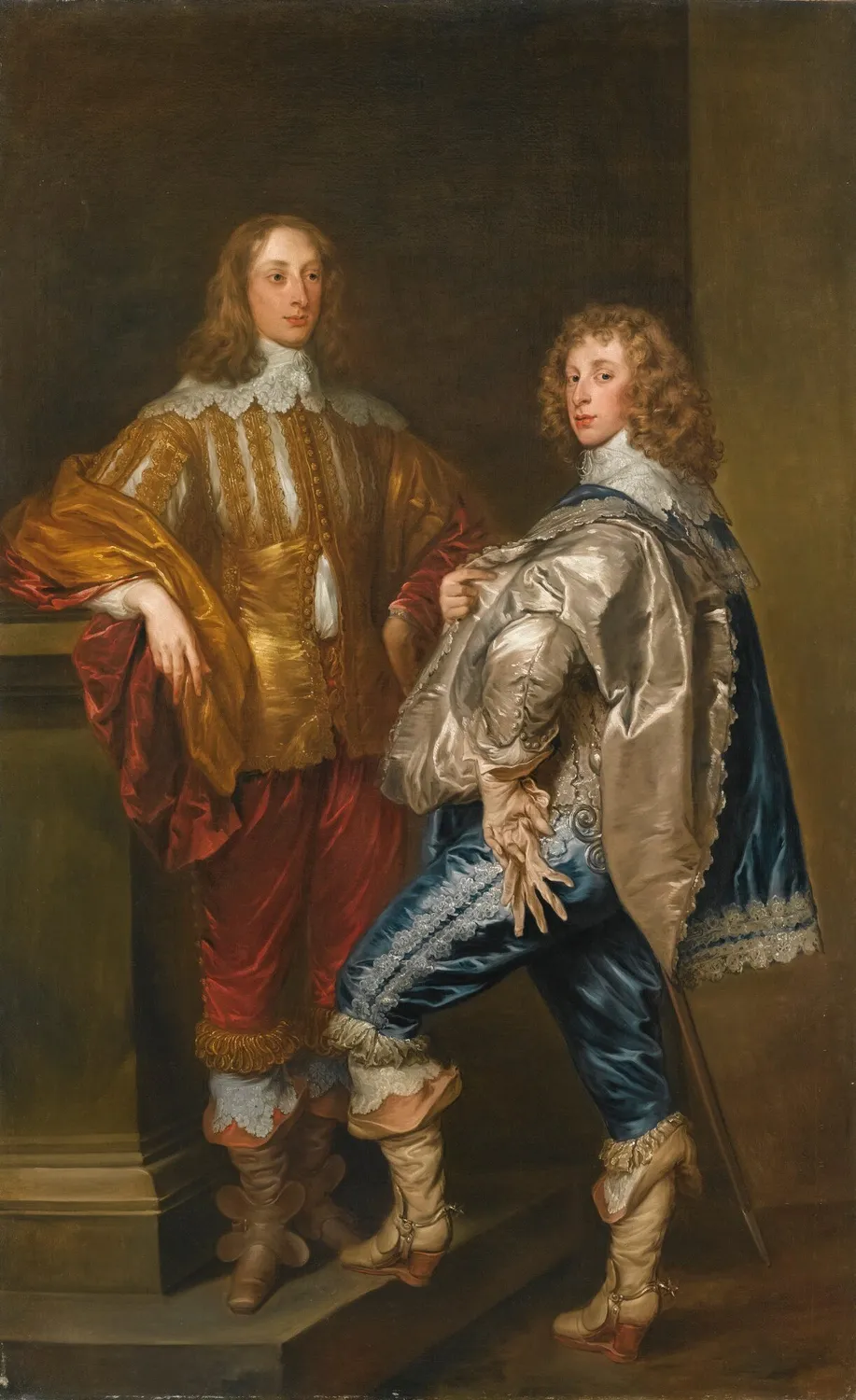
"Anthony van Dyck after - Double portrait of Lord John Stewart (1621-1644) en Lord Bernard Stewart, later Earl of Lichfield (1623-1645) 752L12034 6DFBF" by Anthony van Dyck / After Anthony van Dyck / Wikimedia Commons (Public domain).
The Renaissance period, which began in Italy around 1350 and lasted until the early 1600s, brought dramatic changes to European fashion. Clothing became a clear symbol of social status, wealth, and even political power. The styles and materials people wore were not just a matter of personal taste, but were often controlled by strict laws and local customs.
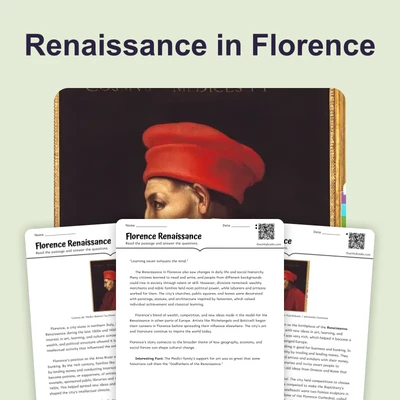
During the Renaissance, clothing styles varied across different regions, but certain trends spread throughout Europe. Wealthy men and women wore garments made from luxurious fabrics such as velvet, silk, and fine wool. These materials were often imported from distant places, showing the influence of trade on fashion. Bright dyes, gold embroidery, and detailed patterns decorated the clothing of the upper class. For example, in Florence, Italy, portraits like those of the Medici family show men in velvet doublets and women in gowns with wide sleeves, high collars, and jeweled belts. Poorer people, in contrast, wore simpler clothing made of linen or rough wool, with little decoration.
Sumptuary laws were introduced in many Renaissance city-states and kingdoms to control what people could wear based on their social rank. These laws stated that only nobles or wealthy merchants could wear certain colors, fabrics, or jewelry. For instance, a 1463 law in Venice made it illegal for commoners to wear silk or furs. In England, the 1574 Statutes of Apparel limited who could wear purple or gold cloth. These rules were enforced to maintain clear boundaries between classes and to prevent people from pretending to be wealthier than they were. Violating sumptuary laws could lead to fines or even prison.
Fashion was also used to display family pride and political alliances. Wealthy families commissioned portraits in their finest clothing to show their power and taste. The clothing itself could be very expensive—a single gown could cost as much as a small house. Tailors and dressmakers became important professions, and new styles spread quickly through royal courts and cities. Yet, many people found creative ways to bend or break the rules, and some wealthy merchants wore forbidden fabrics as a way to challenge social order. Archaeological finds, such as preserved shoes and garments from graves, provide important evidence about what people actually wore, confirming and sometimes challenging what is seen in paintings.
The evolution of Renaissance clothing demonstrates how fashion reflected and shaped society. Changes in trade, technology, and wealth all influenced what people wore. While styles changed over time, the link between clothing and social identity remained strong throughout the Renaissance. Studying these fashions helps historians understand the values and structure of Renaissance society.
Interesting Fact: Interesting Fact: Queen Elizabeth I of England reportedly owned over 2,000 dresses, each designed to display her royal status and power.
This topic connects to broader themes in world history, including the relationship between culture, economics, and social hierarchy.
Comprehension quiz (8 questions)
1. When did the Renaissance begin?
2. What is a sumptuary law?
3. Name a luxury fabric mentioned.
4. Why did people wear fancy clothes in portraits?
5. How did sumptuary laws affect society?
6. What does 'hierarchy' mean?
7. Renaissance fashion showed social class. True or false?
8. What is 'embroidery'?
Perfect for the way you teach
- Build comprehension skills
- Auto-graded quiz
- Differentiated reading
- Read together at home
- Improve fluency
- Quiet reading time
- Reading curriculum support
- Independent practice
- Track Lexile growth