This learning resource is available in interactive and printable formats. The interactive worksheet can be played online and assigned to students. The Printable PDF version can be downloaded and printed for completion by hand.
This passage introduces students to the transformative concept of Renaissance Humanism, a philosophical movement that emerged in Italy during the 14th and 15th centuries. Students learn how humanism placed humans and their achievements at the center of the universe, shifting focus from religious authority to individual learning and creativity. The text explores key figures like Petrarch and Leonardo da Vinci, examines how humanism changed art, literature, and science, and connects these ideas to broader historical themes. The passage includes evidence from primary sources, addresses cause and effect, and highlights the movement's significance. With a glossary, reading comprehension activities, a Spanish translation, and graphic organizers, this resource supports standards CA HSS 7.8.2 and CCSS RH.6-8.2, RH.6-8.4. Students will analyze history like historians while developing their reading, writing, and critical thinking skills.
CONTENT PREVIEW
Expand content preview
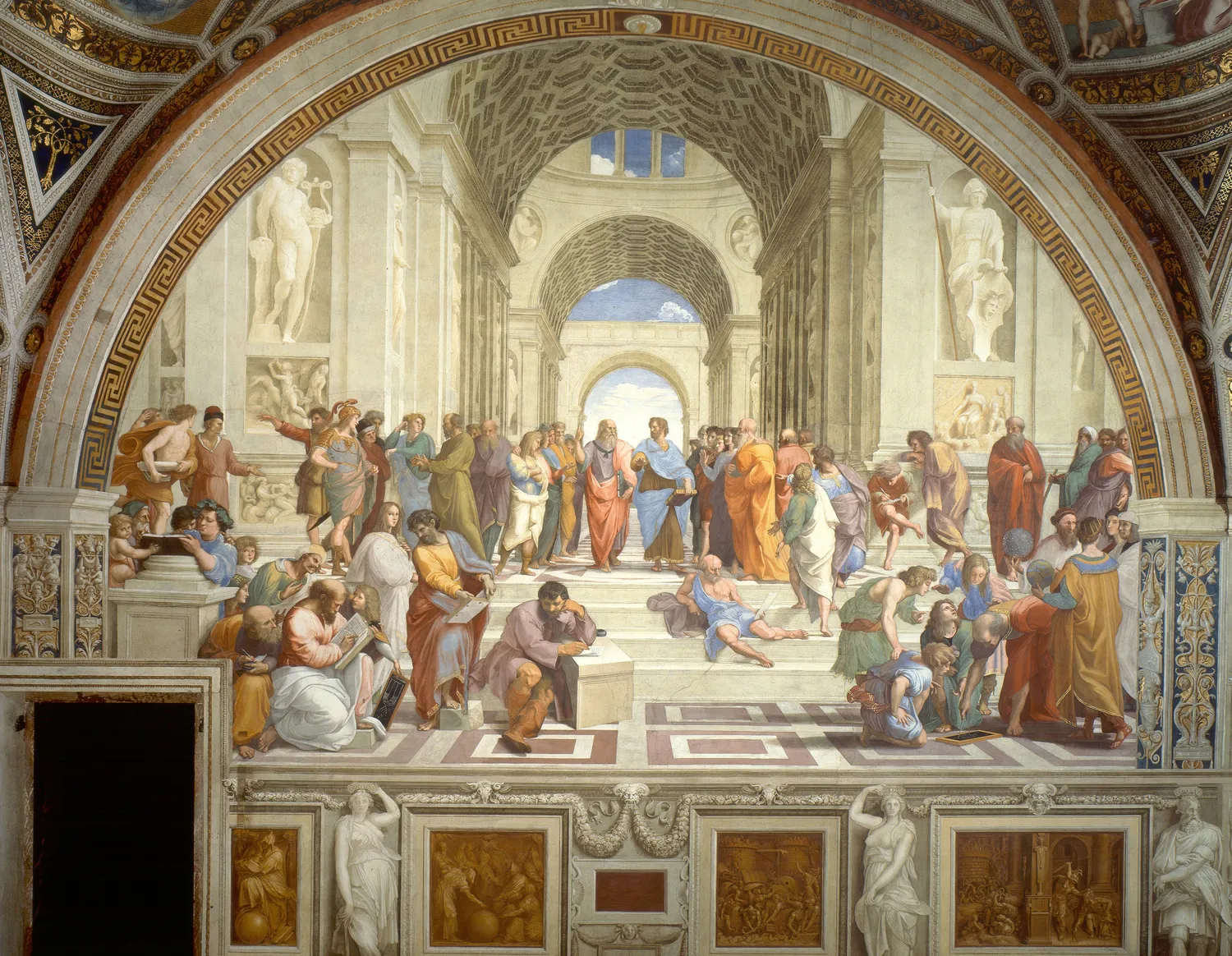
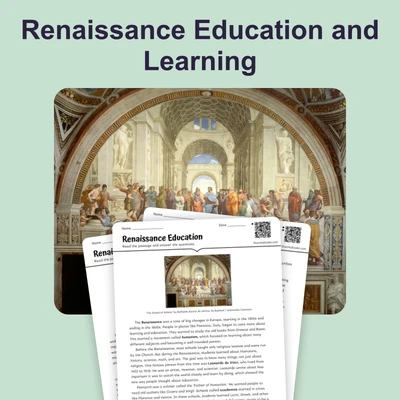
"The School of Athens" by Raffaello Sanzio da Urbino" by Raphael / Wikimedia Commons.
The philosophy of Renaissance Humanism began in the Italian city-states during the 1300s. This movement encouraged people to explore human abilities and achievements, rather than focusing only on religious life. By studying ancient Greek and Roman texts, scholars aimed to understand what it meant to be human, to learn, and to create. Humanism became a foundation for many changes in European society.
Humanist thinkers believed that humans were capable of greatness. They argued that the individual, not just religious authority, should be at the center of the universe. This new idea inspired people to study a variety of subjects, such as literature, history, philosophy, art, and science. Petrarch, often called the "father of humanism," collected ancient manuscripts and promoted the study of classical languages. In a letter dated 1351, Petrarch described his passion for reading old texts and discovering wisdom from the past. Another humanist, Erasmus of Rotterdam, used his knowledge to challenge traditional beliefs and encourage education for all.
The embrace of humanism had a major impact on art and science. Artists like Leonardo da Vinci and Michelangelo began to focus on the beauty and potential of the human body. Leonardo’s famous drawing, the Vitruvian Man, shows how art and science could work together to study human proportions. Humanist ideas also encouraged scientists to question old beliefs. For example, Nicolaus Copernicus, influenced by ancient Greek astronomy, argued in 1543 that the Earth moved around the sun. This challenged the old geocentric view and started a revolution in science.
Education changed as well. Humanist teachers designed new schools and textbooks based on classical knowledge. Students learned grammar, logic, poetry, and rhetoric, skills needed for public life. In Florence, city leaders built libraries and invited scholars to teach. The invention of the printing press around 1450 made books cheaper and spread humanist ideas across Europe. As a result, people from many backgrounds gained access to learning and new ways of thinking.
Renaissance Humanism shifted Europe’s focus from religious obedience to personal achievement and inquiry. This movement helped shape the modern world by promoting critical thinking, creativity, and respect for human potential. Its influence can still be seen today in education, art, and science.
This study of Renaissance Humanism connects to broader world history themes of innovation, cultural change, and the impact of new ideas.
Interesting Fact: In 1506, Leonardo da Vinci was invited by the French king to work in France, showing how humanist ideas crossed borders and influenced many regions.
Where did Renaissance Humanism begin?
Italian city-statesFranceEnglandSpain
Who is called the 'father of humanism'?
PetrarchLeonardo da VinciErasmusMichelangelo
What invention helped spread humanist ideas?
Printing pressCompassSteam engineTelescope
What did humanists study to learn wisdom?
Ancient Greek and Roman textsModern science booksReligious lawMedieval tales
How did humanism change art?
Artists focused on human beautyArt became more religiousOnly landscapes were paintedSculptures were banned
Why was Copernicus important to humanism?
He questioned geocentric beliefsHe invented the printing pressHe built librariesHe painted the Vitruvian Man
Leonardo da Vinci worked in France. True or False?
TrueFalse
What does 'rhetoric' mean?
The art of speaking wellA kind of paintingA science toolA printing method
Perfect For:
👩🏫 Teachers
• Reading comprehension practice
• Auto-graded assessments
• Literacy skill development
👨👩👧👦 Parents
• Reading practice at home
• Comprehension improvement
• Educational reading time
🏠 Homeschoolers
• Reading curriculum support
• Independent reading practice
• Progress monitoring
Reading Features:
📖
Reading Passage
Engaging fiction or nonfiction text
❓
Comprehension Quiz
Auto-graded questions
📊
Instant Feedback
Immediate results and scoring
📄
Printable Version
Download for offline reading
🔊
Read Aloud
Voice-over with word highlighting
Reviews & Ratings
No reviews yet. Be the first to share your experience!
Related Content
Renaissance Clothing
This passage explores the fascinating world of Renaissance fashion clothing in Europe, focusing on how clothing reflecte...
Renaissance Poetry
This engaging world history reading passage introduces students to the Renaissance sonnet, focusing on the influential w...
Renaissance Philosophy
This passage explores the main ideas of Renaissance philosophy, which emerged in Europe during the 14th to 16th centurie...
Renaissance Art
This reading passage examines the enduring legacy of Renaissance art in world history, focusing on key techniques such a...
CA HSS 7.8.3CCSS RH.6-8.2CCSS W.6.2
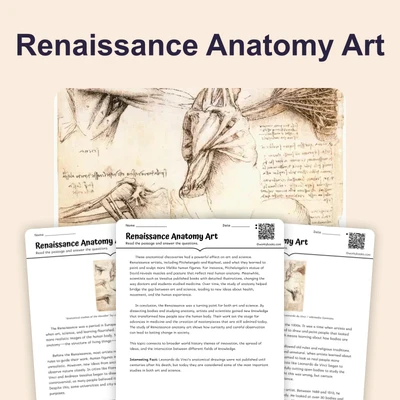
Renaissance Anatomy Art
This engaging passage explores the intersection of art, science, and society during the Renaissance through the lens of ...
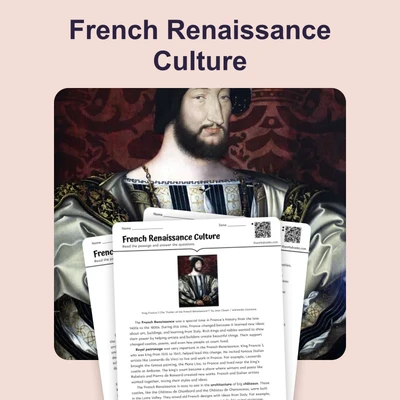
French Renaissance
This passage explores the rich culture of the French Renaissance, focusing on the influence of Italian art and architect...
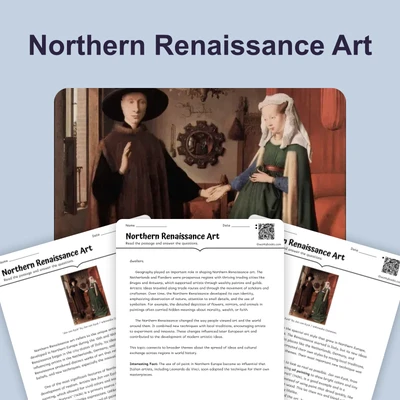
Northern Renaissance
This passage examines the development and significance of Northern Renaissance art, focusing on how Renaissance ideas sp...
Renaissance Art and Artists
This history reading passage delves into the world of Renaissance art, focusing on the revolutionary works and lives of ...
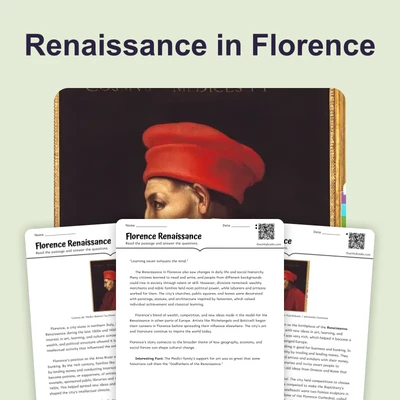
Florence Renaissance
This history reading passage examines Florence during the Renaissance, highlighting its cultural richness, the influence...
Renaissance Oil Painting
This passage explores the development of oil painting techniques during the Renaissance, focusing on the comparison betw...
Renaissance Impact Today
This engaging world history passage examines the enduring impact of the Renaissance on modern society, focusing on how R...
Renaissance Education
This engaging history reading passage examines the transformation of education during the Renaissance and its impact on ...
English Renaissance
This comprehensive passage explores the English Renaissance, a transformative period in England marked by a flourishing ...
Renaissance Medicine
This engaging world history reading passage explores medical advances during the Renaissance in Europe, focusing on chan...
Renaissance Music
This world history reading passage examines the development of music during the Renaissance, a period of profound cultur...
Renaissance Festivals Celebrations
This passage explores the vibrant role of festivals and celebrations during the Renaissance, focusing on how public spec...
Catholic Church and Renaissance
This passage explores the major role the Catholic Church played as a patron of Renaissance art in Europe. It examines ho...
Renaissance Religious Art
This passage explores the dramatic changes in religious art during the Renaissance, focusing on the shift from medieval ...
Renaissance Women
This reading passage explores the lives and contributions of women during the Renaissance period in Europe. Students wil...