Renaissance Philosophy
Interactive passage with audio narration, comprehension questions, and printable PDF.
By completing this purchase you agree to our Terms of Use and Privacy Policy. Your subscription renews automatically until you cancel. You can cancel anytime from your account settings. All sales are final and non-refundable. Digital content is available for download in your account immediately upon purchase.
What's included
Renaissance Philosophy preview and details
About this printable Renaissance Philosophy reading passage (Grades 5-8)
Sample passage and quiz from Renaissance Philosophy
Reading passage and comprehension quiz preview
Renaissance Philosophy
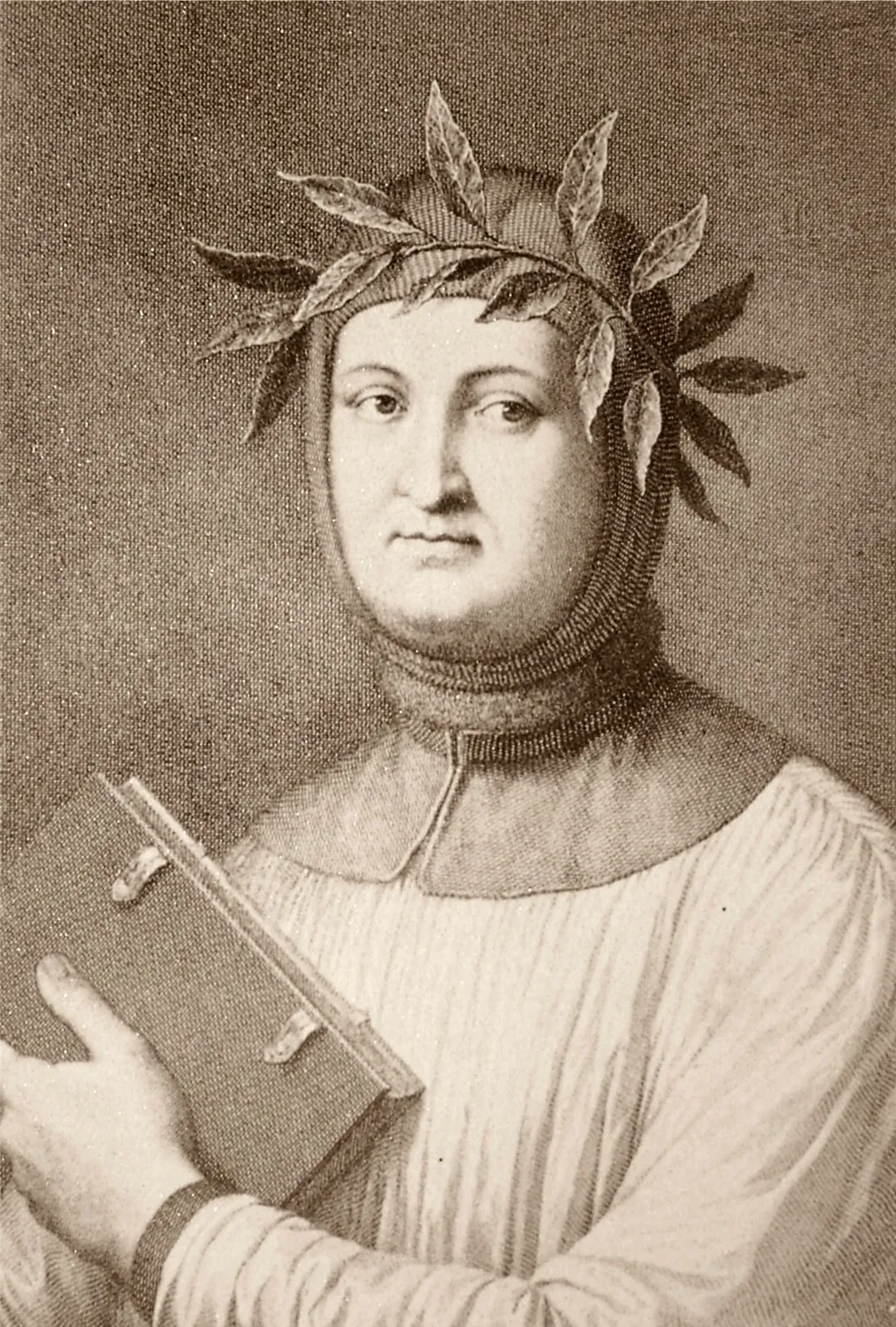
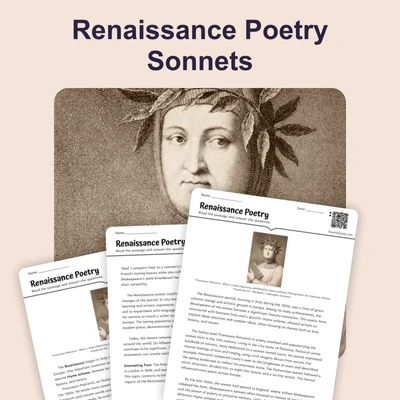
"Francesco Petrarca." after a steel engraving, published by Gustav Schauer Photographic Art Institute, Grosse Friedrichs Str. 188 Berlin. / Wikimedia Commons.
The Renaissance was a period of great change in Europe from the 1300s to the 1600s. During this time, new ideas about philosophy, knowledge, and human beings spread across city-states like Florence and Venice. Renaissance philosophy focused on a human-centered worldview, meaning that thinkers believed humans had great potential and could shape their own lives. This was different from the Middle Ages, when people mostly accepted traditional beliefs and authority without question.
One major idea during the Renaissance was humanism. Humanist philosophers studied ancient Greek and Roman texts, believing that people could learn from these classical sources. For example, Petrarch, who lived in Italy in the 1300s, collected old manuscripts and encouraged others to study them. He is often called the 'Father of Humanism.' Humanism taught that people should develop their talents in many areas, including art, science, and literature. This focus on well-rounded education is known as the 'Renaissance Man' ideal.
Renaissance philosophers also believed in the power of rational thinking. They thought that people could use reason and logic to solve problems and understand the world, rather than just accepting what was taught by tradition or the church. For instance, Desiderius Erasmus, a Dutch scholar, wrote in the early 1500s about the importance of questioning old ideas and seeking truth through careful study. Another example is Niccolò Machiavelli, who wrote 'The Prince' in 1513. Machiavelli argued that rulers should use practical methods, not just follow old customs, to keep their states strong. His ideas were controversial but had a big impact on political thought.
Another important philosopher, Giovanni Pico della Mirandola, wrote the 'Oration on the Dignity of Man' in 1486. In this work, Pico celebrated human freedom and the ability to choose one's own path. He argued that humans were unique because of their capacity for self-improvement. Renaissance thinkers like Pico and Erasmus used ancient texts, observation, and discussion to create a new approach to knowledge.
The spread of Renaissance philosophy changed European society. People began to value education, individual achievement, and new ways of thinking. Universities and academies grew, and books became more available thanks to the printing press, invented in the mid-1400s. While not everyone agreed with these ideas, the Renaissance created space for debate and progress. Over time, this led to advances in science, art, and government, influencing the modern world.
These changes in philosophy connect to broader history themes, such as how ideas spread, the importance of questioning tradition, and the development of individual rights.
Interesting Fact: The phrase "Renaissance Man" describes someone skilled in many subjects, inspired by real people like Leonardo da Vinci, who was both a scientist and an artist.
Comprehension quiz (8 questions)
1. Who is called the 'Father of Humanism'?
2. What did Machiavelli write in 1513?
3. Which invention helped spread Renaissance ideas?
4. What is humanism?
5. Why was rational thinking important?
6. How did Renaissance ideas change society?
7. Renaissance thinkers accepted old ideas without question.
8. What does 'potential' mean in the passage?
Perfect for the way you teach
- Build comprehension skills
- Auto-graded quiz
- Differentiated reading
- Read together at home
- Improve fluency
- Quiet reading time
- Reading curriculum support
- Independent practice
- Track Lexile growth