Renaissance Festivals Celebrations
Interactive passage with audio narration, comprehension questions, and printable PDF.
By completing this purchase you agree to our Terms of Use and Privacy Policy. Your subscription renews automatically until you cancel. You can cancel anytime from your account settings. All sales are final and non-refundable. Digital content is available for download in your account immediately upon purchase.
What's included
Renaissance Festivals Celebrations preview and details
About this printable Renaissance Festivals Celebrations reading passage (Grades 5-8)
Sample passage and quiz from Renaissance Festivals Celebrations
Reading passage and comprehension quiz preview
Renaissance Festivals Celebrations
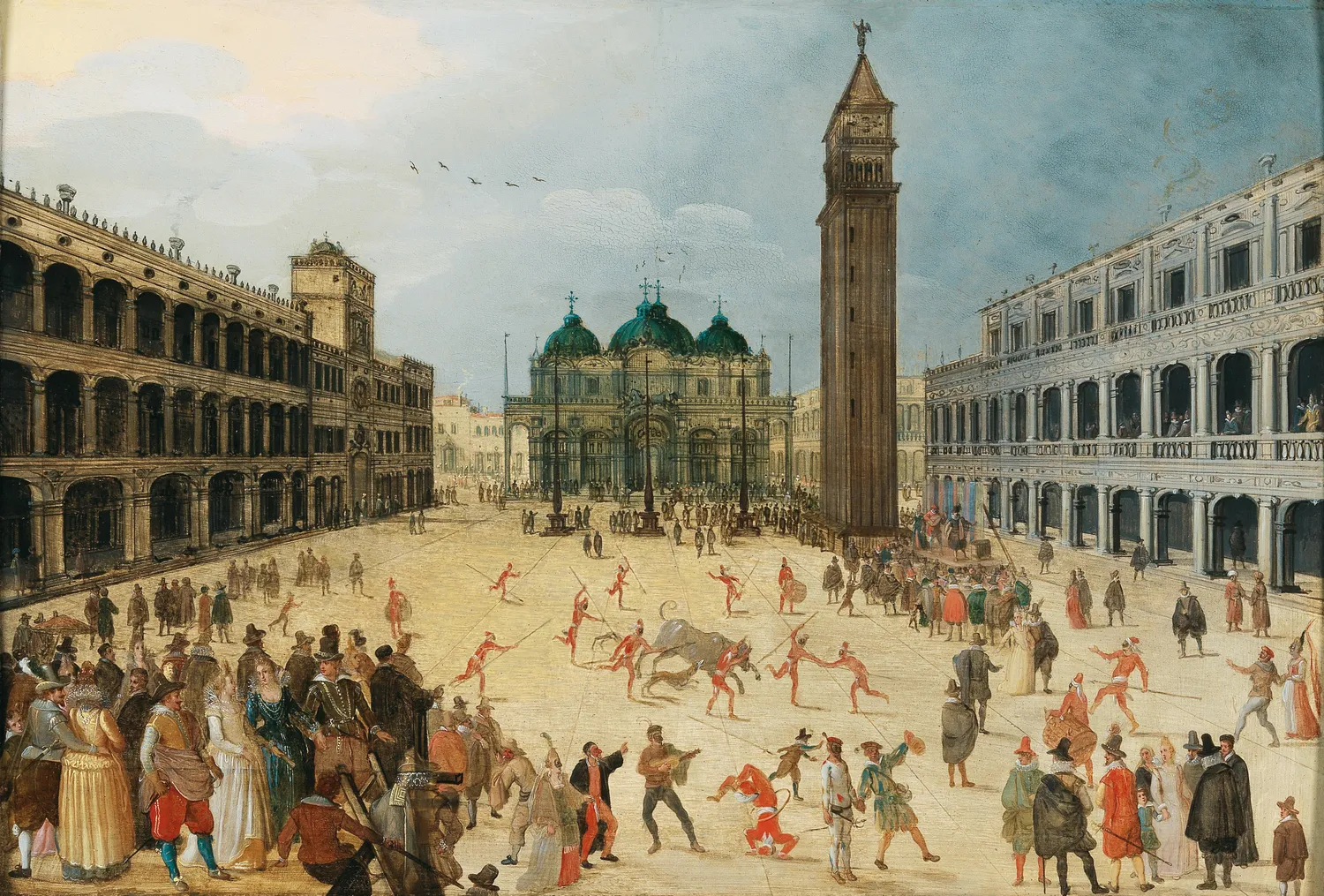
"A Carnival Scene at the Piazza San Marco, Venice by Sebastian Vrancx" by Sebastiaen Vrancx / Wikimedia Commons.
During the Renaissance, lively festivals and public celebrations became a central part of life in European city-states. These events, held in places like Florence, Venice, and Milan from the 14th to the 17th centuries, reflected the changing culture and creativity of the time. Festivals brought together people from all social classes, transforming city streets and squares into stages for music, performance, and colorful spectacle.
One of the most famous festival traditions was the carnival in Venice. The Venetian Carnival, which began as early as the 13th century but flourished during the Renaissance, featured elaborate masks, costumes, and street performances. According to a 16th-century diary, thousands of people gathered to watch dramatic plays and parades. Artists and craftsmen designed intricate masks, while musicians played in open squares. The carnival allowed people from all backgrounds to mingle, temporarily blurring the lines of social hierarchy.
Religious festivals were also significant during the Renaissance. For example, the Feast of San Giovanni in Florence honored the city’s patron saint each June. Churches organized processions with banners, choirs, and incense. Historical records describe how the entire city would participate, with artisans decorating streets and children carrying lanterns. Such events linked religious beliefs to community identity, reinforcing the importance of faith in daily life. At the same time, these festivals were opportunities for public entertainment, including games, feasts, and fireworks.
Public spectacles were another feature of Renaissance celebrations. Cities staged grand tournaments, mock battles, and fireworks displays to showcase civic pride and wealth. For instance, in 1539, Duke Cosimo I de’ Medici organized a famous tournament in Florence’s Piazza Santa Croce, recorded in detailed paintings and festival books. These spectacles attracted visitors from distant regions and helped city-states compete for prestige in Europe. Over time, festivals became more elaborate. The invention of printing allowed festival announcements and programs to reach a wider audience, making celebrations more inclusive.
Renaissance festivals played a crucial role in shaping social life and cultural traditions. They provided a sense of unity and shared identity, while also offering a way to express creativity and innovation. The blend of religious, civic, and artistic elements in these celebrations reflected the dynamic changes of the Renaissance era. Festivals continue to influence European traditions today, showing the lasting impact of this period on community life.
Renaissance festivals connect to the broader themes of cultural change, social structure, and the influence of geography on historical events.
Interesting Fact: During the Venetian Carnival, wearing masks was so popular that special laws were created to control when and where people could disguise themselves!
Comprehension quiz (8 questions)
1. Where was the Venetian Carnival held?
2. Which city celebrated the Feast of San Giovanni?
3. Who organized the 1539 tournament in Florence?
4. What was a main purpose of public spectacles?
5. Why did festivals blur social hierarchy?
6. How did the printing press affect festivals?
7. Renaissance festivals still influence Europe today.
8. What does 'artisans' mean?
Perfect for the way you teach
- Build comprehension skills
- Auto-graded quiz
- Differentiated reading
- Read together at home
- Improve fluency
- Quiet reading time
- Reading curriculum support
- Independent practice
- Track Lexile growth