Renaissance Medicine
Interactive passage with audio narration, comprehension questions, and printable PDF.
By completing this purchase you agree to our Terms of Use and Privacy Policy. Your subscription renews automatically until you cancel. You can cancel anytime from your account settings. All sales are final and non-refundable. Digital content is available for download in your account immediately upon purchase.
What's included
Renaissance Medicine preview and details
About this printable Renaissance Medicine reading passage (Grades 5-8)
Sample passage and quiz from Renaissance Medicine
Reading passage and comprehension quiz preview
Renaissance Medicine
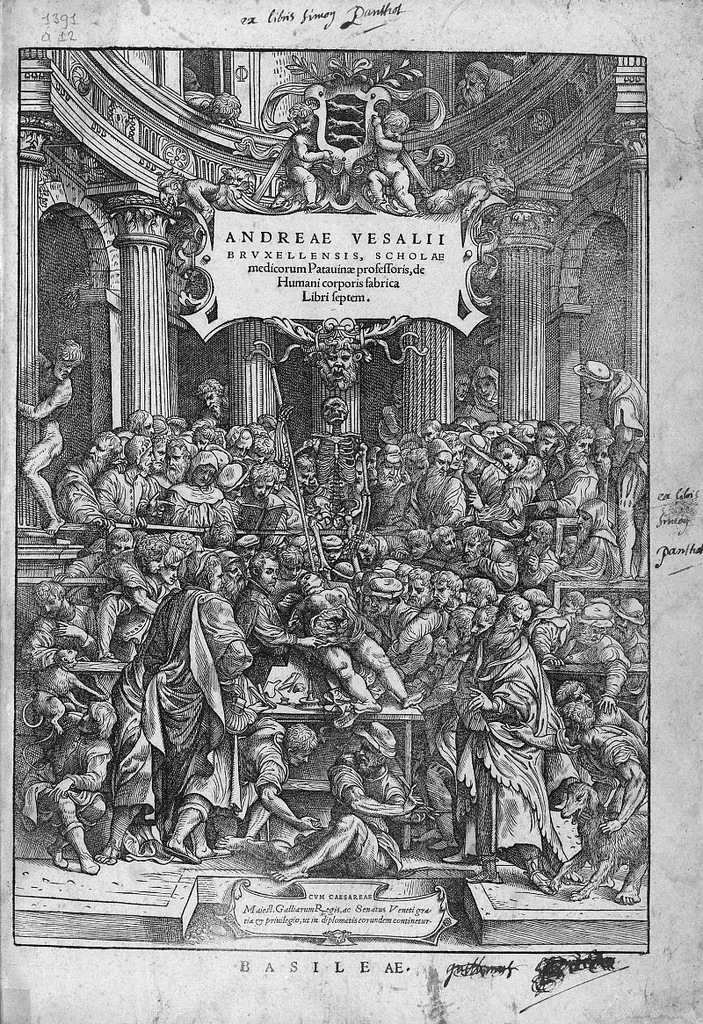
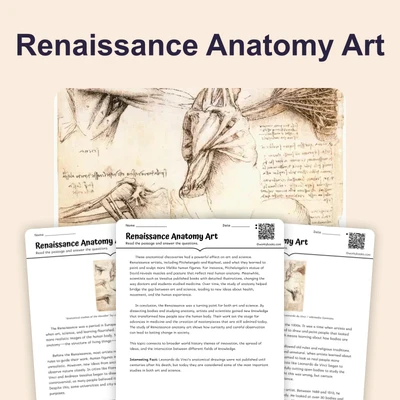
"De humani corporis fabrica" by Andreas Vesalius / Wikimedia Commons.
The Renaissance was a period of great change and discovery in Europe, especially in the field of medicine. During the 1400s and 1500s, doctors and scholars began to question old beliefs about the human body, many of which had come from ancient Greek and Roman texts. Instead of relying only on tradition, they started using observation and direct study to learn more about health, disease, and anatomy.
One of the most important advances of the Renaissance was the new focus on anatomy, the study of the structure of living things. In the past, doctors depended on the writings of ancient authorities like Galen, who had studied animals instead of humans. However, in 1543, the Flemish physician Andreas Vesalius published a groundbreaking book called De humani corporis fabrica (On the Fabric of the Human Body). Vesalius performed careful dissections of human cadavers, creating detailed drawings of muscles, bones, and organs. These drawings were based on what he actually saw rather than ancient texts. Vesalius’ work showed that some of Galen’s ideas were wrong, and it encouraged others to question old beliefs. This change marked a turning point in European medicine.
Renaissance doctors also made progress in surgical techniques. Ambroise Paré, a French barber-surgeon, improved the treatment of battlefield wounds by using gentle ointments instead of hot oil. He also created new ways to tie blood vessels during operations, which helped reduce deadly infections. These methods were recorded in his writings from the 1570s and became important guides for later surgeons. Another critical development was the use of the printing press, which allowed medical books and illustrations to be copied and shared across Europe. This made new knowledge about medicine available to more people than ever before.
As Renaissance thinkers learned more about the body, they also started to rethink the causes of disease. Instead of blaming only evil spirits or imbalances in the body’s “humors,” some doctors began to look for physical causes that could be observed and studied. This approach helped lay the foundation for the scientific method. However, many treatments were still based on old beliefs, and change came slowly. Poor and lower-class people often had less access to these advances, as medical education and expensive books were mostly available to the wealthy or university scholars.
In summary, Renaissance medicine was shaped by new discoveries in anatomy, better surgical methods, and a shift toward observation and scientific thinking. The work of Vesalius, Paré, and others helped move European medicine away from ancient traditions and toward a more modern approach. These changes had a lasting impact on society and set the stage for major breakthroughs in later centuries.
The study of Renaissance medicine connects to the broader theme of how new ideas and technologies can transform societies and improve human life.
Interesting Fact: In the Renaissance, medical students sometimes watched public dissections, which were rare events that attracted large crowds and even artists who wanted to learn about the human body.
Comprehension quiz (8 questions)
1. Who published De humani corporis fabrica?
2. Which tool helped spread medical knowledge?
3. What did Paré use instead of hot oil?
4. Why did Vesalius' work matter?
5. How did social class affect access to new medicine?
6. What changed about understanding disease?
7. Vesalius only studied animal bodies. True or false?
8. What is a 'cadaver'?
Perfect for the way you teach
- Build comprehension skills
- Auto-graded quiz
- Differentiated reading
- Read together at home
- Improve fluency
- Quiet reading time
- Reading curriculum support
- Independent practice
- Track Lexile growth