Renaissance Impact Today
Interactive passage with audio narration, comprehension questions, and printable PDF.
By completing this purchase you agree to our Terms of Use and Privacy Policy. Your subscription renews automatically until you cancel. You can cancel anytime from your account settings. All sales are final and non-refundable. Digital content is available for download in your account immediately upon purchase.
What's included
Renaissance Impact Today preview and details
About this printable Renaissance Impact Today reading passage (Grades 5-8)
Sample passage and quiz from Renaissance Impact Today
Reading passage and comprehension quiz preview
Renaissance Impact Today
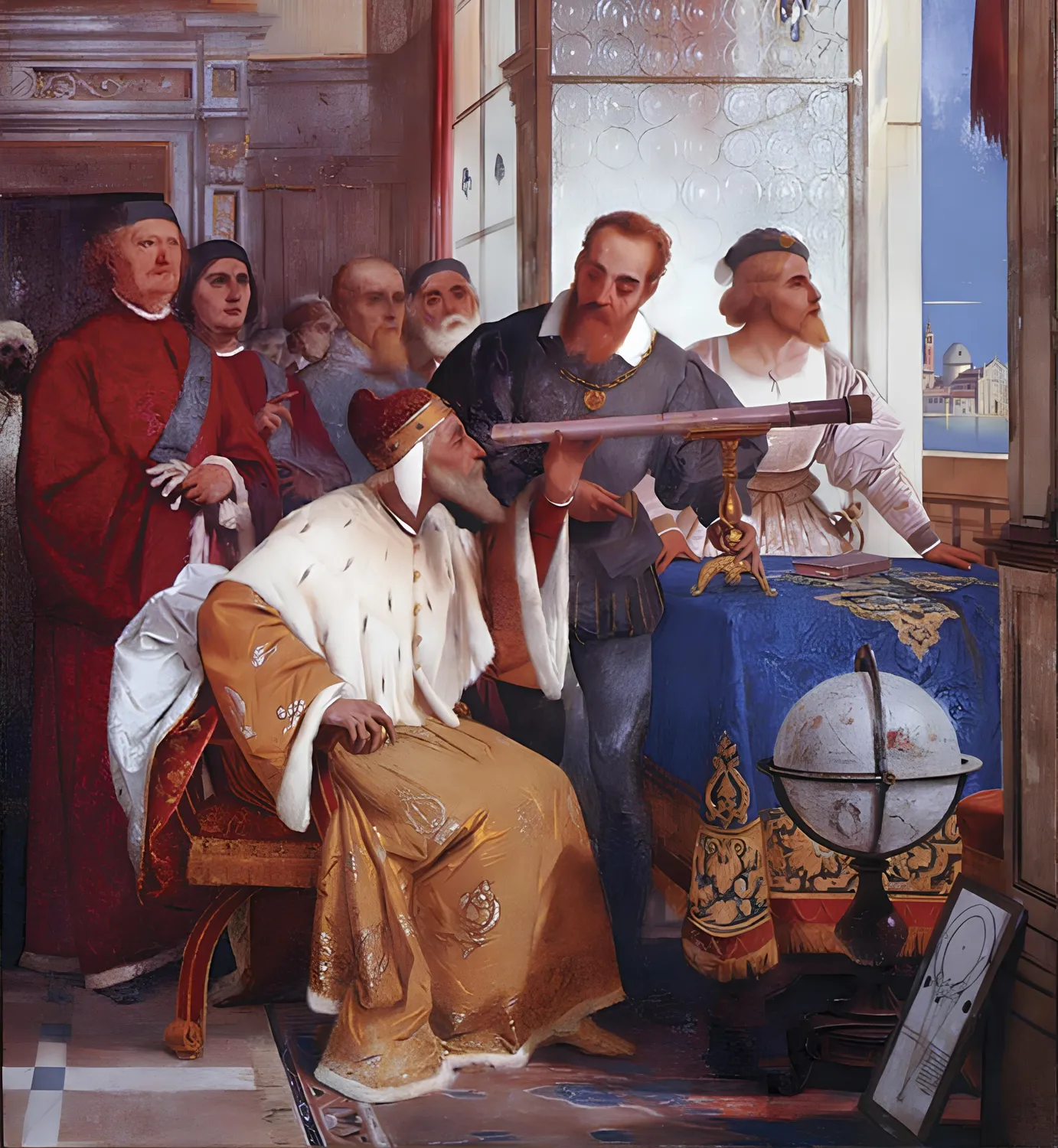
"Bertini fresco of Galileo Galilei and Doge of Venice Upscaled" by Giuseppe Bertini / Wikimedia Commons.
The Renaissance was a period of cultural, artistic, and intellectual growth in Europe that began in Italy around the 1300s and spread throughout the continent. This era saw a renewed interest in classical ideas from ancient Greece and Rome. Today, the Renaissance still shapes many aspects of our world, including democracy, science, education, and individual rights. By examining its values and achievements, we can understand why the Renaissance is considered a foundation of modern Western society.
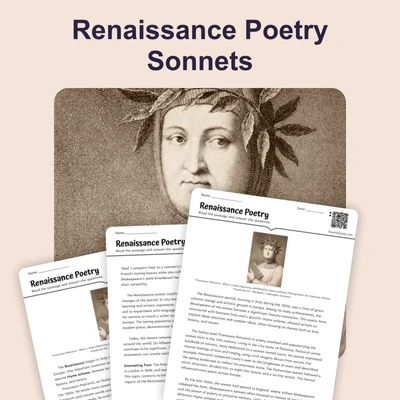
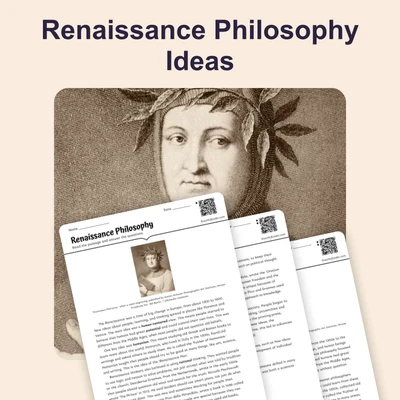
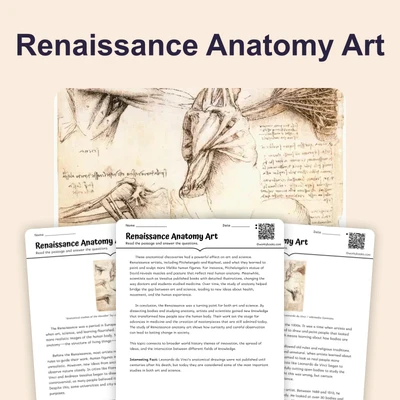
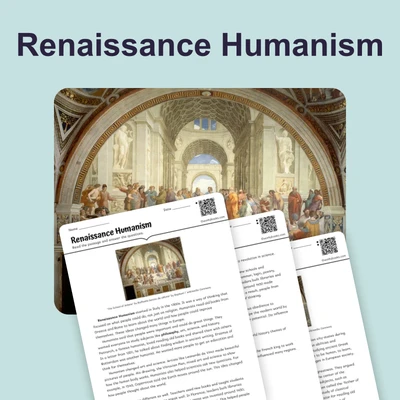
One of the most important influences of the Renaissance is the development of humanism, a philosophy that emphasized the value and potential of each individual. Humanists like Petrarch (1304-1374) encouraged people to study literature, history, and philosophy to understand human nature. This focus on individual achievement led to advancements in art, literature, and politics. For example, Leonardo da Vinci (1452-1519) combined science and art in his work, making detailed observations of the human body and inventing machines. Primary sources, such as da Vinci’s notebooks, show how Renaissance thinkers valued curiosity and observation.
The Renaissance also transformed science and education. Figures like Galileo Galilei (1564-1642) challenged traditional beliefs by using empirical evidence—information gathered through observation and experiment. Galileo’s use of the telescope provided new insights into our solar system. The invention of the printing press by Johannes Gutenberg around 1440 made books more accessible. As a result, education spread more widely, and people could read about new ideas in their own languages. This led to a more informed society, setting the stage for future scientific revolutions.
Another key impact of the Renaissance was its influence on political thought and democracy. Philosophers such as Niccolò Machiavelli (1469-1527) wrote about government and power, encouraging debate about how societies should be governed. City-states like Florence became centers of discussion and civic participation. Over time, these ideas evolved into concepts of individual rights and representative government, which are essential to modern democracies. Art and literature from the Renaissance also reflected changes in social hierarchy and daily life, as more people began to question old traditions and demand equality.
In conclusion, the Renaissance was a turning point that helped shape the foundations of contemporary Western society. Its emphasis on human potential, scientific discovery, and political participation continues to influence our world today. By studying the Renaissance, we can better appreciate the connections between the past and the present.
Interesting Fact: Michelangelo painted the ceiling of the Sistine Chapel in Rome while lying on his back, creating one of the world’s most famous works of art.
This study of the Renaissance connects to broader themes of change, innovation, and human impact throughout world history.
Comprehension quiz (8 questions)
1. Where did the Renaissance begin?
2. Who invented the printing press?
3. Which artist painted the Sistine Chapel ceiling?
4. What was humanism focused on?
5. How did the printing press affect society?
6. Why is Galileo important?
7. The Renaissance had no impact on democracy. True or false?
8. What does 'hierarchy' mean?
Perfect for the way you teach
- Build comprehension skills
- Auto-graded quiz
- Differentiated reading
- Read together at home
- Improve fluency
- Quiet reading time
- Reading curriculum support
- Independent practice
- Track Lexile growth