Renaissance Education
Interactive passage with audio narration, comprehension questions, and printable PDF.
By completing this purchase you agree to our Terms of Use and Privacy Policy. Your subscription renews automatically until you cancel. You can cancel anytime from your account settings. All sales are final and non-refundable. Digital content is available for download in your account immediately upon purchase.
What's included
Renaissance Education preview and details
About this printable Renaissance Education reading passage (Grades 5-8)
Sample passage and quiz from Renaissance Education
Reading passage and comprehension quiz preview
Renaissance Education
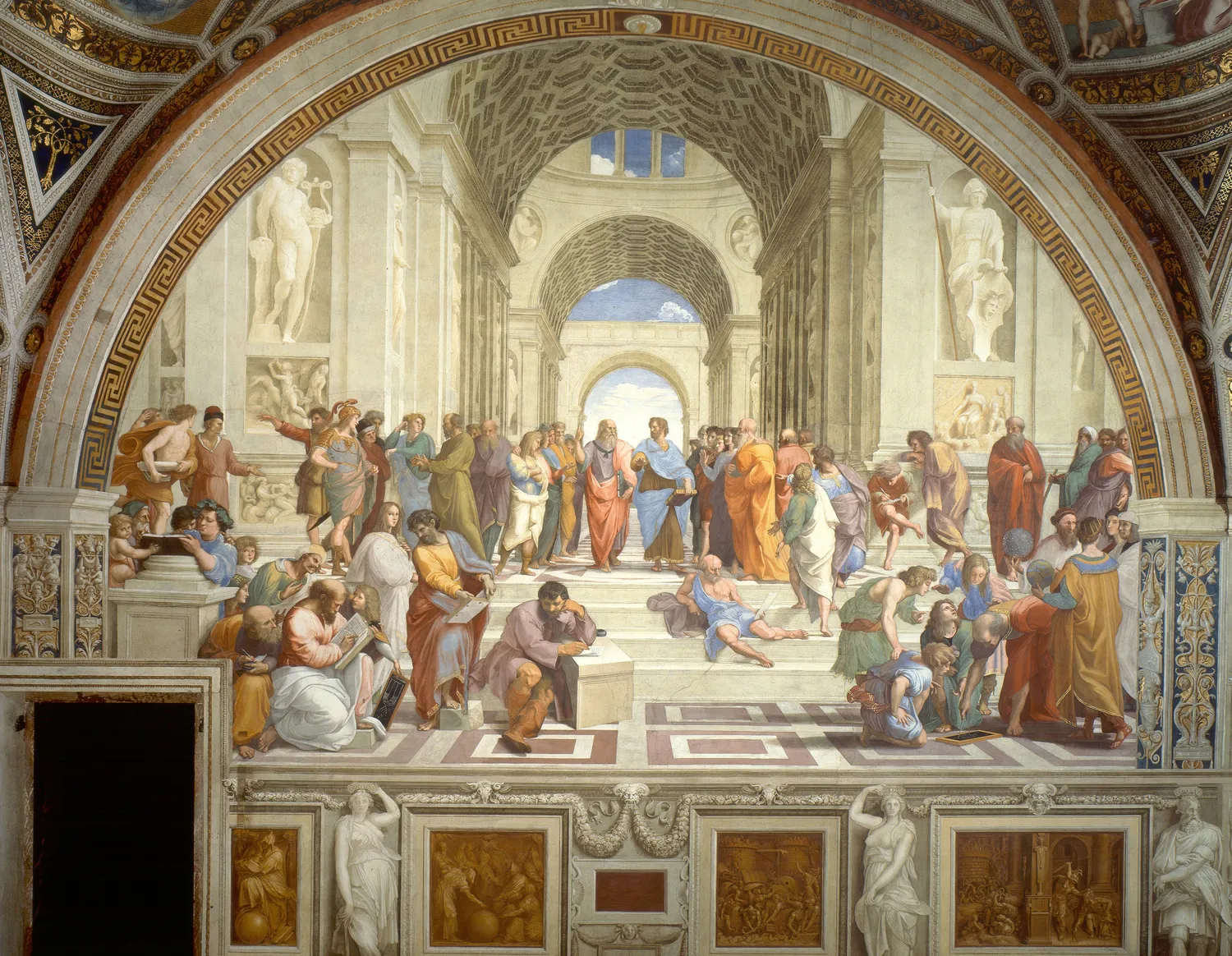
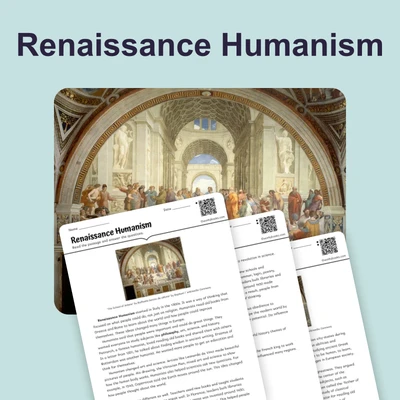
"The School of Athens" by Raffaello Sanzio da Urbino, by Raphael / Wikimedia Commons.
The Renaissance was a period of great change in Europe, beginning in the 1300s and lasting into the 1600s. During this time, education and learning became more important than ever before. Scholars and artists in places like Florence, Italy, wanted to rediscover the knowledge of the ancient Greeks and Romans. This movement led to a new focus called humanism, which valued studying classical works and developing well-rounded individuals.
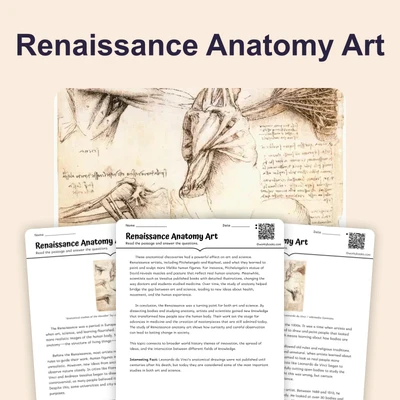
In the Middle Ages, most education was based on religious teachings and controlled by the Church. However, during the Renaissance, people began to study subjects such as literature, history, philosophy, mathematics, and science. The goal was not just to prepare for religious life but to become a knowledgeable citizen. One famous example is Leonardo da Vinci, who lived from 1452 to 1519 in Italy. He studied art, science, engineering, and anatomy. Leonardo wrote in his notebooks about the importance of observing the world and learning from experience, showing the spirit of Renaissance education.
Many teachers and students followed the ideas of Petrarch, a poet and scholar who was called the 'Father of Humanism.' He encouraged people to read the works of ancient authors like Cicero and Virgil. Schools known as academies were established in city-states such as Florence and Venice. These academies taught Latin and Greek, as well as rhetoric, grammar, and logic. Students also learned about the arts and physical education, aiming to become a Renaissance man—someone skilled in many subjects. For example, a letter from a Florentine academy, written in 1472, describes students debating philosophy and practicing painting.
This new approach to education changed society. It encouraged critical thinking and creativity, making people question old ideas and search for new solutions. The invention of the printing press by Johannes Gutenberg around 1450 helped spread books and ideas quickly. More people learned to read and gained access to knowledge, which weakened the strict social divisions of the past. While education was still mostly for wealthy boys, some women and people from lower classes began to study as well, signaling slow but important change.
The Renaissance emphasis on learning and humanism helped shape the modern world. By encouraging curiosity and the study of many subjects, Renaissance education laid the foundation for scientific discoveries, new art forms, and democratic ideas. These changes connect to the broader themes of world history, such as the spread of knowledge and the growth of individual rights.
Interesting Fact: The word "Renaissance" comes from French and means "rebirth," showing the revival of classical learning and culture during this era.
Comprehension quiz (8 questions)
1. Where did the Renaissance begin?
2. Who invented the printing press?
3. What did academies teach?
4. What was humanism?
5. Why was the printing press important?
6. How did Renaissance education differ from before?
7. Renaissance education encouraged creativity. True or false?
8. What is a 'Renaissance man'?
Perfect for the way you teach
- Build comprehension skills
- Auto-graded quiz
- Differentiated reading
- Read together at home
- Improve fluency
- Quiet reading time
- Reading curriculum support
- Independent practice
- Track Lexile growth