Clownfish and Coral Reef Loss
Interactive passage with audio narration, comprehension questions, and printable PDF.
By completing this purchase you agree to our Terms of Use and Privacy Policy. Your subscription renews automatically until you cancel. You can cancel anytime from your account settings. All sales are final and non-refundable. Digital content is available for download in your account immediately upon purchase.
What's included
Clownfish and Coral Reef Loss preview and details
About this printable Clownfish and Coral Reef Loss science reading passage, NGSS-aligned (Grades 5-8)
Sample passage and quiz from Clownfish and Coral Reef Loss
Reading passage and comprehension quiz preview
Clownfish and Coral Reef Loss
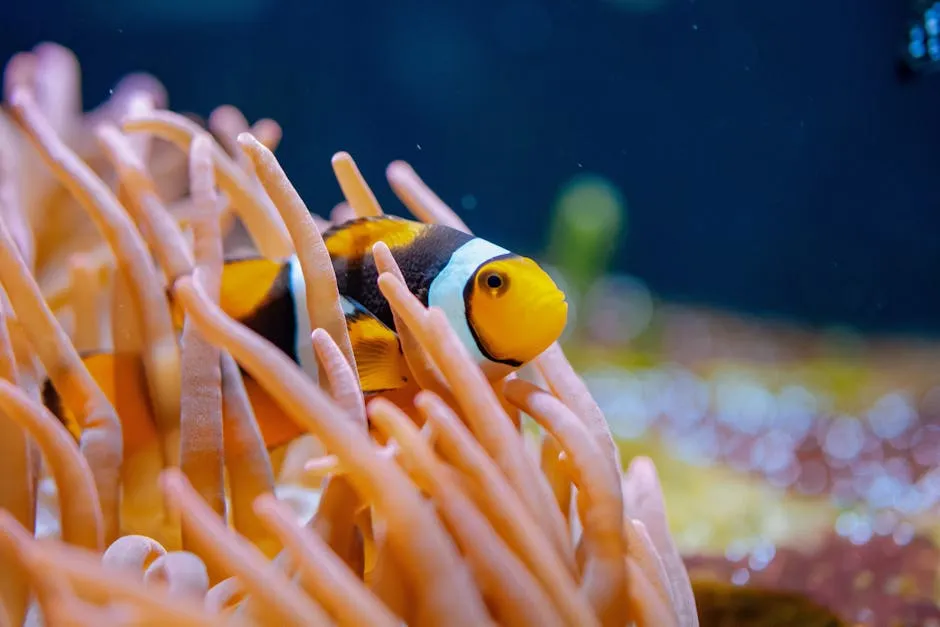
"Close-up of a clownfish swimming among sea anemones in a vibrant coral reef." by Erdal Erdal / Pexels.
Thanks to a famous movie, clownfish are among the most recognizable animals on coral reefs. These small, orange-and-white striped fish live in one of nature's most interesting partnerships. Clownfish make their homes among the stinging tentacles of sea anemones. This relationship benefits both animals and is called mutualism.
Sea anemones are ocean animals with tentacles that contain stinging cells. Most fish avoid anemones because the stings can harm or kill them. However, clownfish produce a special mucus coating that protects them from the stings. The anemone's tentacles provide the clownfish with shelter from predators like larger fish. In return, the clownfish helps the anemone by eating parasites and dead tissue. The clownfish also chases away fish that might eat the anemone. Scientists explain that this partnership allows both species to survive better than they could alone.
The challenge is that sea anemones face the same threats as coral reefs. Like corals, anemones host tiny algae called zooxanthellae inside their tissues. These algae use sunlight to make food through photosynthesis. The algae share this food with their anemone host. When ocean water becomes too warm, the anemones expel their algae. This process is called bleaching. Without their algae, anemones lose their main food source and can die. Evidence shows that ocean temperatures have risen due to climate change. This warming causes more frequent bleaching events.
Coral reef damage also affects clownfish through ocean acidification. When seawater absorbs carbon dioxide from the atmosphere, it becomes more acidic. Acidic water makes it harder for corals and anemones to build their structures. As reefs decline, there are fewer anemones for clownfish to call home. Scientists observe that clownfish populations decrease when their anemone partners disappear.
Research from the Great Barrier Reef shows these impacts are real. Studies found that after major bleaching events, the number of young clownfish dropped significantly. The fish could not find healthy anemones to settle in. This matters because clownfish help us understand larger problems facing coral reefs. When these beloved fish struggle, it signals that entire reef ecosystems are in trouble. Protecting coral reefs means protecting the countless species that depend on them, including the famous clownfish.
Interesting Fact: Clownfish are all born male, but the dominant fish in a group can change into a female if needed. This ability helps ensure the survival of their small family groups.
Comprehension quiz (10 questions)
1. What type of relationship do clownfish and sea anemones have?
2. How do clownfish protect themselves from anemone stings?
3. What is the term for the process where anemones lose their algae due to warm water?
4. What do zooxanthellae provide to sea anemones?
5. How does ocean acidification affect coral reefs and anemones?
6. According to research from the Great Barrier Reef, what happened after major bleaching events?
7. Why do clownfish help keep anemones clean?
8. What causes ocean acidification?
9. True or False: Most fish can safely live among sea anemone tentacles without being harmed.
10. True or False: When clownfish populations decline, it signals that entire reef ecosystems are in trouble.
Perfect for the way you teach
- Build comprehension skills
- Auto-graded quiz
- Differentiated reading
- Read together at home
- Improve fluency
- Quiet reading time
- Reading curriculum support
- Independent practice
- Track Lexile growth