This learning resource is available in interactive and printable formats. The interactive worksheet can be played online and assigned to students. The Printable PDF version can be downloaded and printed for completion by hand.
This engaging U.S. History reading passage explores the dramatic events leading to the Declaration of Independence by the Continental Congress in July 1776. Students will delve into the challenges, fears, and debates among colonial delegates as they considered breaking away from British rule, examining both the conflicts and solutions that shaped this revolutionary decision. The passage highlights important academic vocabulary, provides a glossary, and integrates problem/solution text structure to help students analyze history like a historian. Also included are differentiated reading versions, a Spanish translation, and a variety of activities aligned with HSS 5.6.1, 8.2.3 and CCSS RI.6-8.1, RI.6-8.2 standards. Students can assess their understanding with a multiple-choice quiz, writing prompts, graphic organizers, and a timeline. Read aloud audio is available to support diverse learners.
CONTENT PREVIEW
Expand content preview
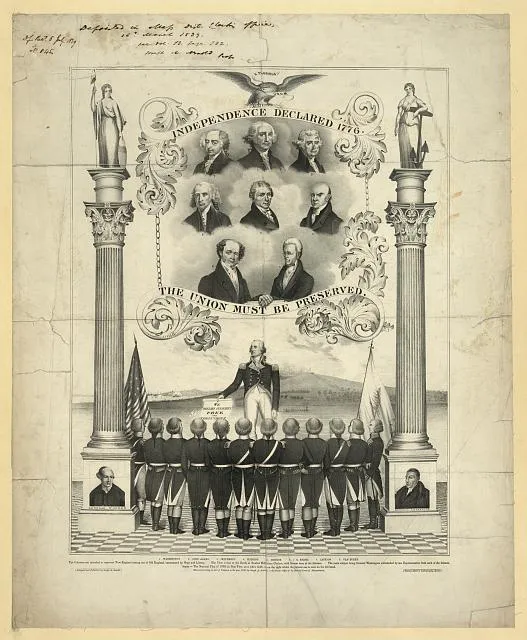
"Independence declared 1776. The Union must be preserved" by Moore, Thomas / Library of Congress.
In July 1776, the Second Continental Congress reached a turning point that would change the future of North America. Meeting in Philadelphia, delegates from thirteen colonies faced a critical decision: whether to formally declare independence from Great Britain. This choice was not simple. The colonies had lived under British rule for generations, but increasing taxes, lack of representation, and harsh laws had made many colonists eager for change. However, the risks were enormous. If their effort failed, those involved would be considered guilty of treason, a crime punishable by death.
The delegates to the Congress came from vastly different backgrounds and regions. Some, like John Adams of Massachusetts, strongly supported independence. Others, such as John Dickinson of Pennsylvania, were hesitant and hoped for reconciliation. Over months of debate, these men discussed not only the resolution for independence but also the possible consequences for the colonies. Disagreements were common, and unity was difficult to achieve. Fear of British military power and uncertainty about the future divided the delegates, yet they continued to seek a path forward.
One major challenge was convincing all thirteen colonies to agree. The Congress knew that a unanimous decision would send a stronger message both to Britain and to the world. Influential figures, such as Thomas Jefferson, Benjamin Franklin, and Roger Sherman, worked tirelessly to draft a document that would express the colonies’ reasons for separating. This document, known as the Declaration of Independence, explained the colonies’ grievances and proclaimed their right to self-government.
Throughout these debates, the delegates demonstrated political courage and compromise. Some feared the loss of economic ties or the destruction of families with differing loyalties. Others worried about forming a new government from scratch. Through careful negotiation, the Congress addressed these concerns while maintaining focus on the larger goal: freedom from British control. The final vote did not come easily, but persistence paid off.
On July 2, 1776, the Congress officially voted for independence. Two days later, on July 4th, the Declaration of Independence was adopted and signed by representatives of the colonies. This act signified the birth of a new nation, the United States of America. The Declaration not only inspired colonists but also attracted international attention, particularly from France and Spain. By standing together, the colonies transformed their struggle from a series of protests into a unified revolution.
The Continental Congress’s decision was both revolutionary and risky. Had they failed, the leaders would have faced severe punishment, and the colonies might have remained divided. Instead, their collective action set the stage for the Revolutionary War and the eventual creation of a democratic republic. The courage and determination displayed during these debates continue to be celebrated as a defining moment in American history.
Interesting Fact: After the signing, John Hancock wrote his name the largest on the Declaration so that, as he said, "King George could read it without his spectacles."
When was the Declaration adopted?
July 4, 1776June 17, 1775May 1, 1776July 2, 1774
Where did the Congress meet?
BostonPhiladelphiaNew YorkRichmond
Who signed the Declaration largest?
Thomas JeffersonJohn HancockJohn AdamsBenjamin Franklin
Why did some delegates hesitate?
Feared British militaryWanted higher taxesLiked British foodWanted a king
How did the Congress show unity?
All voted for independenceInvited British leadersChanged colonies’ namesWrote secret letters
What did the Declaration explain?
Colonies’ complaints and rightsHow to pay taxesNames of all coloniesA new British law
The Congress risked treason by declaring independence.
TrueFalse
What does 'unanimous' mean?
Everyone agreesOnly one agreesSome disagreeNo one votes
Perfect For:
👩🏫 Teachers
• Reading comprehension practice
• Auto-graded assessments
• Literacy skill development
👨👩👧👦 Parents
• Reading practice at home
• Comprehension improvement
• Educational reading time
🏠 Homeschoolers
• Reading curriculum support
• Independent reading practice
• Progress monitoring
Reading Features:
📖
Reading Passage
Engaging fiction or nonfiction text
❓
Comprehension Quiz
Auto-graded questions
📊
Instant Feedback
Immediate results and scoring
📄
Printable Version
Download for offline reading
🔊
Read Aloud
Voice-over with word highlighting
Reviews & Ratings
No reviews yet. Be the first to share your experience!
Related Content
Great Awakening Colonial America
This engaging history reading passage explores the impact of the Great Awakening on colonial America. Through analysis o...
Quakers in Colonial America
This passage explores the role of the Quakers in Colonial America, focusing on their pursuit of peace, religious freedom...
D2.HIS.2.3-5D2.HIS.3.3-5RI.4.3RI.4.4
Indentured Servants in Colonial America
This comprehensive passage and activity set explores the crucial but complex role of indentured servants in colonial Ame...
D2.HIS.2.3-5D2.HIS.3.3-5RI.4.3RI.4.4
Cities in Colonial America
This engaging U.S. history reading passage explores the rise of colonial American cities such as Boston, Philadelphia, a...
HSS 5.4.68.1RI.6-8.1RI.6-8.7
Why Europeans Immigrated to Colonial America
This passage examines the complex reasons why Europeans immigrated to Colonial America, exploring both push and pull fac...
D2.HIS.2.3-5D2.HIS.3.3-5RI.4.3RI.4.4
Colonial Social Classes
This comprehensive history reading passage delves into the complex social classes of Colonial America, exploring their o...
D2.HIS.2.3-5D2.HIS.3.3-5RI.4.3RI.4.4
Colonial Slave Resistance
This U.S. History reading passage explores the complex topic of slave resistance in colonial America, examining the many...
D2.HIS.2.3-5D2.HIS.3.3-5RI.4.3RI.4.4
Benjamin Franklin in Colonial America
This U.S. History reading passage explores the life and influence of Benjamin Franklin, a key colonial leader whose idea...
HSS 5.58.1RI.6-8.1RI.6-8.3
How the Middle Colonies Were Governed
This engaging history reading passage explores how the Middle Colonies of Colonial America—such as New York, New Jersey,...
D2.HIS.2.3-5D2.HIS.3.3-5RI.4.3RI.4.4
Colonial Printing Press
This passage explores the revolutionary impact of the colonial printing press in America, examining how it enabled the s...
HSS 5.58.1RI.6-8.1RI.6-8.2
Life in the Southern Colonies
This engaging reading passage explores Colonial America's Southern Colonies, focusing on how geography, climate, and peo...
D2.HIS.4.3-5D2.GEO.4.3-5RI.4.3RI.4.4
Labor Shortages in the American Colonies
This passage examines the causes and effects of labor shortages in the American colonies, focusing on the economic and s...
Frontier Life in Colonial America
This passage examines the realities of frontier life in colonial America, highlighting both the promise and peril faced ...
HSS 5.4.68.1RI.6-8.1RI.6-8.2
Colonial Jobs: Blacksmiths, Bakers, and Craftsmen
This engaging history reading passage explores the vital roles of blacksmiths, bakers, and craftsmen in colonial America...
D2.HIS.2.3-5D2.HIS.3.3-5RI.4.3RI.4.4
Colonial Apprenticeship System
This comprehensive passage explores the Colonial Apprenticeship System and its role in education during Colonial America...
HSS 5.4.6RI.6-8.1RI.6-8.2
Native American Allies in Colonial Wars
This passage examines the complex role of Native American nations as allies and adversaries during the colonial wars of ...
D2.HIS.2.3-5D2.HIS.3.3-5RI.4.3RI.4.4
Colonial Clothing and Homemade Goods
This engaging U.S. history passage explores the daily life of early American colonists with a focus on colonial clothing...
D2.HIS.2.3-5RI.4.3RI.4.4
African Diaspora Americas
This engaging history reading passage explores the fact that more Africans than Europeans arrived in the Americas during...
Colonial Women's Lives
This history reading passage examines the complex roles, rights, and daily experiences of women in colonial America. Stu...
D2.HIS.2.3-5D2.HIS.3.3-5RI.4.3RI.4.4
Colonial Games and Entertainment
This engaging history reading passage explores the types of games and entertainment enjoyed by children and families in ...