Different Beaks for Different Foods
Interactive passage with audio narration, comprehension questions, and printable PDF.
By completing this purchase you agree to our Terms of Use and Privacy Policy. Your subscription renews automatically until you cancel. You can cancel anytime from your account settings. All sales are final and non-refundable. Digital content is available for download in your account immediately upon purchase.
What's included
Different Beaks for Different Foods preview and details
About this printable Different Beaks for Different Foods science reading passage, NGSS-aligned (Grades 3-6)
Sample passage and quiz from Different Beaks for Different Foods
Reading passage and comprehension quiz preview
Different Beaks for Different Foods
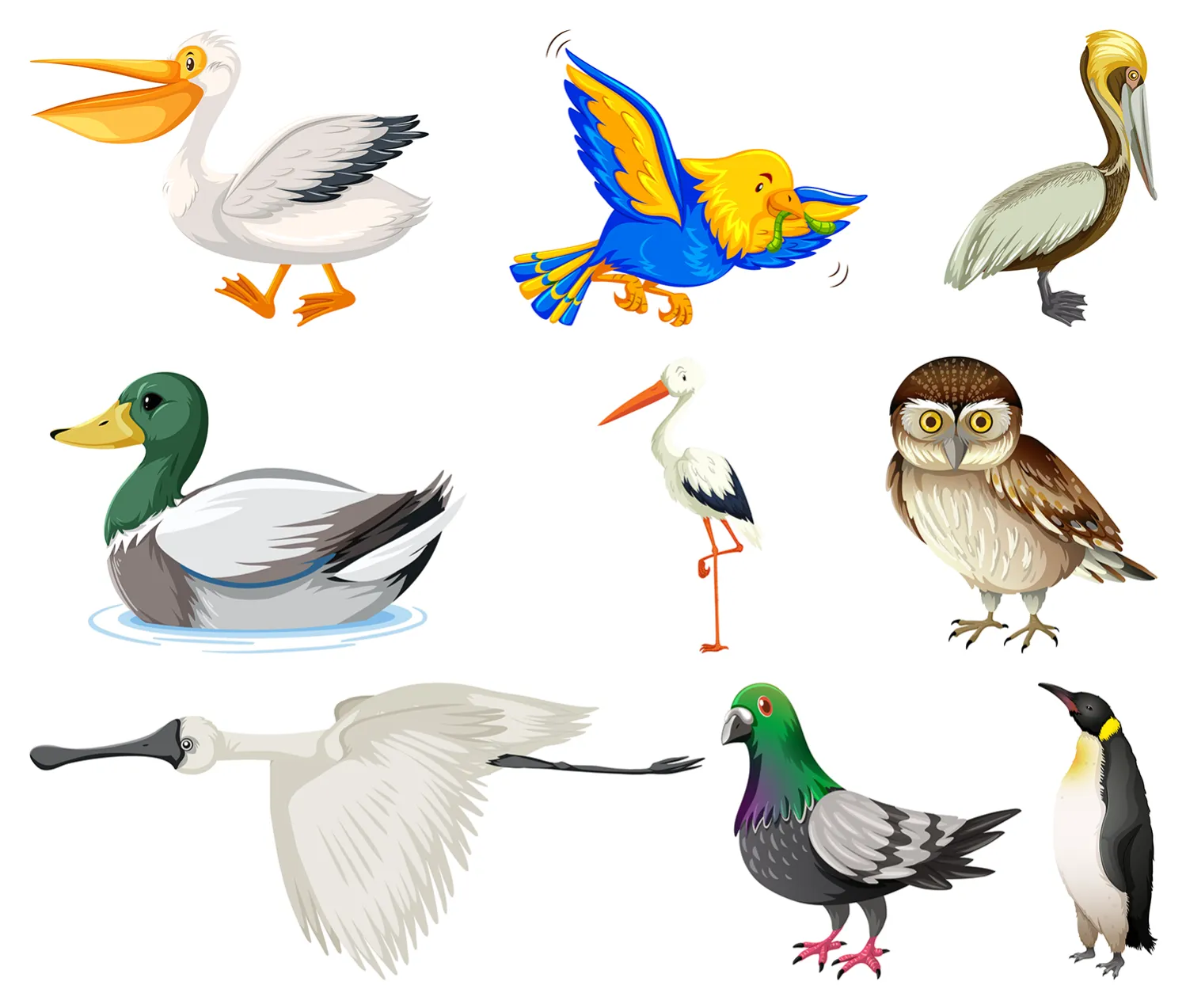
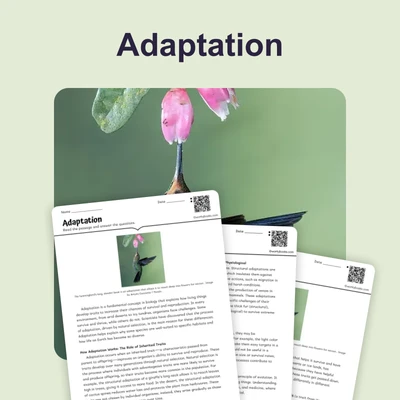
Birds have many different shapes and sizes of beaks. A bird’s beak is a special body part that helps it eat, build nests, and even defend itself. The type of beak a bird has depends on what it eats and where it lives. This is called an adaptation, which is a change that helps an animal survive in its environment.
For example, birds that eat seeds, like finches, have short, thick beaks. These beaks are strong and help the bird crack open hard seeds. Birds that drink nectar from flowers, such as hummingbirds, have long, thin beaks. Their beaks can reach deep into flowers to get the sweet nectar. Birds that eat fish, like herons and kingfishers, have long, pointed beaks that help them catch slippery prey.
Some birds eat meat. Hawks and eagles have sharp, hooked beaks that help them tear apart their food. Ducks have flat, wide beaks called bills. These allow them to scoop up plants and small animals from the water. Woodpeckers have strong, chisel-shaped beaks. They use these to peck into tree bark and find insects to eat.
Every type of bird beak is suited to the food that bird eats. This is an example of how animals fit into their ecosystem. The shape of a beak helps a bird find food, avoid danger, and live in its habitat. If a bird’s food or environment changes, it may need to adapt again over time. This process is called evolution.
Interesting Fact: The famous scientist Charles Darwin studied finches on the Galápagos Islands and learned that beaks can change shape over many generations to help birds survive.
Comprehension quiz (8 questions)
1. What is a beak?
2. Which bird has a long, thin beak?
3. What do hawks use their beaks for?
4. Why do ducks have flat bills?
5. What might happen if a bird's food changes?
6. Which bird has a chisel-shaped beak?
7. All birds have the same beak shape.
8. What is 'adaptation'?
Perfect for the way you teach
- Build comprehension skills
- Auto-graded quiz
- Differentiated reading
- Read together at home
- Improve fluency
- Quiet reading time
- Reading curriculum support
- Independent practice
- Track Lexile growth